
The red circle above indicates the time we discuss in this section
The beginning of the Soshu style
A new sword style called Soshu-den appeared after the Mongolian invasion during the later part of the Kamakura period. The Kamakura region became prosperous under the rule of the Hojo family (北条). Many swordsmiths moved to Kamakura. These included the Kunitsuna group (国綱) from the Yamashiro area and Fukuoka Ichimonji Sukezane (福岡一文字助真) and Kunimune (国宗) from the Bizen area. They are the originators of Soshu-den (相州伝). A well-known swordsmith, Goro-Nyudo-Masamune (五郎入道正宗), emerged during this time.

Sugata (Shape 姿) ——- O–kissaki (large kissaki: 大切先) and chu-kissaki (medium kissaki: 中切先). The tip of the hi ends lower (see the illustration below). Hamaguri– ha is no longer in style. The body has become thinner. The original length was approximately three feet or longer, but most were later shortened to two feet, three inches, or four inches. The shortened sword is called o-suriage (大磨上).
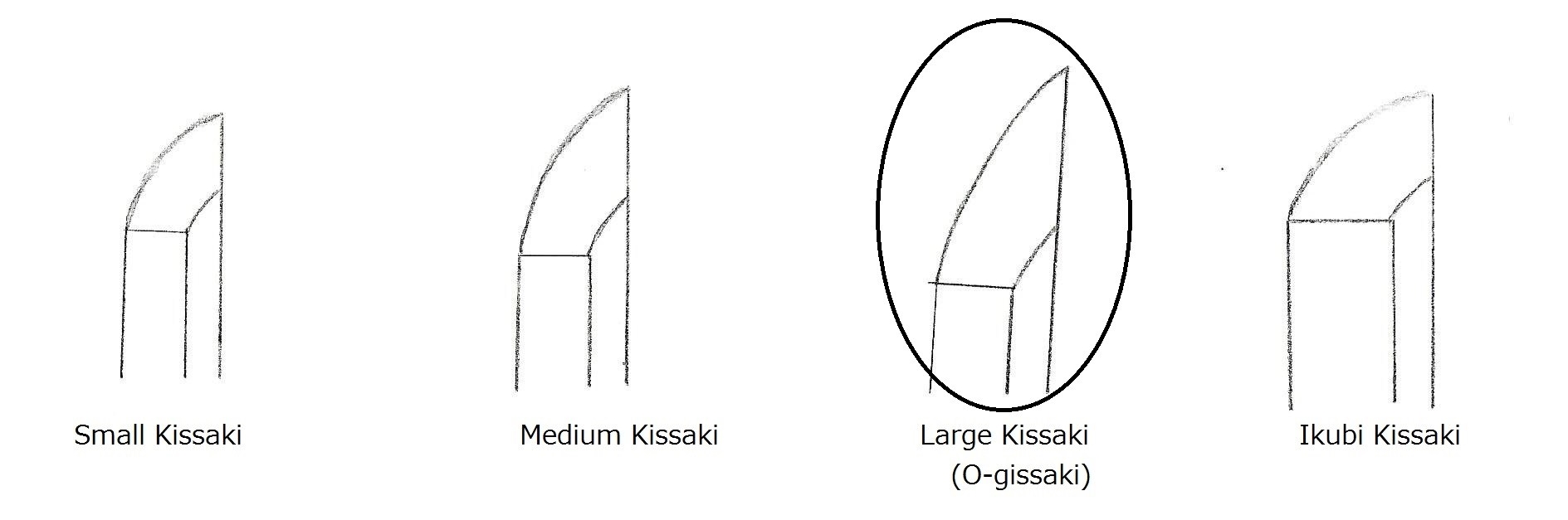

Hamon——————–Narrow Hamon and wide Hamon.
Narrow Hamon ——- A mix of Suguha (straight), Ko-choji (small clove-like pattern), and Ko-gunome (small half-circle pattern). Small Nie base. (shown below)
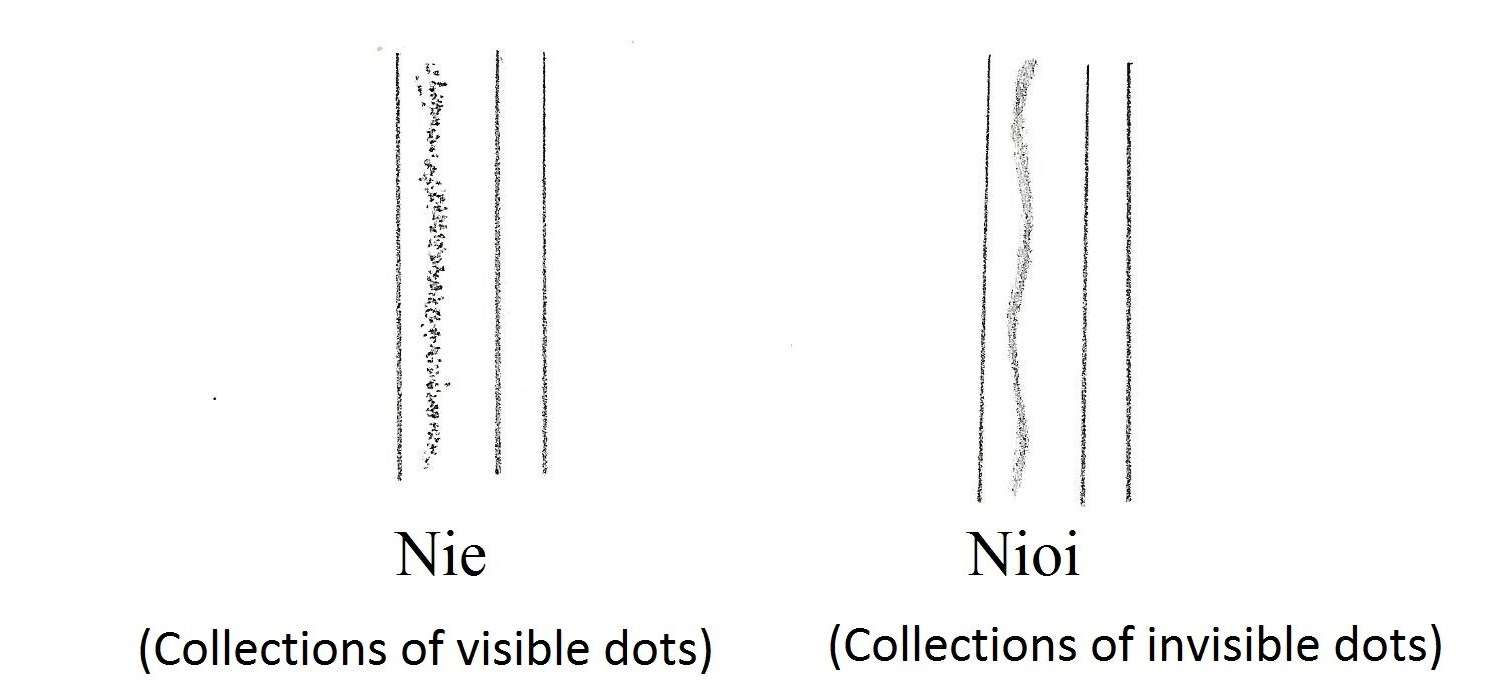
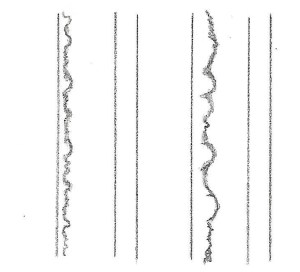
Wide Hamon ——– Notare midare (wavy). O-gunome. Nie base. Ashi-iri (short line toward the blade, the right drawing below). Inazuma (lightning-like line) or kinsuji (bright line) may appear on a tempered line. However, inazuma and kinsuji require trained eyes to detect. It is difficult for beginners to see inazuma or kinsuji.
Boshi————The main body and boshi have the same type of hamon. At the tip of the kissaki, angle it back slightly or yakizume. You might also see o-maru (large round), ko-maru (small round), kaen (flame-like), or nie-kuzure. Yakizume and kaen (Chapter 12).

Ji-hada (between the shinogi and the tempered line) ——-Strong ji-nie (地沸), which are sand-like small dots appearing on the ji (between the tempered line and the mune). Yubashiri (a cluster of ji-nie), kinsuji (a bright, radiant line formed by nie), inazuma (a lightning-like irregular line), or chikei (similar to kinsuji) may appear on the ji-hada.

Late Kamakura Period Soshu School Sword Smiths
From Bizen————–Fukuoka Ichimonji Sukezane (福岡一文字助真) Kunimune (国宗 ) From Yamashiro ————————————–Toroku- Sakon- Kunituna (藤六左近国綱)
The three swordsmiths mentioned above originated the Soshu-den (school) in Kamakura. Later, Tosaburo Yukimitu and his son, the famous Goro Nyudo Masamune, emerged.
More Soshu Den swordsmiths other than above
From Yamashiro (山城)———- Rai Kunitsugu (来国次), Hasebe Kunishige (長谷部国重) From Etchu (越中) province ———————Gou- no-Yoshihiro (郷義弘) Norishige (則重) From Mino (美濃) province ——————————————-Kaneuji (兼氏) Kinjyu (金重) From Chikuzen (筑前) province —————————————————-Samoji (左文字)


Goro Nyudo Masamune (正宗): his hamon is like ocean waves. (Sano Museum permission granted)

Masamune (政宗) Yoshioka Ichimonji (吉岡一文字)
Once owned by my family
 Study of Japanese Sword