
The circle indicates the time we discuss in this chapter.
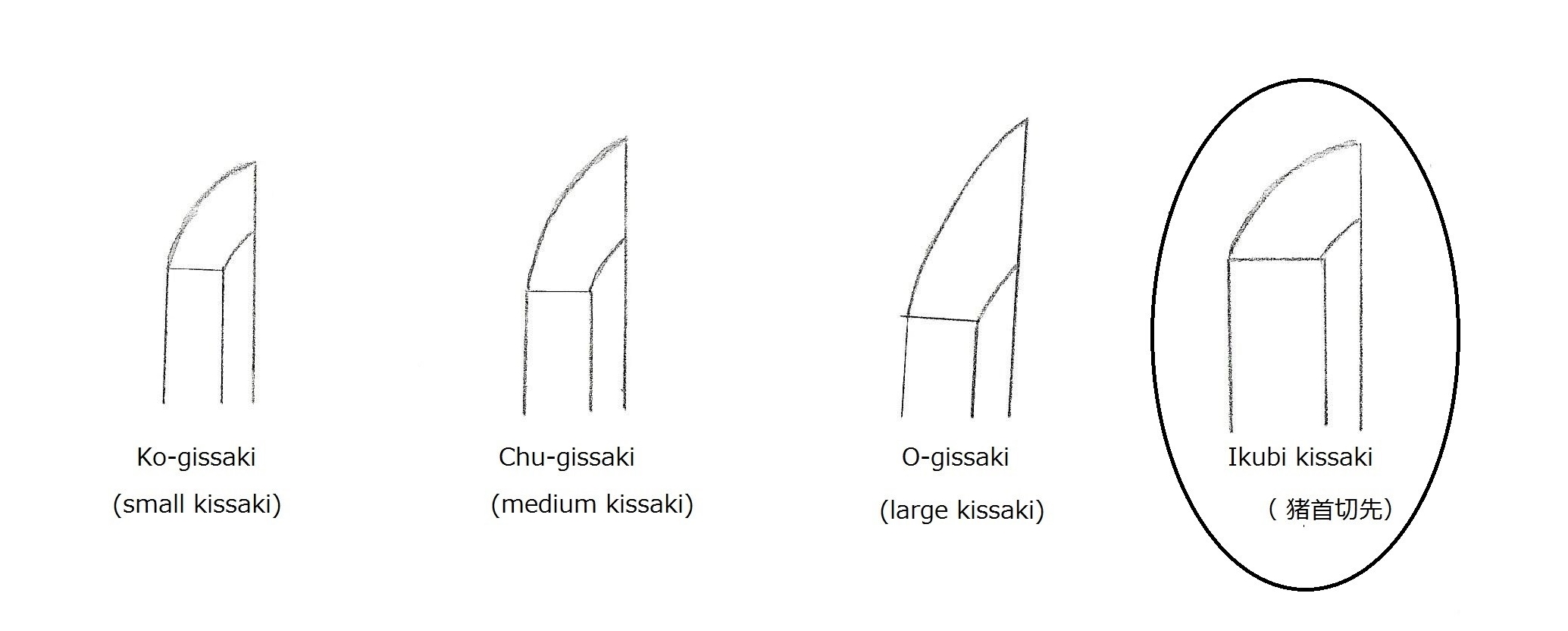
Through the experience of the Jokyu-no-ran war (Chapter 10), the design of swords shifted to a wider, sturdier, and more impressive style. The swords made around this time are called “ikubi-kissaki. “ Ikubi means a wild boar’s neck. The kissaki area of ikubi-kissaki-style swords resembles a boar’s neck, with a somewhat stout appearance.
The middle Kamakura period was the golden age of Japanese sword-making. Many top swordsmiths created exceptional swords during this time. Experts agree that there are no mediocre swords among Ikubi-kissaki swords.
IkubiKissakiSword 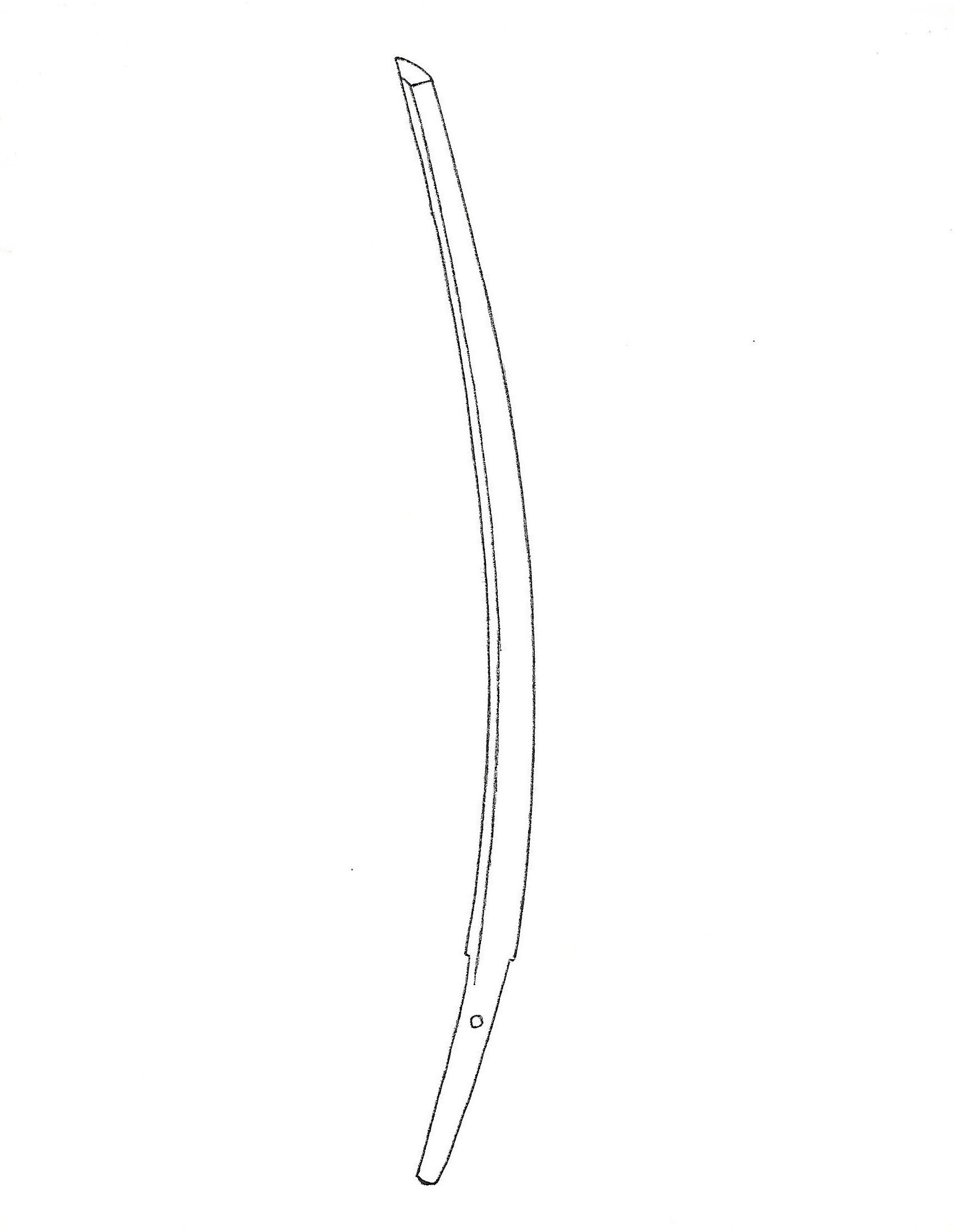
SUGATA (shape) —————— Originally 3 feet or longer, these blades were often shortened in later years. Wide width. Thick kasane (thick body) with hamaguri-ha, meaning the sword’s cross-section is shaped like a clam. The difference in width between the near yokote line and the machi is minimal. The shinogi is high and narrow. The cross-section of an Ikubi-kissaki sword is shown below.

KISSAKI ————- Ikubi-kissaki. Ikubi means the neck of a wild boar. It is thick, short, and stout in appearance. Kissaki is short and wide at the yokote line. The illustration below shows an exaggerated image of an Ikubi-kissaki.
Hamon (刃文) —— Kawazuko-choji (tadpole-head shape pattern). O-choji (large clove-shape pattern), ko-choji (small clove-shape), a mixture of o-choji and ko-choji, or suguha-choji. Suguha-choji features a straight line combined with a choji (clove-shape) pattern.
 Kawazuko-choji O-choji Ko-choji Suguha-choji (tadpole head) (large clove) (small clove) (straight and clove)
Boshi (鋩子) ——Yakizume: the hamon ends almost at the tip of the kissaki, with no return. Sansaku Boshi: the hamon narrows at the yokote line, created by Nagamitsu (長光), Kagemitsu (景光), and Sanenaga (真長). See below for Yakizume and Sansaku Boshi.

Yakizume 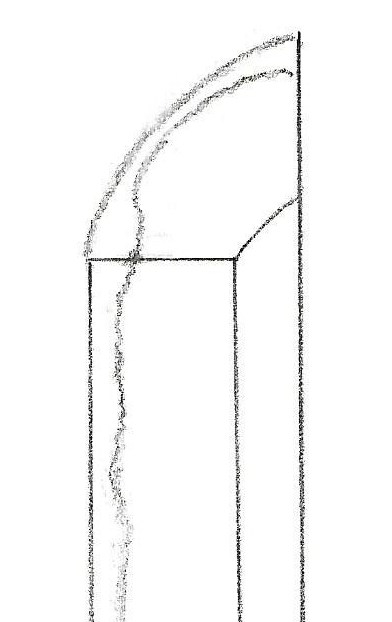 Sansaku-boshi
Ikubi Kissaki Sword Smiths
Fukuoka Ichimonji Group (福岡一文字) —————Fukuoka Ichimonji Norimune (則宗) Kamakura Ichimonji Group(鎌倉一文字) ———— Kamakura Ichimonji Sukezane (助真) Soshu Bizen Kunimune Group(相州備前国宗)——– Soshu Bizen Kunimune (国宗)Bizen Osafune Group(長船)——————Bizen Osafune Mitutada(長船光忠) Nagamitsu(長光) Ugai Group————————————————————————- Ugai Unji (鵜飼雲次)
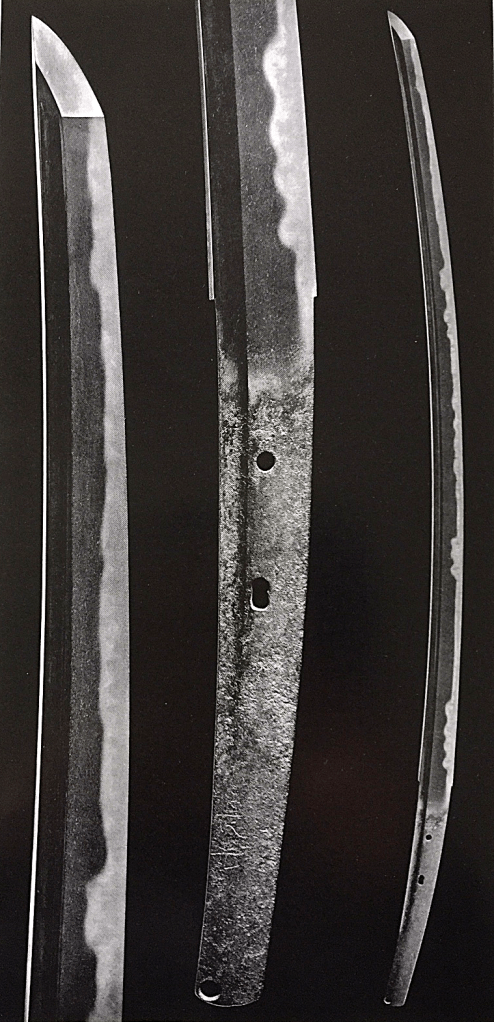
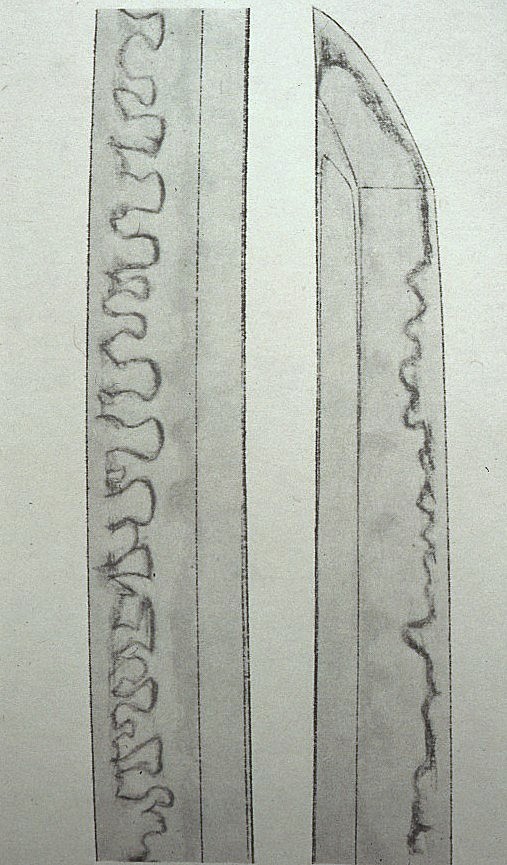
Osafune Nagamitsu(長船長光) From Sano Museum Catalogue (permission granted)
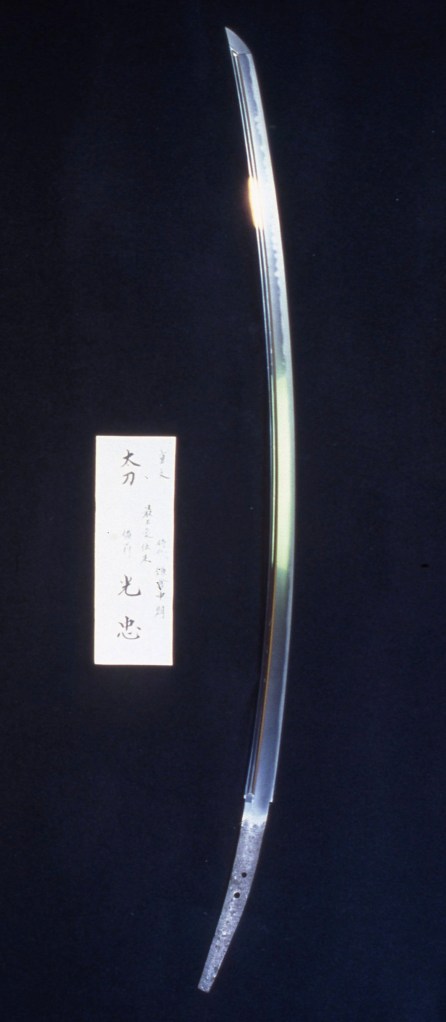
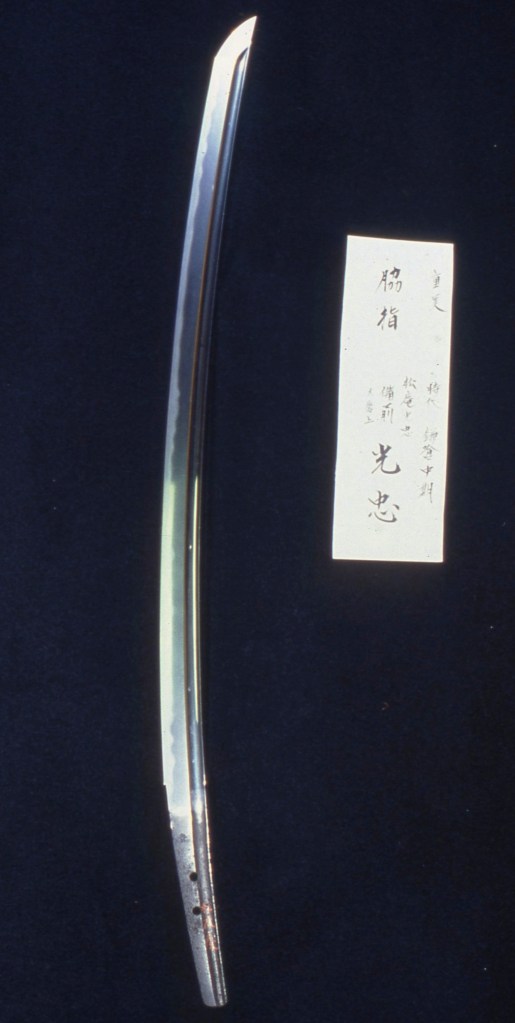
Osafune Mitsutada(長船光忠) Osafune Mitsutada(長船光忠)
Once my family sword. My father did the calligraphy and took these pictures for himself.
 Study of Japanese Sword