This chapter is a detailed part of Chapter 9. Please read 9 | Middle Kamakura Period (Bizen Den) 鎌倉中期備前伝 before reading this chapter.

The red circle indicates the time we discuss in this section
The middle Kamakura period marked the height of the Bizen-den. In many regions outside Bizen, sword styles often reflected local preferences and politics in specific areas. However, the Bizen sword has its own style and has not been significantly influenced by these elements throughout time. The clients of Bizen swords come from across the country. Therefore, Bizen swordsmiths created swords that appealed to everyone.
The general style of Bizen Den
- In general, their style appeals to everyone.
- The shape, the width of the blade, the thickness of the body, and the tempered line are of standard size or usual design, rarely out of the ordinary.
- Nioi base
- Soft feeling Ji-gane (steel)
- Utsuri (cloud-like shadow) appears.
- The tempered line tends to have a consistent width, neither too wide nor too narrow.
Fukuoka Ichimonji group
Names of swordsmiths among the Fukuoka Ichimonji group
Fukuoka Ichimonji Norimune (福岡一文字則宗) and Fukuoka Ichimonji Sukemune (福岡一文字助宗) were the leading swordsmiths of the Fukuoka Ichimonji group (福岡一文字). From this group, six swordsmiths, including Norimune and Sukemune, received the honor of “Gobankaji” from Emperor Gotoba (後鳥羽上皇). I saw Fukuoka Ichimonji Muneyoshi (福岡一文字宗吉) in Mori Sensei’s class on June 25, 1972. My notes pointed out a lot of utsuri (shadows) on the blade.
Sugata (shape) ——————- A graceful and elegant shape. Generally, it has well-balanced proportions. The difference between the top width and the bottom width is minimal. Occasionally, a stout-looking kissaki called ikubi-kissaki appears. (refer to Chapter 11, Ikubi Kissaki (猪首切先)
Hi and Engraving ———–The tip of the hi may follow the ko-shinogi line. See below. The end of the hi goes under the machi, ending with a square or kakinagashi (see Chapter 41)

Hamon ———- Wide ichimonji-choji tempered line. It indicates the consistent width of the tempered line from the bottom to the top. The same hamon appears on both sides. O-choji-midare (large clove-like pattern), juka-choji (overwrapped-looking choji). Nie base. Inazuma and/or kinsuji may appear.
Boshi ————– Same Hamon continues into the Boshi area and ends with Yakizume or turns slightly. Sometimes O-maru.
Jihada ———– A fine and soft appearance. Itame (woodgrain pattern). Lots of utsuri (cloud-like shadow or reflection)
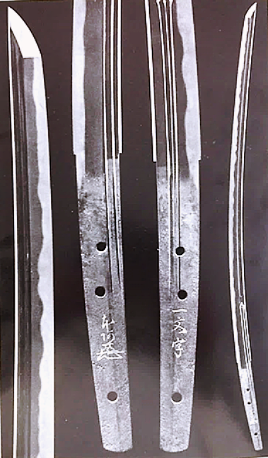
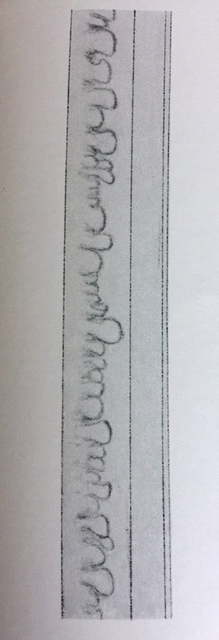
Ichimonji Sano Museum Catalogue (佐野美術館) Permission granted
*The sword above is o-suriage. The end of the hi is lower than the mekugi-ana inside the nakago.
 Study of Japanese Sword