60|Part 2 of – – 26 Overview of Shin-To (新刀概要)

Chapter 60 is a detailed part of Chapter 26, Overview of Shinto (新刀概要).  Please read Chapter 26 before reading this section.

0-timeline - size 24 edo Period

                   The red circle above indicates the time we discuss in this section    

The difficulty of Shin-to Kantei

Regarding swords from the ko-to period, you can estimate when they were made by analyzing their style and shape.  Several factors indicate which period and which Gokaden (五ヶ伝) created the sword by examining several points, such as the appearance of the hamon or the appearance of the ji-gane.  However, swords from the shin-to period do not follow this method.     

Although there are differences among shin-to swords made during the early Edo period, around the Keicho (慶長: 1596 ~) era, the middle Edo period, that is around the Kanbun (寛文: 1661 ~) era, and the late Edo period, that is the Genroku era (元禄: 1688 ~), these differences are not much. 

The same applies to the Gokaden (五ヶ伝) during the shin-to period.  In the ko-to time, Bizen swordsmiths forged swords with Bizen characteristics.  Swords made by Yamato swordsmiths usually showed the Yamato-den features.  However, during the shin-to period, a swordsmith from one specific den sometimes forged blades in the style of another den’s featuresAs a result, it is difficult to determine the maker of a particular sword. 

For shin-to, we will study the characteristics of the seven main locations, which will be discussed in the following chapters.

Picturesque Hamon

During and after the Genroku era (元禄1688 – 1704), some picturesque hamon style became trendy.  Several swordsmiths created picturesque hamon on wakizashi and short swords.  As it gained popularity, especially among foreigners, most of these swords were exported from Japan during the Meiji Restoration.  Today, very few remain in Japan.

The swordsmiths who made picturesque  Hamon 

Yamashiro (山城) area ———————————-Iga-no-kami Kinmichi (伊賀守金道),                                                                                       Omi-no-kami Hisamichi (近江守久道)

Settsu (摂津) area ———————————Tanba-no-Kami Yoshimichi  (丹波守吉道)                                                                                 Yamato-no-Kami Yoshimichi (大和守吉道)

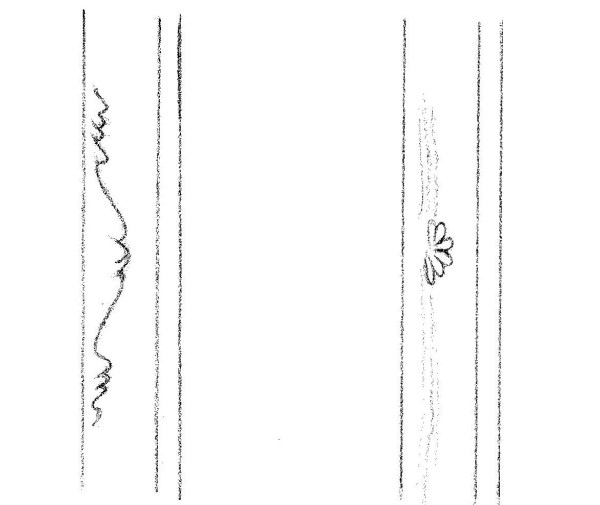
Below are examples.  Fuji is the Mount Fuji designKikusui is a chrysanthemum in the water.
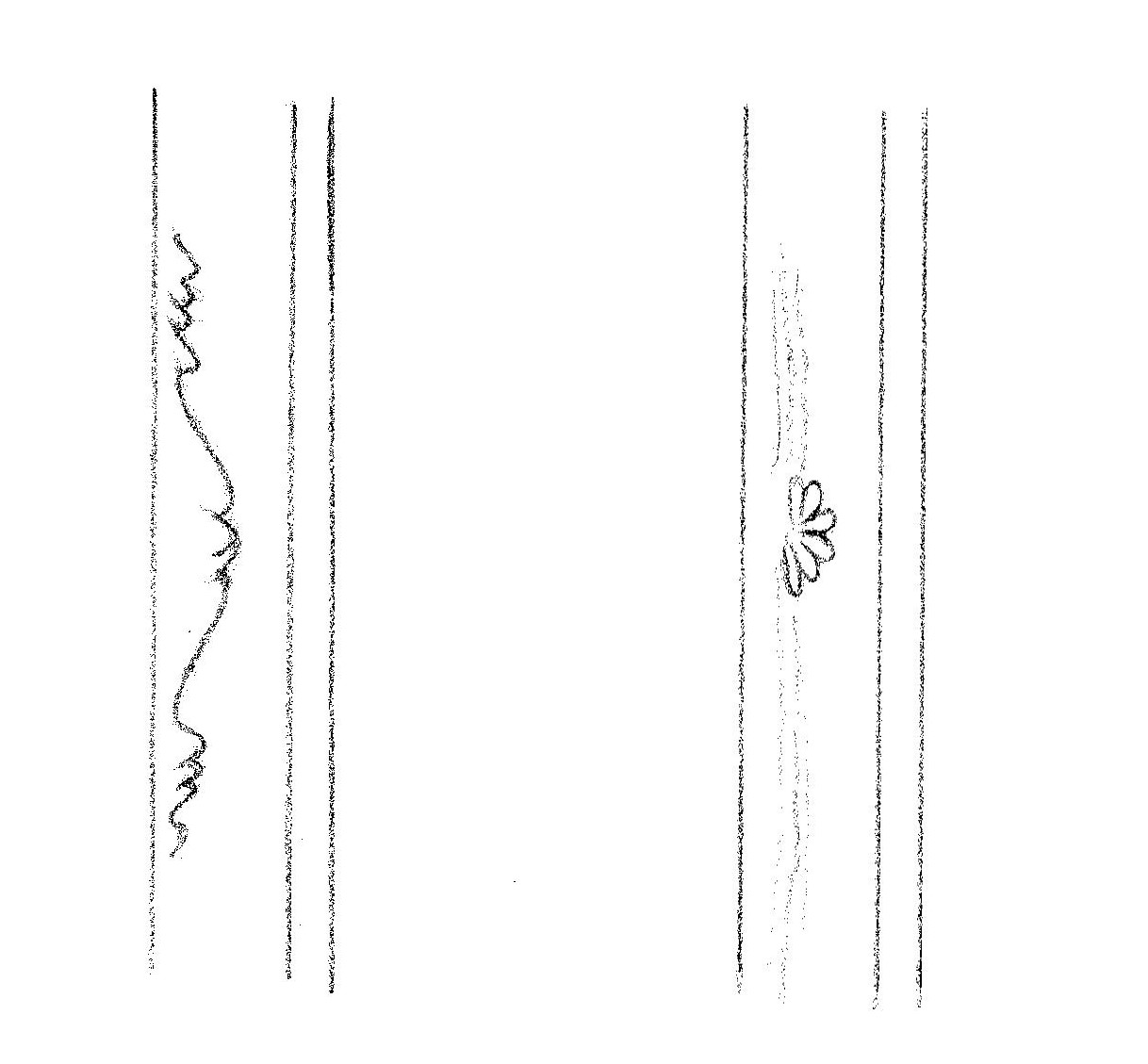
63 fuji sakura hamon

        Fuji                                      Kikusui

26 |Over view of Shinto (新刀概要)

                                   
0-timeline - size 24 Shin-to
                           The circle indicates the subject discuss in this section 

The previous chapter 25 stated that the Edo period lasted from 1603 to 1868.  This is for political history.  The third timeline above shows that the Momoyama period overlaps with the Edo period.  Some people believe the Momoyama period was from 1573 to 1600. In general history, there are several opinions on how to divide these transitional periods.  For sword history, it is straightforward.  Swords made between approximately 1596 (慶長: Keicho era) and 1781 (天明: Tenmei era) are called shin-to.  Swords made between the Tenmei and Meiji eras are referred to as shin-to. 

After Toyotomi Hideyoshi nearly unified the country, the people could enjoy a period of peace.  This period of peace shifted the geographic distribution of swordsmiths. There were three main regions where sword forging took place.  These areas include Kyoto, Osaka, and Edo (Tokyo now).  The remaining swordsmiths gathered near the castles of major daimyo (大名: feudal lords).

Kyoto—- The Umetada Myoju (梅忠明寿) group thrived, followed by swordsmiths such as  Horikawa Kunihiro (堀川国広), Kunimichi (国路), Kunisada (国貞), and Kunisuke (国助).

Osaka——–Osaka was established as a commercial city and became the center of commerce.  It produced swords and distributed them to other regions across the country.  The well-known swordsmiths in Osaka: Tsuda Sukehiro (津田助広) and Inoue Shinkai (井上真改).

Edo————-Many swordsmiths gathered in Edo (江, now Tokyo), where Shogun Tokugawa Iyeyasu livedThe well-known swordsmiths in EdoNagasone Kotetsu (長曽祢虎徹), Yasutsugu (康継), Noda Hannkei (野田繁慶).

By the time Tokugawa Iyeyasu’s grandson, Tokugawa Iyemitsu, became shogun (寛永:Kan’ei era 1624 – 1643), swordsmiths had spread beyond the three areas mentioned above.  In each daimyo territory, swordsmiths operated shops near the castles to meet the needs of the daimyo and their subjects.  By the Genroku era (元禄: 1695), sword-making had declined, and people preferred more picturesque hamon designs, such as kikusui (菊水: flower design) and fujimi (富士見: Mount Fuji).

63 fuji sakura hamon
Fujimi                           Kikusui

Difference between Koto  and Shinto 

The following section describes the differences between Ko-to and Shin-to.   However, remember that there are always exceptions to these rules.

  1. The length of the shin-to katana is typically about two feet three inches ± a little.  The wakizashi is about one foot six inches.   Shallow curvature.  Wide width.  Thick body.   Gyo-no-mune.  Chu-gissaki with a slightly stretched appearance.

13 Mune drawing

  1. The ko-to sword feels light, while the shin-to feels heavy.
  2. The bottom of the hi is rounded above the machi. Shin-to’s bo-hi ends slightly below the yokote line.

27. Hisaki & marudome

  1. Generally, carvings are less common on shin-to. However, some swordsmiths are famous for their carvings.  The designs are refined and detailed.  Umetada Myoju (埋忠明寿) is well-known for his carvings.
  2. For shin-to, if it is mainly nie, it is usually a coarse nie.
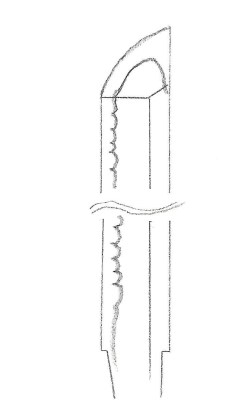
  3. In the machi area, the hamon begins with a straight tempered line (the bottom part of the blade shown in the illustration below), followed by midare, or various types of hamon in the middle, and ends with suguha (straight hamon) in the boshi area (the top part).  Generally, this is the standard Hamon style of shin-to, but there are always exceptions. 

27 Keshou Yasuri & suguha

  1. For shin-to, the type of iron used for the blade is consistent throughout Japan.  A few variations of iron were used across Japan, with a very hard, dark color and a glossy look.
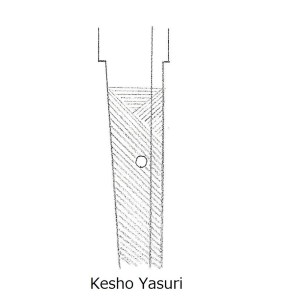
  2. The nakago has a well-balanced shape.  The bottom of the nakagotapers gradually.  The type of yasuri-me (file mark) is often a kesho-yasuri. Engraved inscriptions display the swordsmith’s name, location, province, and year of creation.

27 Keshou Yasuri & suguha