 The circle indicate the time we discuss in this section
The Kamakura period (鎌倉) was the golden age of sword making. Many valuable swords we have today were made during this time. The war between the Gejii and Heishi clans demanded more swords and more swordsmiths in the late Heian period.
Throughout and after the Genpei-Gassen (源平合戦: the final battle between the Genji and the Heishi), sword-making techniques improved considerably. Also, Emperor Gotoba encouraged sword-making and treated swordsmiths with respect. As a result, swordsmiths in the Kamakura era produced numerous valuable swords. Since sword styles varied a lot during this period, they are usually divided into three chronological groups: swords from the early, middle, and late Kamakura periods.
The name of the Kamakura period comes from the city called Kamakura, where the leader of the Genji clan, Minamoto-no-Yoritomo (源頼朝), established a new government, the Kamakura bakufu (鎌倉幕府).
Kamakura Bakufu (鎌倉幕府)
At the end of the Heian period, the Genji and the Heishi (also known as the Heike) were the two main powerful samurai clans. After their first battle, the Heishi killed the Genji’s top leader and banished his young son, Minamoto-no-Yoritomo (源頼朝), to Izu Island. For the people of Kyoto at that time, Izu Island was a remote place with limited transportation in those days.
The Heishi rose to the top of society. They were so powerful that it was once said, “If you are not a part of the Heishi, you are not human.” Such arrogant people, however, naturally created many enemies.
Meanwhile, Yoritomo grew into a fine young man on the island. He met Hojo Masako (北条政子), the daughter of a minor local official, Hojo Tokimasa of Izu Island, and married her. Eventually, Yoritomo gathered an army with help from his wife’s family and his Genji relatives. They fought against the Heishi, drove them out of Kyoto, and won the war. This marked the end of the Heian period in 1185. As a result, Yoritomo became the shogun in 1192, and political and military power shifted from Kyoto to Kamakura.
The imperial court and aristocrats remained in Kyoto. While the Kamakura bakufu (government) held military, police, and political power, the imperial court had administrative authority. Although they appeared to be two major rivals, they governed different aspects of the country’s affairs and maintained a balance with one another.
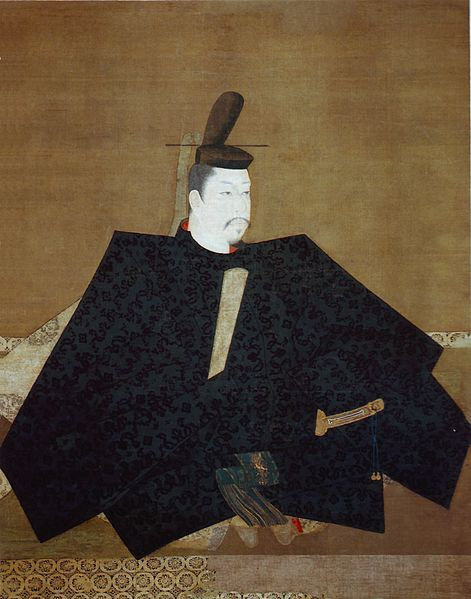
![7 Taira_no_Kiyomori,TenshiSekkanMiei[1]](https://studyingjapaneseswords.com/wp-content/uploads/2017/10/7-taira_no_kiyomoritenshisekkanmiei1-e1576620323401.jpg?w=538)
From Wikimedia Commons, the free media repository: Taira-no-Kiyomori, painted in the 14th century by Fujiwara Tamenobu, owned by the Imperial Household Agency.
 Study of Japanese Sword