
The red circle indicates the area we discuss in this chapter
It is rare to find a tanto (短刀 dagger) made during the Heian period. During the middle Kamakura period, many high-quality tanto were produced. They were called takenoko-zori shaped tanto, with “takenoko” meaning bamboo shoot. The back of the tanto curves inward slightly.
Middle Kamakura Period Yamashiro School Tanto

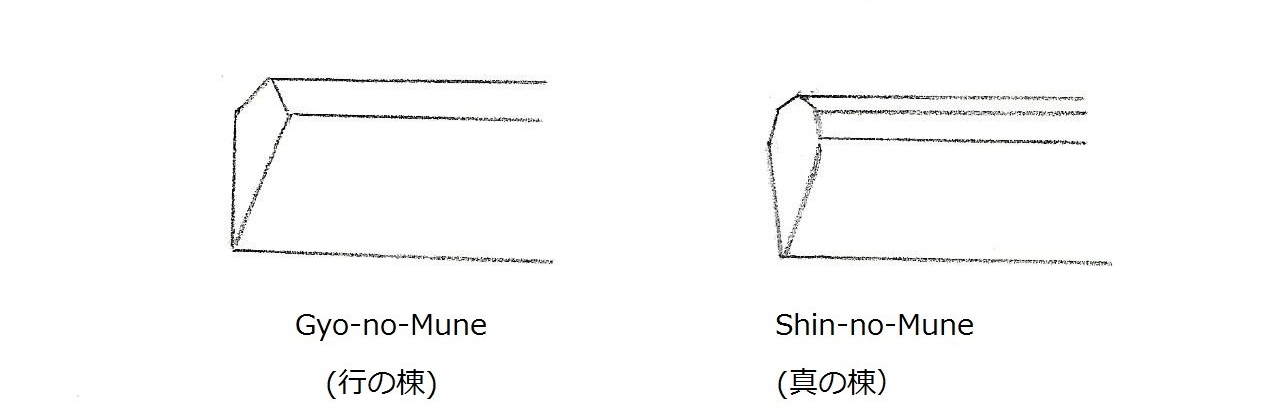
Sugata (shape)———-Hirazukuri. This means there is no shinogi, no yokote line. See the illustration above. The standard tanto length is approximately ten inches. The width is neither too wide nor too narrow, making it well-proportioned. The body is slightly thick. High gyo-no-mune (行の棟) and shin-no-mune (真の棟).
Hamon (刃文) ——————— The tempered area is narrow. Nie base. Suguha-midare (a straight-line pattern with an irregular wavy shape) or suguha-choji (a straight-line pattern with small choji). The tempered edge line may display a frayed pattern.
Boshi(tempered line at Kissaki area) ———Yakizume, Kaen, Nie-kuzure.

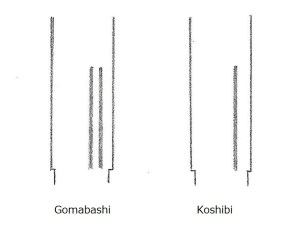
Engravings (彫刻) ———- Often, various types of engravings are applied to the lower part of the body. These may include one or two grooves, Sanskrit, suken (spear), dragon, etc. For the Sanskrit and spear, refer to the illustration in Chapter 8.
Tanto Swordsmiths in the Middle Kamakura Period
Awataguchi group(粟田口)———————————Awataguchi Yoshimitu (粟田口吉光) Rai group (来) ——————————————————————-Rai Kunitoshi(来国俊) Soushu Group (相州) ——————————————Shintougo Kunimitu (新藤五国光) Bizen group (備前) —————————————————— Bizen Kagemitu (備前景光) Bungo no Kuni Group (豊後の国) ——————–Bungo-no-kuni Yukihira (豊後の国行平)
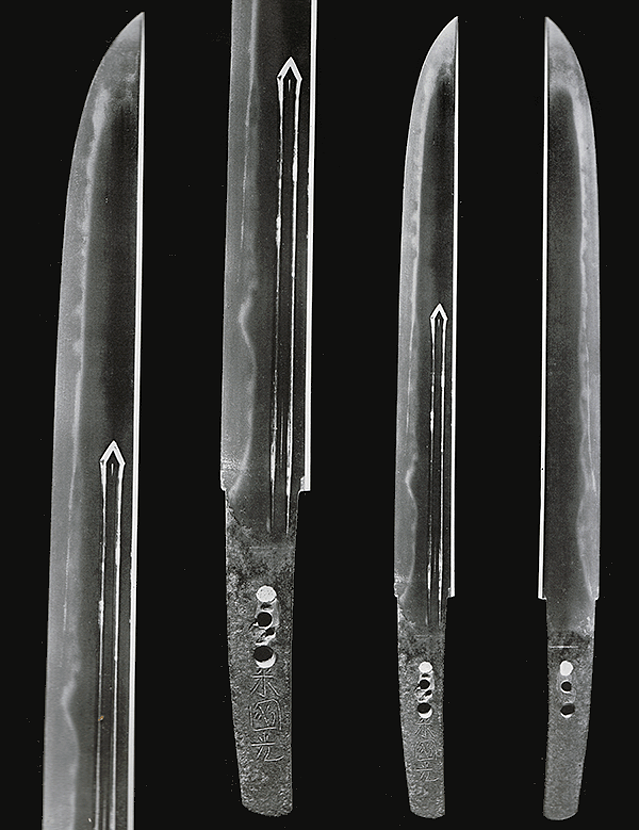 来国光(Rai Kunimitsu)
This Photo by an unknown author is licensed under CC BY-SA Creative Commons Free Media Attribution-Share Alike 3.0 Unported (CC BY-SA 3.0)

 Study of Japanese Sword
YURIE-SAN;
congratulations! You started a very good work which will be helpful for many collectors! Did you ever think of publishing this in book form? Then a review of a native English speaker might be helpful. Also, some terms should be looked upon more closely. An example:
13|Tanto (dagger 短刀) Middle Kamakura Period
Dagger always have two cutting edges, so ‘fighting knife’ might be more appropriate as translation for TANTO.
Kind regards, from Germany,
Jean Collin
P.S. I am a longtime collector of TSUBA and a fewJapanese blades. My profession is classic blade smith and experimental archaeologist.
LikeLike
Thank you very much for your comment. I really appreciate it. Sorry to be late to answer to your comment.
In the beginning, I was hoping someday I can publish in book form, but I am losing the confidence. When I read back my old chapter, I am not sure if it is worth continue writing. But I came this far, I will continue to the end. I am looking into somebody who does edit in good English. Thank you very much for your comment.
Yurie
LikeLike