54|Part 2 of — 20|Muromachi Period History (室町時代歴史)

This is a detailed section of Chapter 20, Muromachi Period History.  Please read Chapter 20 before reading this part.


0-timeline - size 24 Nuromach & Sengoku

                      The red circleabove indicate the time we discuss in this chapter

Until the Muromachi (室町) period, the study of political history and sword history ran in parallel.  The timelines above show that the middle line represents sword history, and the bottom line represents political history.  

The styles of swords were distinctly different between the Muromachi and Sengoku periods (戦国時代).  Therefore, for sword study, the Muromachi and Sengoku periods should be separated.   Japanese history textbooks define the Muromachi period as 1393 (the end of the Nanboku-cho) to 1573, when Oda Nobunaga (織田信長) deposed Shogun Ashikaga Yoshiaki (足利義昭) from Kyoto (the fall of the Muromachi bakufu).   In these textbooks, the Sengoku period is considered part of the Muromachi period.  However, we need to distinguish between the Muromachi and Sengoku periods for the study of swords.

 Ashikaga Yoshimitsu (足利義満)

The best period during the Muromachi era was when Shogun Ashikaga Yoshimitsu (足利義満: grandson of Ashikaga Takauji) was in power.  He moved the bakufu to Muromachi (室町) in Kyoto; therefore, this era is called the Muromachi period.  By the time most of the South Dynasty’s samurai had surrendered to the North Dynasty, the South Dynasty had accepted Shogun Yoshimitsu’s offer to stop fighting against the North.  This acceptance established the Ashikaga family’s power within the Muromachi Bakufu

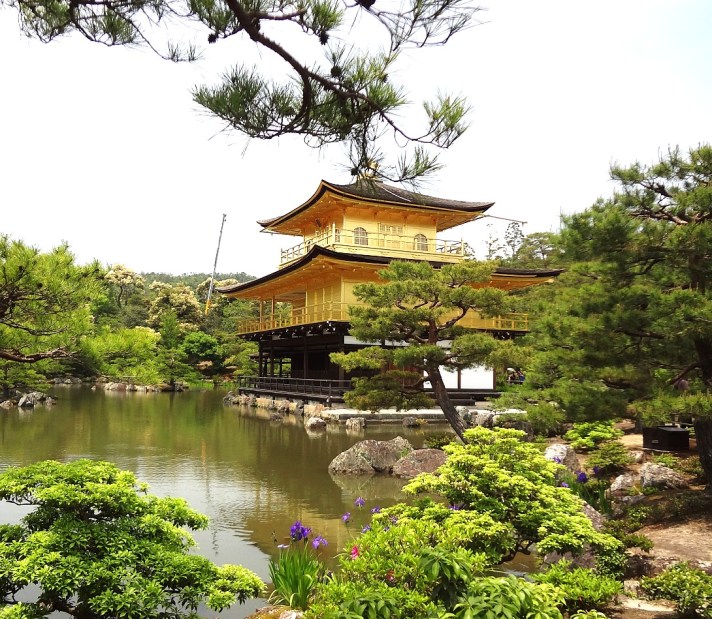
Shogun Ashikaga Yoshimitsu generated tremendous profits from trade with China (Ming). He built a famous resort villa in Kyoto, the Golden Pavilion (Kinkaku-ji Temple 金閣寺*). It is believed that he created the Golden Pavilion to display his power and wealth. The beautiful culture known as Kitayama Bunka (Kitayama culture 北山文化) flourished during this period.

*Golden Pavilion (金閣寺: Kinkaku-ji Temple) —– Its official name is Rokuon-ji Temple (鹿苑寺).  Saionji Kintsune (西園寺公経) originally built it as his resort house during the Kamakura period.  Shogun Yoshimitsu acquired it in 1397 and turned it into his villa.  He also used it as an official guesthouse. 

After Shogun Yoshimitsu’s death, the villa was converted into Rokuon-ji Temple.  It is part of the Rinzaishu Sokoku-ji Temple, which served as the main temple of a Zen sect denomination, called the Rinzaishu Sokoku-ji group (臨済宗相国寺派).  Kinkaku-ji is a reliquary hall that contains relics of the Buddha.  Kinkaku-ji Temple represents the grand Kitayama Bunka (Kitayama culture).  In 1994, it was designated a UNESCO World Cultural Heritage Site. https://www.shokoku-ji.jp/kinkakuji/


57 Kinkakuji trip 2019                                                               My photo  May 2019,

Ashikaga Yoshimasa (足利義政)

After the death of Shogun Ashikaga Yoshimitsu (足利義満), the Muromachi bakufu became less financially stable, and its military power declined.  Consequently, the daimyo (feudal lords) increased their control.  A few generations after Shogun Yoshimitsu, Ashikaga Yoshimasa, the eighth Shogun, took power.  His wife was the well-known Hino Tomiko (see Hino Tomiko in Chapter 20, Muromachi Period History). 

It is said that Shogun Yoshimasa was not interested in his role as shogun; instead, he was more interested in art and culture.  He laid the foundation for today’s Japanese art and culture, including the Japanese garden, Shoin-zukuri (書院造) interior design, the tea ceremony, flower arrangements, painting, and other art forms.  His cultural influence is known as Higashiyama Bunka (Higashiyama culture (東山文化).  

As described in Chapter 20, Muromachi Period History (室町時代), Shogun Yoshimasa did not have any children.  His brother Yoshimi (義視) was expected to become the next Shogun. However, his wife, Hino Tomiko, gave birth to a son, Yoshihisa (義尚).  Hino Tomiko sought support from Yamana Sozen (山名宗全: a powerful family) to back her son.  Meanwhile, the brother, Yoshimi, was connected with Hosokawa Katsumoto (細川勝元: another powerful family).  The problem was that Shogun Yoshimasa paid too much attention to his cultural pursuits and failed to address the issue he created by not being clear about who should succeed him as Shogun.  He did not hand over the shogunate to either party. 

In 1467, in addition to the succession problem and conflicts of interest among powerful daimyo, a civil war, known as “Onin-no-run (応仁の乱),” broke out.  All daimyo were divided, siding with either the Hosokawa or the Yamana factions.   Eventually, the war spread throughout Japan and lasted more than 10 years.  Finally, in 1477, after the deaths of Hosokawa Katsumoto and Yamana Sozen, Shogun Yoshimasa decided to transfer the shogunate to his son Yoshihisa.  As a result of this war, Kyoto was devastated, and the power of the Muromachi Bakufu declined significantly. 

While all this was happening and people were suffering, Yoshimasa continued to spend money on building the Ginkaku-ji Temple (銀閣寺: The Silver Pavilion).  He died before seeing the completion of Ginkaku-ji Temple.  The Onin-no-ran would lead to the next Sengoku period, a 100-year-long Warring States period.

*Shoin-zukuri (書院造)———- A traditional Japanese residential interior style with Tatami mats, a nook, and shoji screens (sliding doors).  This style forms the basis for interior design in modern Japanese homes.

Shoin Zukuri style Japanese room

57 Shoin zukuri

Public Domain   GFDL,cc-by-sa-2.5,2.0,1.0 file: Takagike CC BY-SA 3.0view terms      File: Takagike Kashihara JPN 001.jpg

My japanese room                                                                      My Japanese room

51| Part 2 of — 17 Nanboku-Cho Period History 1333 – 1392 (南北朝歴史)

This chapter is a detailed part of Chapter 17|Nanboku(Yoshino) Cho Period History (1333-1392).  Please read Chapter 17 before reading this section.

0-timeline - size 24 Nanboku-cho

                      The red circle above indicates the time we discuss in this section

The Nanboku-cho period (1333 – 1392) was between the fall of the Kamakura bakufu and the beginning of the Muromachi bakufu.  It was a time when the Northern and Southern Dynasties coexisted.  Around the time of the Mongolian invasion, Emperor Go-saga died without naming a successor.  Because of that, his two heirs and their family lines, the Daigakuji-to (大覚寺統) and the Jimyoin-to (持明院統), alternately assumed the imperial position after Emperor Go-saga‘s death.  This system was politically unstable.  Additionally, many inconvenient problems arose; for example, while one emperor was still very young, the next-in-line emperor died young from a head injury while playing on a slippery stone.

At a time like this, Go-daigo (後醍醐天皇) became the emperor.  He was placed on the throne as a temporary emperor until the young emperors reached maturity.  Around this time, the emperors’ power was declining.  The Kamakura bakufu (government) controlled the emperors.  After the Mongolian invasion, even though typhoons drove the Mongolian troops away, the Kamakura bakufu faced financial troubles due to the costs of war.  Many samurai who fought during the Mongolian invasion did not receive any rewards or compensation for their expenses and were also financially troubled.  All these problems piled up and caused the resentment against the Kamakura bakufu.

Emperor Go-Daigo refused to be merely a placeholder emperor.  He decided to stay as emperor and attack the Kamakura bakufu.  For some reason, the Kamakura bakufu found out about his plans.  Emperor Go-Daigo somehow managed to avoid being accused of being the instigator.  Afterwards, the Kamakura bakufu appointed another heir for the next emperor.  However, Go-Daigo insisted on remaining emperor.  He planned another attack once more.  This time, he had carefully planned and allied with prominent, powerful temples in Yamato (Nara today) since the Kamakura bakufu did not control themRefer to 15 Revival of Yamato Den (大和伝復活)  and 49 Part 2 of– 15 The Revival of Yamato Den. 

This time again, the rebellion plot came to light.  Go-Daigo sneaked out of Kyoto and fought against the Kamakura army.  Although Go-Daigo’s army had fewer soldiers than the Kamakura army, several groups opposing the Kamakura bakufu rose up in various parts of Japan.  Eventually, Go-Daigo was captured and sent to Oki Island (the same place where Emperor Go-Toba was exiled).  

Even after exiling Emperor Go-Daigo to Oki Island, the Kamakura bakufu still had to fight against other uprising groups.  One of the most famous rebels was Kusunoki Masashige (楠正成).  Go-Daigo’s son also actively fought against the Kamakura bakufu and managed to ally with more factions.

More and more people sought to overthrow the Kamakura bakufu.   Even Ashikaga Takauji (足利尊氏), one of the top men of the Kamakura bakufu who fought against Emperor Go-Daigo, betrayed the Kamakura and switched sides, becoming the emperor’s ally.  Meanwhile, Go-Daigo escaped from Oki Island.  More and more uprisings against the Kamakura bakufu increased across the country.  Eventually, the main political center, Rokuhara Tandai (六波羅探題) of the Kamakura bakufu, fell.  Nitta Yoshisada (新田義貞)*, who led another uprising group, attacked Kamakura and won.  The Kamakura bakufu fell in 1333. 

Emperor Go-Daigo initiated a new political system called Kenmu no Shinsei (建武の新政).  However, his new system turned out to be a disaster.  He made great efforts to set things right and drastically changed the old political system.  Yet, this political reform created big unrest.  It was not beneficial for anyone, and no one gained anything.  Ashikaga Takauji (one of the key figures of merit) and his men did not receive any high-ranking positions.  This reform was highly idealistic and too advanced for its time.  It proved disadvantageous for the noblemen.  His new policies only caused chaos and corruption.

Now, Ashikaga Takauji turned against Go-Daigo and defeated him.  Go-Daigo left the Imperial Palace and established a new government in Yoshino, south of Kyoto.         Therefore, it was called the Southern Dynasty.  Meanwhile, Ashikaga Takauji set up a new emperor, Emperor Komyo (光明), in Kyoto and established the Northern Dynasty.     This is how the Northern and Southern Dynasties arose. 

Two dynasties co-existed for about 60 years.  Gradually, many samurai groups moved to the Northern Dynasty, and after Go-Daigo and several of his key men died, the Southern Dynasty weakened.  Eventually, the Southern Dynasty accepted an offer from the Ashikaga side, and the North and South united in 1392.  Throughout these conflicts between the emperor and the Kamakura bakufu, sword styles became broader and longer, reaching 3, 4, or even 5 feet.  Later, most Nanboku-cho (North and South Dynasties) style long swords were shortened.

53 Ashikaga Takauji

Kibamusha (騎馬武者蔵) This portrait was once believed to depict Ashikaga Takauji, but now some claim otherwise. “Public Domain” owned by the Kyoto National Museum

 *Nitta Yoshisada (新田義貞)

When Minamoto-no-Yoritomo established the Kamakura bakufu, he chose the Kamakura area as its center because it is surrounded by mountains on three sides and one side faces the ocean.  This made it hard to be attacked and easier for them to defend themselves.  They built seven narrow, steep roads through the mountains called Kir- toshi (切り通し), connecting with several major cities.  These seven routes were the only roads in and out of Kamakura

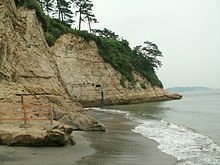
When Nitta Yoshisada attempted to attack Kamakura, he first attempted the land route but failed.  He then approached the town from the ocean side, but the cliff stretched far out into the sea, making it impossible for them to pass.  The legend says that when Nitta Yoshisada reached the area called Inamura Gasaki (稲村ヶ崎), he threw his golden sword into the ocean and prayed.  Then the tide receded, allowing all the soldiers to walk around the cliff on foot.  They charged into Kamakura, and the Kamakura bakufu fell.  There are several different views on this story.  Some scholars argue it is not true; some say it happened, but the date was wrong; others say that an unusual ebb tide occurred that day, and so on.  

Today, Inamura Gasaki in the Shonan area (湘南) is one of the favorite evening dating spots for young people.  The evening view at Inamura Gasaki is beautiful.    The sunset over Inamura Gasaki towards Enoshima (江の島, a small island with a shrine on the hilltop) is stunning.   My parents’ house used to sit above the cliff in an area called Kamakura-yama, overlooking the ocean.

53 Inamura gasaki

Inamura Gasaki      Photo is “Creative Commons” CC 表示-継承 3.0 File: Inamuragasaki tottanbu.jpg    Public domain

20|Muromachi Period History (室町時代歴史)    

0-timeline - size 24 Muromach
                   The red circle iabove ndicates the time we discuss in this section

The Muromachi period started after Ashikaga Takauji (足利尊氏) and several other key leaders ended the Nanboku-cho period.  Discussed in 17|Nanboku-cho Period History (1333-1393).

The grandson of Ashikaga Takauji, Ashikaga Yoshimitsu (足利義満, often called Shogun Yoshimitsu), constructed a beautiful new palace in the Muromachi (室町) area of Kyoto.  The palace became the center of government, known as the Muromachi bakufu (室町幕府: Muromachi government).   This is the beginning of the Muromachi period.  Ashikaga Yoshimitsu also built the famous “Kinkaku-ji Temple” * (Golden Pavilion) in Kyoto as his second residence.

Kinkaku-ji Temple* (金閣寺: Golden Pavilion) —————Ashikaga Yoshimitsu (足利義満) built Kinkaku-ji in 1397.   Later, it became a Rinzai-Shu (臨済宗) Buddhist temple, but it was originally built as the secondary residence of Ashikaga Yoshimitsu and a guest house for official visitors.  Today, it is a designated World Heritage site.  The temple was burned down by an arsonist in 1950 but was rebuilt in 1955.  Novelist Mishima Yukio wrote a novel, “Kinkaku-ji,” which relates to this temple and the arsonist.  A famous quote from his book is, “The ho-oh (a mythic golden bird, a Chinese version of the phoenix) on the roof of Kinkaku-ji Temple is stationary, but it flies through time eternally.”

During the Muromachi period, the emperor’s power declined.  The shogun (将軍) held all the political power.  Gradually, several groups of samurai who were officially appointed as shugo daimyo (守護大名: high-ranking officials) began to gain political and economic power by occupying key positions in the Muromachi bakufu.  They also owned extensive land.  Two powerful shugo daimyo families were the Hosokawa (細川) and Yamana (山名).

The Ashikaga family made great efforts to establish the Muromachi bakufu as a stable and strong government through political measures.  The beginning of the Muromachi period was peaceful and prosperous.  However, by the time Ashikaga Yoshimasa (足利義政) became the eighth shogun, the Muromachi bakufu had become severely corrupt.  Shogun Yoshimasa paid little attention to governing the country.  Instead, he pursued women (his mother scolded him for this), spent large amounts of money building the Silver Pavilion called “Ginkaku-ji Temple (銀閣寺),” and retreated there.  Since Shogun Yoshimasa did not have an heir, his brother, Yoshimi (義視), was appointed as the next shogun.

However, later, Yoshimasa’s wife, Hino Tomiko (日野富子)*, gave birth to a son, Yoshihisa (義尚).  Now, brother Yoshimi (義視) allied with the high-ranking officials, the Hosokawa (細川), while his son, Yoshihisa, allied with another powerful family, the Yamana (山名).  Several smaller samurai groups allied with either side, and the war broke out.  This war, called Onin-no-ran (応仁の乱), occurred in 1467.  It spread across the country and lasted for eleven years.

Hino Tomiko (日野富子)*————————-The wife of Shogun Yoshimasa.  She took advantage of her political privileges to generate substantial income by investing in the rice market, thereby controlling prices and selling at high profits.  Then, she loans this money to high-ranking officials at steep interest rates.  The corruption reached an uncontrollable level.

As a result of the Onin-no-ran, beautiful Kyoto was burned to the ground.  The authority of the Muromachi bakufu only extended to small areas of nearby Kyoto.  The Onin-no-ran led to the next period called the Sengoku period (戦国時代), or the Warring States period.  During the Sengoku period, Japan was divided into approximately thirty small, independent states that fought one another until Oda Nobunaga, Toyotomi Hideyoshi, and Tokugawa Ieyasu unified them.

57 Kinkakuji trip 2019

 The photo was taken in May 2019, a family trip to Kyoto

17| Nanboku-cho Period History 1333-1392(南北朝歴史)

0-timeline - size 24 Nanboku-cho

            The red circle above indicates the time we discuss in this section.

After Jokyu-no-ran (Chapter 10 Jokyu-no-ran), the power of the Imperial Court declined significantly.  The successor, the Hojo clan, which was a dominant force during the Kamakura period, also began to face financial difficulties and began to lose control over regional lords.  One reason was the costs incurred by the Mongol invasion.  The Kamakura bakufu (government) could not adequately reward the samurai who fought hard during the war.  As a result, they became very dissatisfied with the bakufu.  Seeing this as an opportunity, Emperor Go-Daigo attempted to attack the Kamakura bakufu twice but failed both times.  He was exiled to Oki Island.  In the meantime, Ashikaga Takauji (足利尊氏) and several groups of anti-Kamakura samurai gathered armed forces and succeeded in destroying the Kamakura bakufu in 1333.  This war ended the Kamakura period.                                                                                                                                                  

Emperor Go-Daigo, who had been exiled to Oki Island, returned to Kyoto and attempted political reforms.  This reform was known as Kenmu-no-chuko (or Kenmu-no-shinsei, 建武の中興).  However, his reforms failed to satisfy most of the ruling class.  Seeing an opportunity, Ashikaga Takauji attacked the Imperial Court in Kyoto, deposed Emperor Go-Daigo, and installed a member of a different branch of the Imperial family as emperor. 

Emperor Go-Daigo, however, insisted on his legitimacy, moved to Yoshino in the south of Kyoto, and established another Imperial court.  Thus, the Northern and  Southern Dynasties began.  With much strife between these rival courts and internal problems within each court,  more samurai groups began to move to the Northern Dynasty.  About sixty years later, the Southern Dynasty was forced to accept the Northern Dynasty’s proposal.  Consequently, the Northern Dynasty became the legitimate imperial court.  This sixty-year period is referred to as the Nanboku-cho or Yoshino-cho period. 

During the Nanboku-cho period, samurai preferred longer, more elaborate, yet practical swords.  The Soshu-den was at the height of its prominence.  However, the Soshu group was not the only one to produce Soshu-den-style swords.  Other schools and provinces in different areas also made Soshu-den-style swords.

Late Kamakura Period Swordsmiths (Early Soshu-Den time)

  • Tosaburo Yukimitsu (藤三郎行光)  
  • Goro Nyudo Masamune (五郎入道正宗)     
  • Hikoshiro Sadamune (彦四郎貞宗)

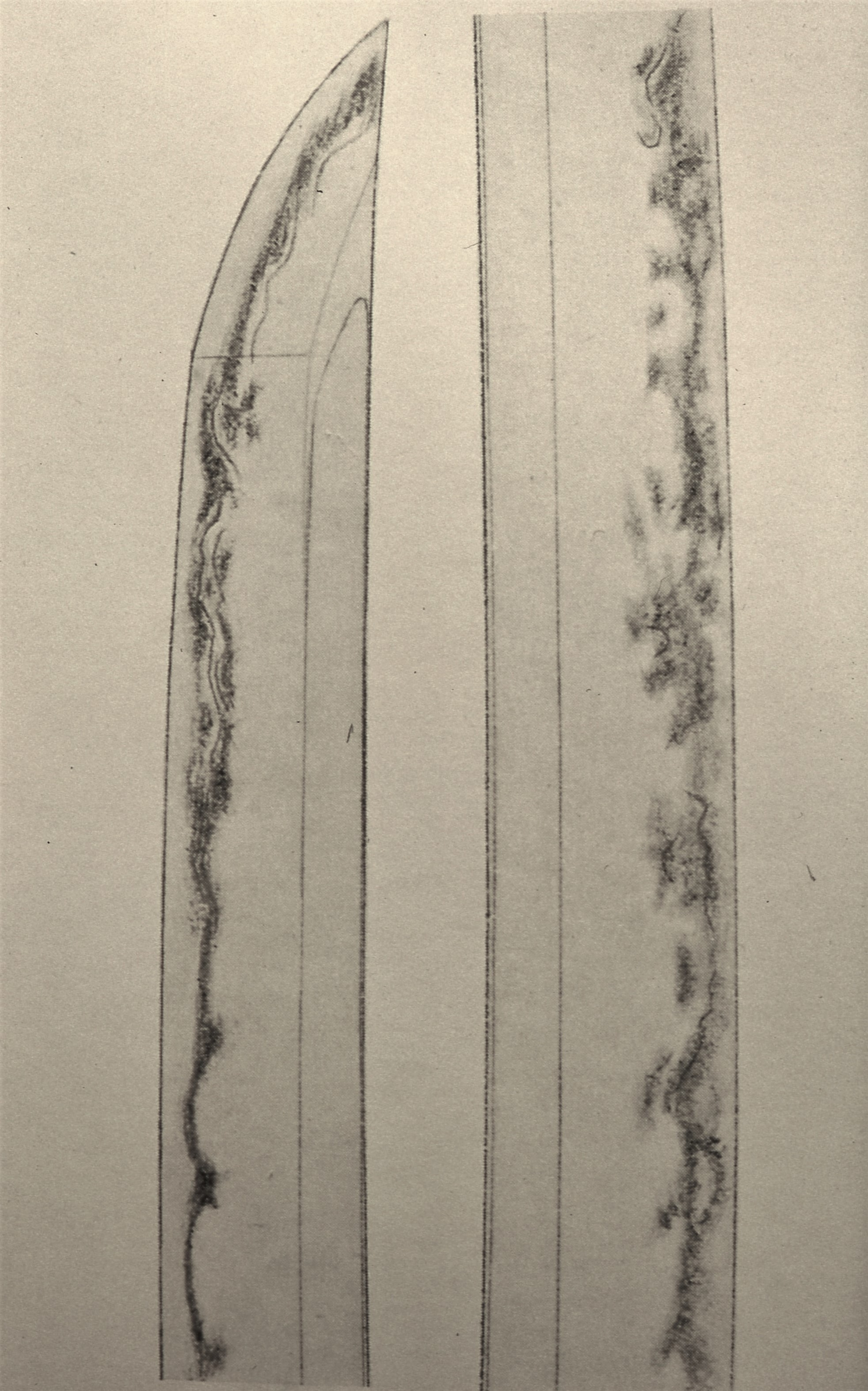
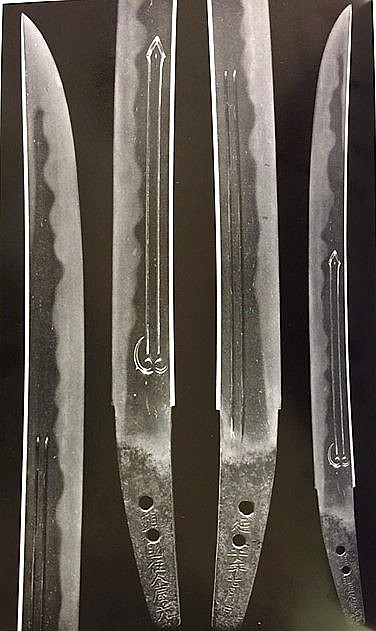
 17 Masamune hamon (Sano)             Masamune from Sano Museum Catalog (permission granted)
Nanboku-cho Period Swordsmiths  (Middle Soshu-Den time)

  • Hiromitsu (広光)   
  • Akihiro (秋広)

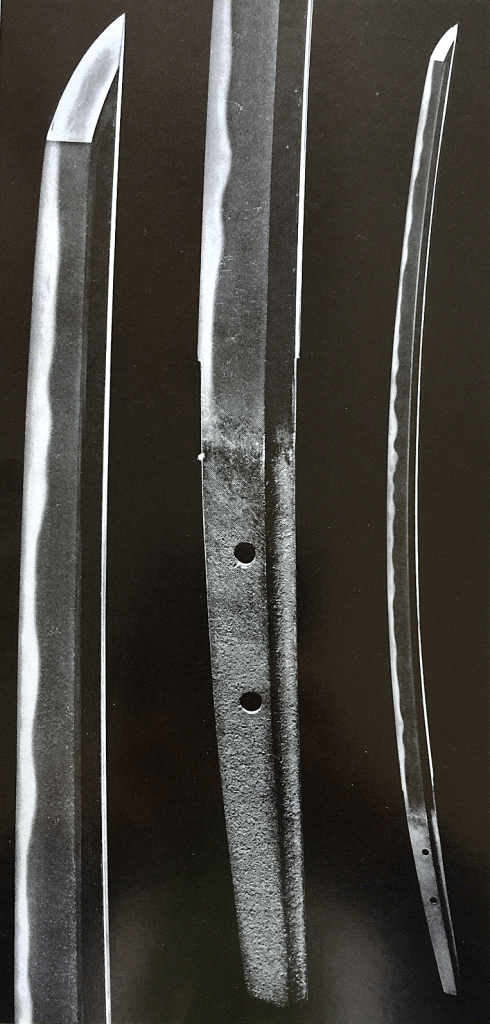
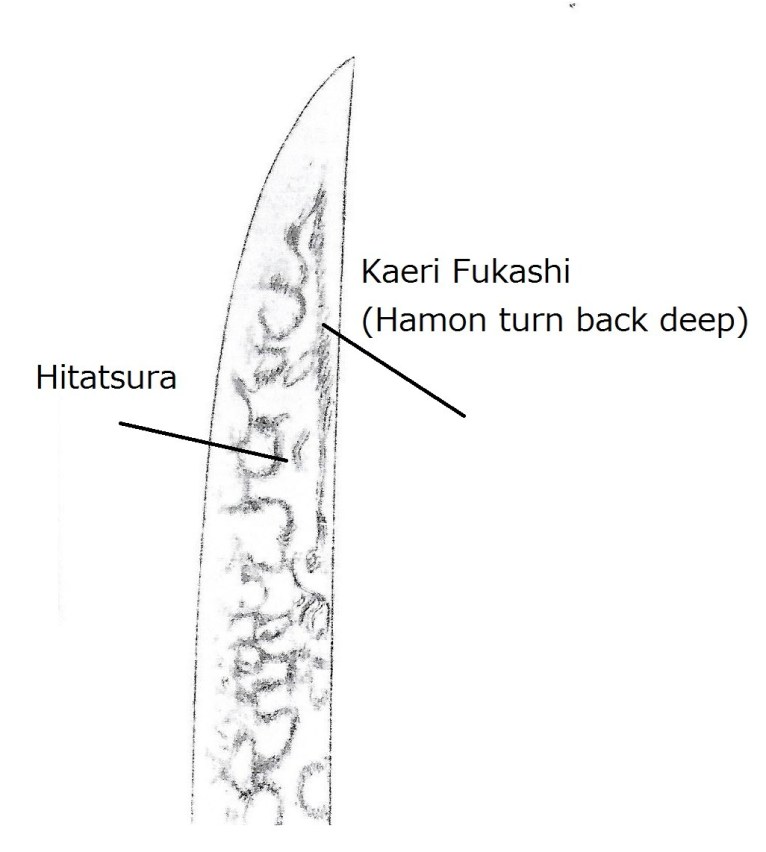
 20 Hitatsura Hiromitsu Hitatura )                  Hiromitsu from Sano Museum Catalog (permission granted)

Muromachi Period Swordsmiths (Late Soshu-Den time)

  • Hiromasa (広正)    
  • Masahiro (正広)