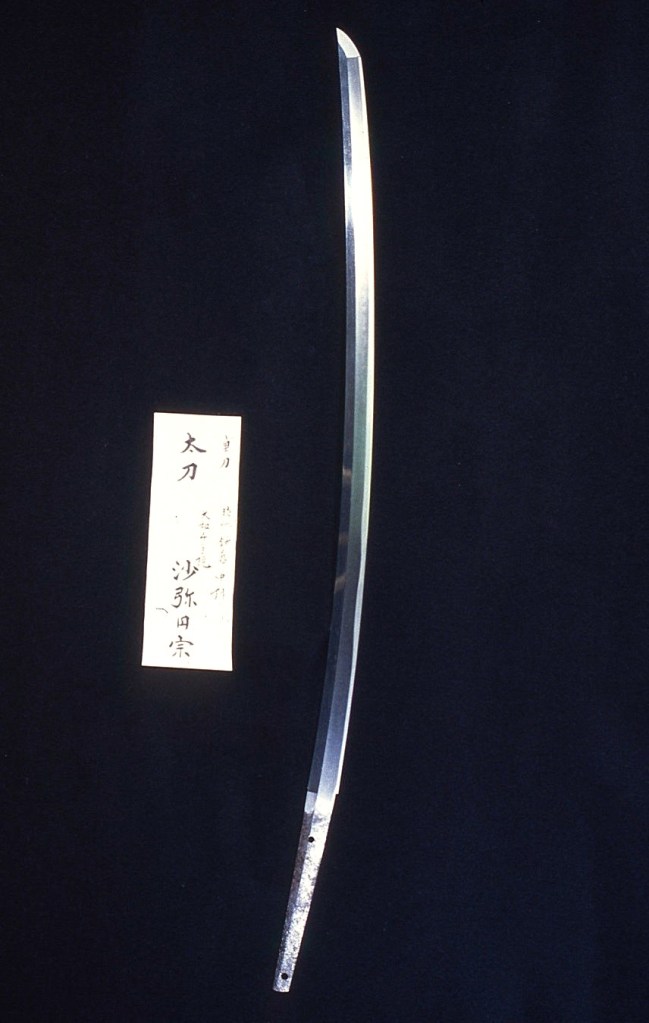
61|Part 2 of — 27 Shin-to Main 7 Regions (part A)

Chapter 61 is a detailed part of Chapter 27, Shinto Main 7 Regions (part A).  Please read Chapter 27 before reading this section. 

0-timeline - size 24 Shin-to                        The red circle above indicates the time we discuss in this section

Chapter 27, Shin-to Main 7 Regions (Part A), and Chapter 28, Shin-to Main 7 Regions (Part B), describe an overview of the seven main regions.  This chapter and the next chapter show photos of representative swords from these regions.  They are Yamashiro (山城, in Kyoto), Settsu (摂津, today’s Osaka), Musashi (武蔵, Edo), and Satsuma (薩摩, Kyushu).  However, Echizen (越前), Kaga (加賀), and Hizen (肥前) are omitted.
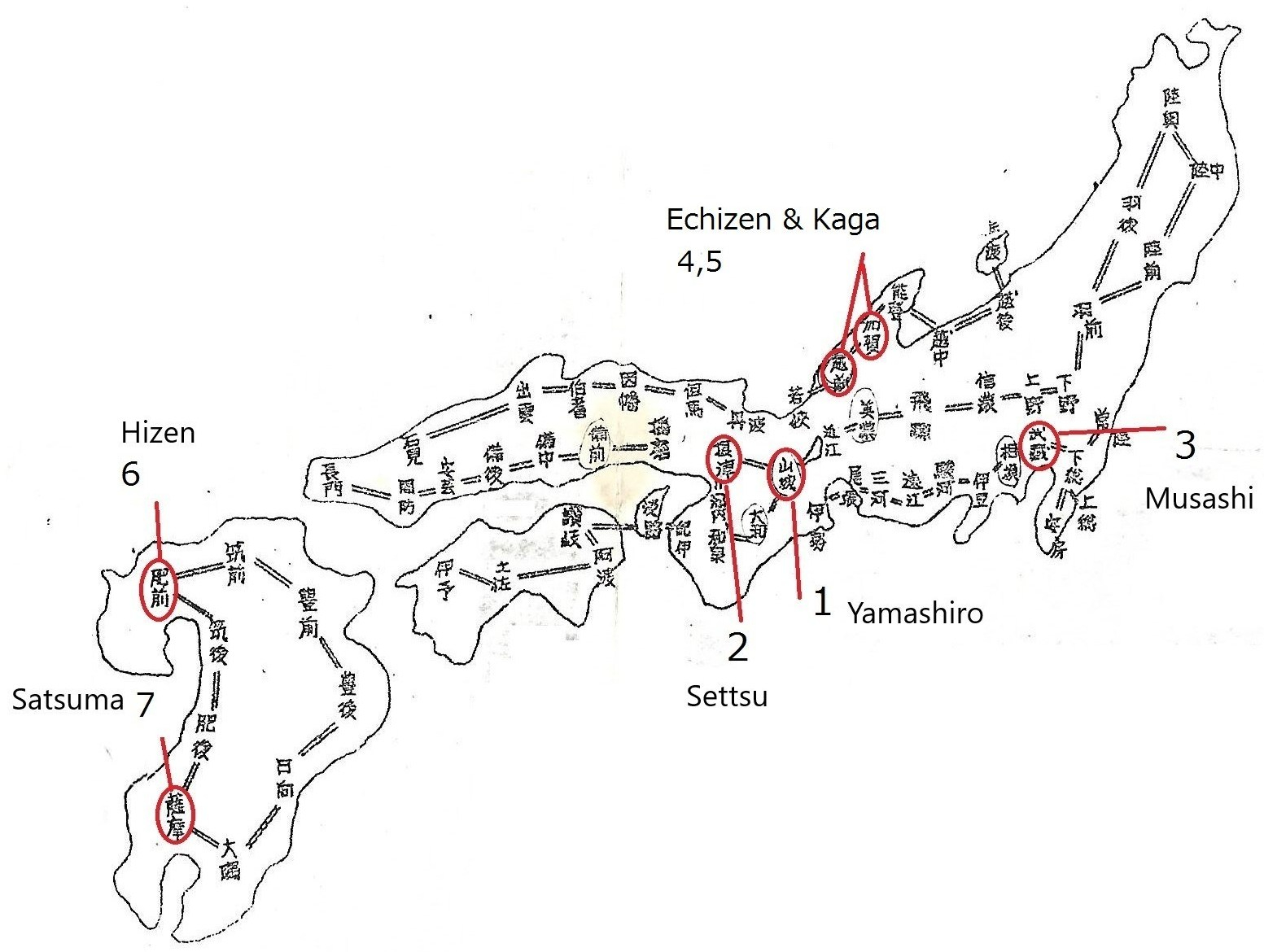
29 Map with number 7

With ko-to swords, features such as the condition of the hamon, kissaki size, length, and  shape of the nakago, etc., indicate when the sword was made.  During the ko-to period, Bizen swordsmiths produced Bizen-den swords, Yamashiro swordsmiths made Yamashiro-den swords, and Mino swordsmiths made Mino-den swords.  However, during the shin-to period, that is not the case.  The den and the swordsmith’s location often do not match.  For shin-to swords, we study the swordsmiths and swords from the seven main regions along with their characteristics.

Regarding swords made during the ko-to period, if a sword has a wide hamon line with  nie, usually, its ji-hada shows a large wood grain or a large burl grain.  Also, when you see a narrow hamon line, it typically features a fine ji-hada.

However, with shin-to swords, if a sword shows a wide hamon with nie, it often has a small wood grain or small burl grain pattern on ji-hada.  If it has a narrow hamon line, it may have a large wood grain pattern on the ji-hada.  This is a shin-to characteristic.   

Here is an exception: some early Soshu-den swords from the late Kamakura period may show a wide hamon with nie, which has small burls on the ji-hada.  Because of that, whether it is ko-to or shin-to can be confusing.  Even so, other features such as ji-hada or other parts should indicate whether it is shin-to or ko-to.

Yamashiro (山城: Kyoto)
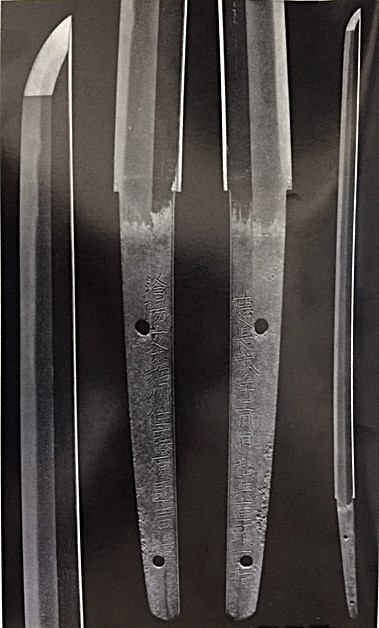
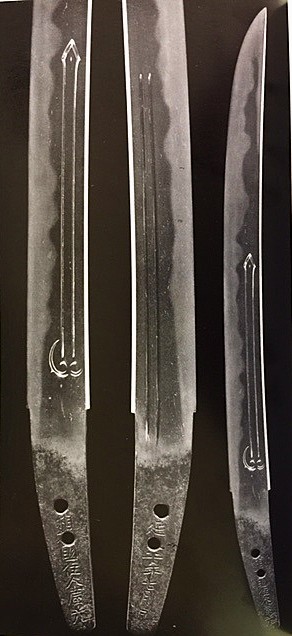
 Horikawa Kunihiro   (堀川国広)   From Sano Museum Catalogue (permission granted)

Horikawa Kunihiro (堀川国広)

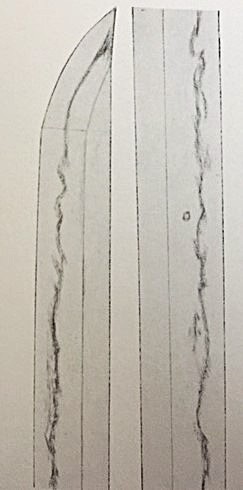
Horikawa Kunihiro was regarded as a master swordsmith among shin-to swordsmiths.  He forged swords in many styles with various characteristics.  The hamon types are o-notare, o-gunome, togari-ba (pointed hamon), chu-suguha with hotsure (frayed look), hiro-suguha with a sunagashi effect, inazuma, and kinsujiKunihiro preferred to shape his swords to resemble an o-suriage (shortened Nanboku-cho style long sword).  Kunihiro‘s blades give a powerful impression.  Kunihiro‘s swords often feature beautiful carvings; designs include dragons, Sanskrit letters, and more.  Because he created swords in many different styles, there is no general characteristic that defines his work other than the hamon mainly being nie.  His ji-hada is finely forged.                                                                                                                                                                                                                                                                                                                                                     
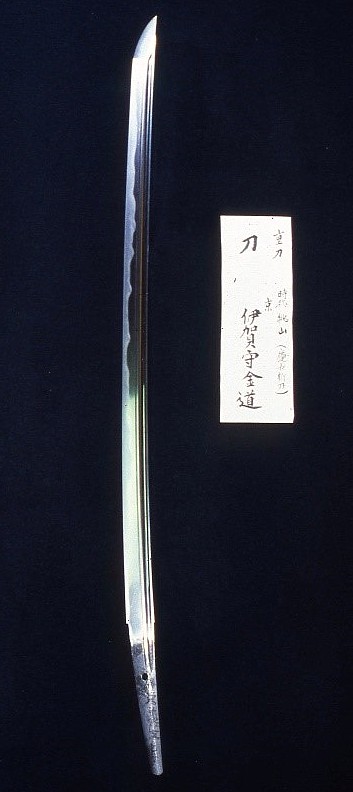
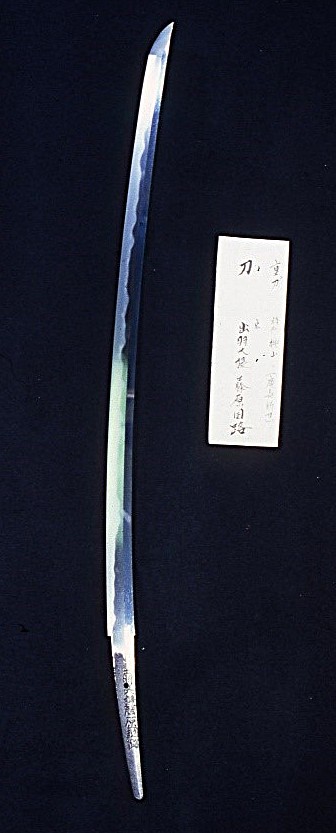
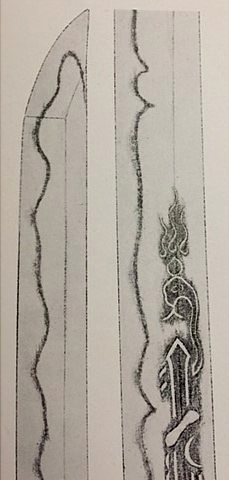
img067.jpg  img068.jpg      Iga-no-Kami Kinnmichi (伊賀守金道)           Dewa Daijyo Kunimichi (出羽大掾国路)        Both Juyo Token (重要刀剣), once my family owned, photos were taken by my father.

Iga-no-Kami Kinmichi ( 伊賀守金道)

The Kinmichi family is called the Mishina group.  Refer to 27 Shinto Main 7 Regions  Part A.   Iga-no-Kami Kinmichi was awarded the Japanese Imperial chrysanthemum crest. 

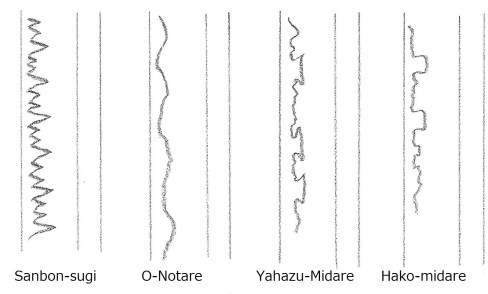
The characteristics of Kinmichi ——– Wide sword, shallow curvature, an extended kissaki, sakizori (curvature at 1/3 top),  a wide tempered line, kyo-yakidashi (see 27 Shinto Main 7 Regions  A ), hiro-suguha (wide straight hamon), o-notare (large wavy), yahazu-midare, hako-midare (refer to 24 Sengoku Period Tanto).  Mishina-boshi, refer to 27 Shin-to Main 7 Regions A.  Fine wood burl, masame appear in the shinogi-ji area.   

Dewa Daijo Kunimichi (出羽大掾国路)                                                                                 

Dewa Daijo Kunimichi was the top student of Horikawa Kunihiro.  The right photo above.  Like Kunihiro, the sword resembles a shortened Nanboku-cho sword.  Shallow curvature, a wide body, a somewhat elongated kissaki, and fukura-kareru (less arch in fukura).  Wide tempered lines, large gunome, nie with sunagashi, or inazuma shows.  Double gunome (two gunome side by side) appears.  Fine ji-hada.                                                                                                                                                                                                                

  1. Settu (摂津) Osaka (大阪 )

Settu (Osaka) is home to many famous swordsmiths.  They are Kawachi-no-Kami Kunisuke (河内守国助), Tsuda Echizen-no-Kami Sukehiro (津田越前守助広), Inoue Shinkai (井上真改), and Ikkanshi Tadatsuna (一竿子忠綱), among others.                          The main characteristic of the Settsu (Osaka) sword ——– The surface is beautiful and fine, almost like a solid surface with no pattern or design.  The two photos below are of the Settsu sword.
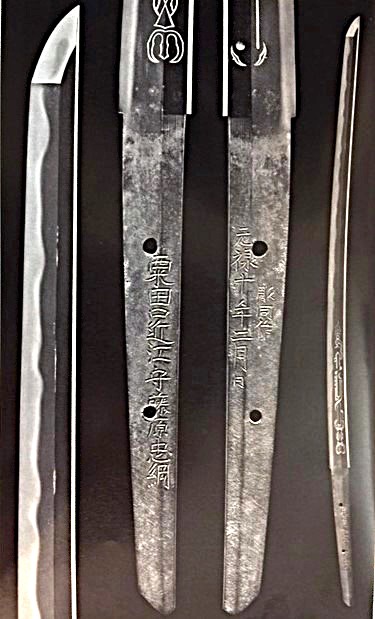
              Ikkanshi Tadatsuna from the Sano Museum Catalogue.  Permission granted to use.

Ikkanshi Tadatsuna (一竿子忠綱)

Ikkanshi Tadatsuna was famous for his carvings.  His father was also a well-known swordsmith, Omi-no-Kami Tadatsuna (近江守忠綱)Consequently, he was known as Awataguchi Omi-no-Kami Fujiwara Tadatsuna (粟田口近江守藤原忠綱), as shown in the nakago photo above.     

The characteristics of Ikkanshi Tadatsuna ——-A longer kissaki and a wide-tempered line with nie.  The Osaka yakidashi (transition between the suguha above machi and midare is smooth.  Refer to 27 Shin-to Sword – Main 7 Regions (Part A) for details on Osaka yakidashi.  O-notare with gunome, komaru-boshi with a turn back, and very fine ji-hada with almost no pattern on the surface.
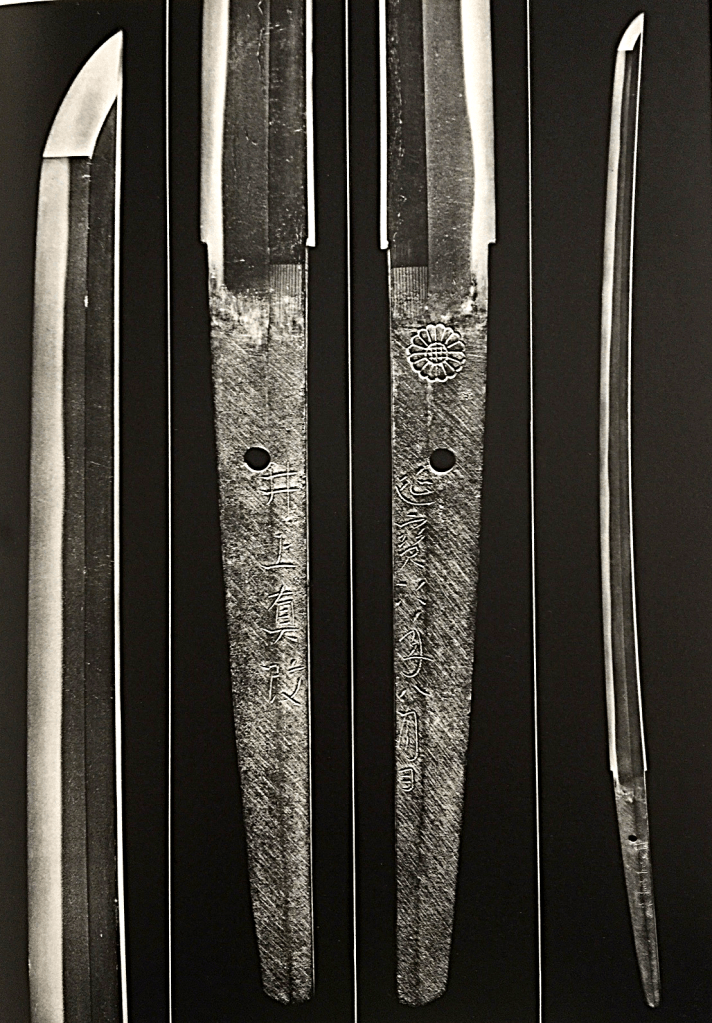
                        Inoue Shinkai (井上真改) from “Nippon-to Art Swords of Japan” The Walter A. Compton Collection

Inoue Shinkai (井上真改)

Inoue Shinkai was the second generation of Izumi-no-Kami Kunisada (和泉守国貞), who was a student of Kunihiro.                                                                                                  The characteristic of Inoue Shinkai’s swords —————- Osaka yakidashi, the tempered line gradually widens toward the top.  O-notare and deep nie.  Very fine ji-hada with almost no surface design.

53| Part 2 of — 19 Nanboku-cho Period Tanto (南北朝短刀)

This chapter is a detailed section of Chapter 19.  Please read Chapter 19, Nanboku-cho Period Tanto, before proceeding on to this part. 

0-timeline - size 24 Nanboku-cho

                          The red circle above indicates the time we discuss in this section

20 Enbun Jyoji Kowakizashi Tanto

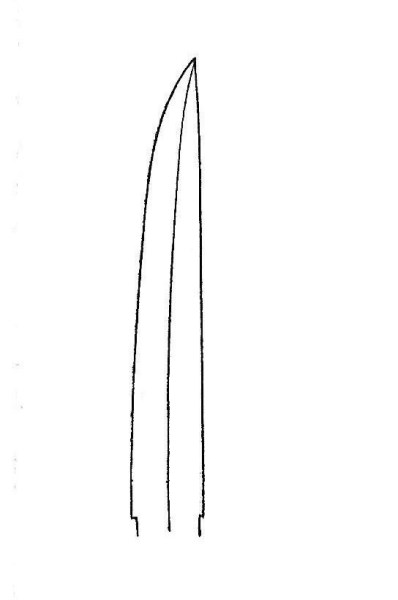
The drawing above shows a typical shape of a Nanboku-cho-period tanto. This drawing was in Chapter 19.  I exaggerated the features of the Enbun Joji ko-wakizashi tanto to better show you.  At the end of Chapter 19, Nanboku-cho Tanto, there is a list of swordsmiths’ names from that period.  Hiromitsu (広光) and Akihiro (秋広) represent the Nanboku-cho style.

56 cropped Hiromitu photo 20 HitatsuraHiromitsu from the Sano Museum Catalogue (permission to use granted)

Enbun Joji Ko-wakizashi tanto is also called Sun-nobi tanto (>10 inches) because its length is longer than the standard size (about 10 inches) tanto.  The upper part of the tanto curves outward slightly.  This type is called sakizori.

Characteristics of Hiromitsu (広光) and Akihiro (秋広)

  • Shape———————— Usually, one foot and one to two inches long (Sun-nobi).   Wide width.  Thin blade.  Sakizori.
  • Hamon ———————- A mix of wide and narrow hamon.  The hamon around the yakidashi (just above the machi) area is narrow but gradually widens as it moves up.  The hamon around the fukura area shows most work.  Mainly nie.  Sunagashi, kinsuji, gunome, umanoha-midare (horse teeth-shaped hamon), or hitatsura appear (drawing above).                 
  • Boshi———-Irregular and unevenly tempered.  The hamon covers almost the entire boshi. Deep turn back. 
  • Jihada ———————————————————Wood-grained pattern
  • Nakago —————–Tanago-bara shape.  Refer to 19 Nanboku-cho Period Tanto.

Nobukuni (Below is my sword)

Shodai Nobukuni (the first-generation Nobukuni) was a student of Sadamune.  He was one of the Sadamune San Tetsu (貞宗三哲, Sadamune’s top three students).  Nobukuni’s characteristics resembled those of Hiromitsu and Akihiro, as described above.  Nobukuni also created sun-nobi tanto.  The sword below has a hoso-suguha, ko-mokume (small burl pattern), and ko-maru boshi (small round). 

56 Nobukuni 1 Nobukuni4

56 Nobukuni 2This is the certification of my sword.  Shodai Nobukuni (初代信國).   Juyo Token (重要刀剣)
Certification

Number: Juyo 3220, Certification Juyo-Token

Wakizashi:  Nobukuni (信国), 31.4cm long, 0.3cm curvature, hirazukuri, mitsumune (three-sided mune), sun-nobi.  The ji-hada shows a wood grain and ji-nie (surface nie, between shinogi and hamon). The hamon is a chu-suguha (medium straight). The front carving shows bonji (Sanskrit) and sanko-ken. The back engraving is bonji and hoko (pike).   Original nakago.  Examined by the Nihon Bijutsu Token Hozon Kyokai.  It is certified as a Juyo Token.  The Chairman, Moritatu HosokawaShowa 45 June 1 (June 1, 1970)

24| Sengoku Period Tanto (戦国時代短刀)

0-timeline - size 24 Sengoku Period                             The red circle above indicates the time we discuss in this section

25 Chukanzori Tanto

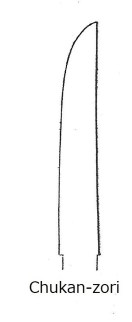
Chukan-zori (中間反り) ————– The chukan-zori tanto features a straight mune (back).  Its back does not curve either inward or outward.   

Hamon (刃文: Tempered line) ————————————-Sanbon-sugi (三本杉), o-notare (大湾), yahazu-midare (矢筈乱), hako-midare (箱乱), gunome-choji (互の目丁子), chu-suguha (中直刃).   See below.

24 Sannbon sugi,hako, yahazu, O-midare)

Horimono (彫り物: Carving) —————Often Hi (grooves) is curved

Tanto Length ————————— The standard tanto length should not exceed one shaku*¹ (about 12 inches, 30.5cm).  The standard size tanto is called a Jo-sun tanto, which is roughly 8.5 shaku (about 10 inches, 25.7cm).  Longer than jo-sun is called sun-nobi tanto (寸延)Shorter than jo-sun is called sun-zumari tanto (寸詰).

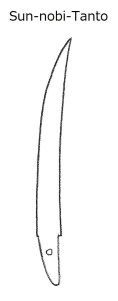
             Sun-nobi Tanto  >  Jo-sun Tanto (approx. 10 inches) >  Sun-zumari Tanto

*Shaku is a traditional Japanese unit of length measurement.

Takenoko-zori jo-sun tanto (筍反定寸短刀)————– The takenoko-zori jo-sun tanto was made during the Sengoku period.  It resembles swords made by Rai Kunimitsu of Yamashiro–den.  (illustration below)

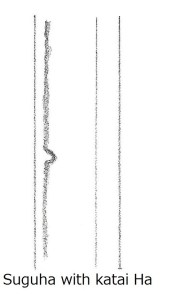
Hamon (刃文: Tempered line) ————– Hoso-suguha (細直刃: Narrow straight hamon). Katai-ha (illustration below) appears somewhere on the blade.  Masamehada (straight grain pattern) may be visible on the mune side.

                13 Middle Kamakura Period Tanto                 24 Suguha katai-ha

Ji-hada (地肌: The area between the shinogi and the tempered line)————– Some shirake (白け: a whitish surface) may sometimes appear.  Some utsuri (a light, whitish, cloud-like effect) appears on the ji-hada.

Sun-nobi Tanto (寸延短刀)————–This type of tanto resembles the sakizori tanto from the late Soshu-den period.  You may see a hitatsura-type hamon.  (illustration below).   Unlike the Soshu-den style, the hitatsura pattern is more visible in the lower part of the tanto and less in the upper part.

                                             25 Sun-Nobi Tanto      25 Hitatsura

Hirazukuri Takenokozori Sunzumari Tanto (平造筍反寸詰短刀)                                  

This is a unique tanto from the Sengoku period.   Hirazukuri means a flat-surfaced sword without a shinogi, yokote line, or obvious kissaki.   Takenoko-zori refers to a bamboo shoot shape (the back of the sword curves inward).   Sun-zumari indicates a blade shorter than 10 inches (less than 8.5 shaku or 25.7 cm).  The lower part of the blade is wide and thick, while the tip is narrow and thin.  It has a piercing, sharp appearance.

  • Horimono (彫物: Engraving) ————- Deeply carved ken-maki ryu (a dragon wrapped around a spear).
  • Hamon (刃文: Tempered line)——— Wide tempered line, with a nioi baseIrregular hamon, with wide suguha (straight), and chu-suguha (medium straight).  The hamon in the boshi area curves back deeply.
  • Ji-hada (地肌)———– fine ji-gane and wood burl pattern.

Moroha-tanto (諸刃短刀: Double-edged sword)

A double-edged sword with a hamon on both cutting edges.  Often, Bonji (Sanskrit) is curved.

  • Hamon (刃文: Tempered line) ——— Wide tempered line.   Nioi base.  Irregular hamon, wide suguha (straight tempered line), and chu-suguha (medium straight  tempered line).  The hamon turns back deeply.
  • Ji-hada (地肌: The area between the shinogi and the tempered line)——- Fine ji-gane and wood burl pattern.

25-moroha-tanto1 Moroha Tanto

The Swordsmith for Tanto during the Sengoku Period 

The Bizen swords from the Sengoku period are called sue-bizenSue is pronounced “su” and “e“ as in egg.   Bizen Osafune Yoso-Zaemon Sukesada (与三左衛門祐定) is the most famous swordsmith of the Sengoku period.  He also forged tantos.  One thing to note is that many swordsmiths had the name Sukesada.  Yoso-Zaemon Sukesada is the one who best represents the era.

15| The Revival of Yamato Den(大和伝復活)

0-timeline - size 24 Late Kamakura

        The red circle above indicates the time we discuss in this section

It is believed that sword-making first started in Yamato province (now Nara Prefecture) during the Nara period (710 to 794).  In the early days of sword-making, the forging techniques were primitive.  At that time, many swordsmiths lived in Yamato, but over time, sword-making in this region declined.

At the end of the Kamakura period, several powerful Buddhist temples emerged in the Yamato area, leading to conflicts among them.  Temples held significant political and military power to control large territories called shoen (荘園) through their large numbers of warrior monks, known as sohei (僧兵).  The most dominant group was Nanto Sohei (南都僧兵)*.  These groups of sohei demanded more swords to arm themselves, which revitalized the Yamato-den (school) and increased the number of swordsmiths in the Yamato area.   As a result, the Yamato-den group became active again.  The Yamato-den style is somewhat similar to the Yamashiro-den.    

*Nanto Sohei (南都僧兵)—————-Since around the 11th century, Buddhist temples grew powerful under the protection of the Joko (retired emperors).  These temples had many sohei (low-level monks who also served as soldiers). When power struggles arose among the temples, sohei fought as their soldiers on the battlefields.  Nanto Sohei were such soldiers at Kofuku-Ji Temple (興福寺).  Several large temples, such as Todai-ji (東大寺) Temple, controlled the Yamato area.

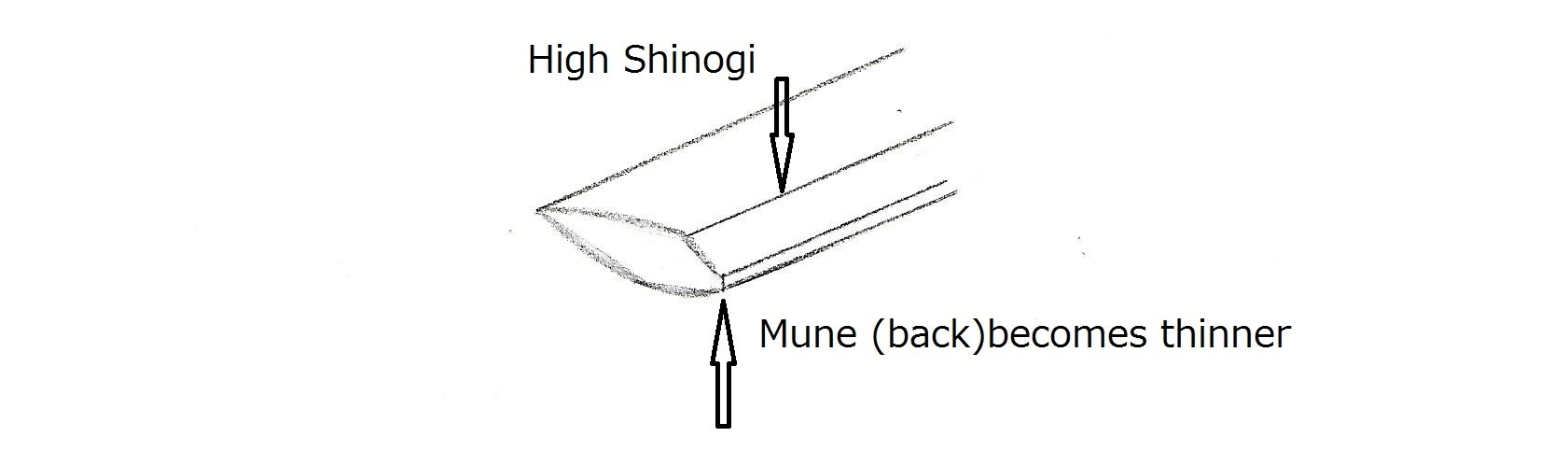
Sugata (姿: Shape) —————- Not much difference in style during the early part of Yamatoden and Yamashiro-den.  Shinogi is high.  Mune is thin.   Some Yamato-den have a shallow sori (curvature).

16 Yamato sword cross section

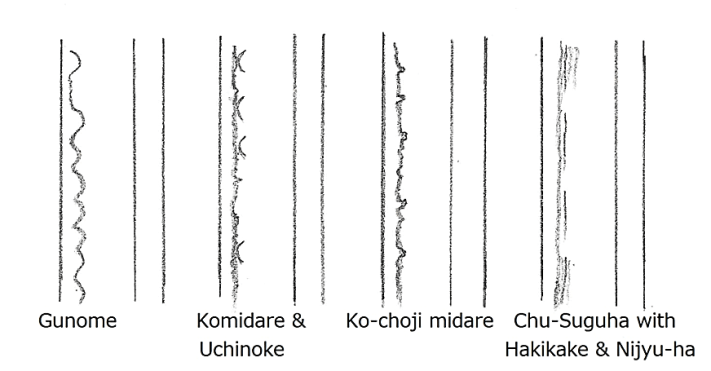
Hamon (刃文Tempered line) ——————Narrow tempered line.  Mainly nie (沸).  Chu-suguha-hotsure (中直刃ほつれ: a medium straight line with a frayed pattern), ko-choji-midare (小丁子: a mixture of small clove-like patterns and irregular wavy lines), ko-midare (小乱: small irregular wavy lines), ko-gunome-komidare (小五の目小乱: small continuous half-circles mixed with wavy lines). 

The main features of the Yamatoden style sword are masame (straight grain).  Its tempered line often shows nijyu-ha (double straight lines), hakikake (brush mark trace), uchinoke (a crescent-shaped line), or a combination of these.   See the illustration below.


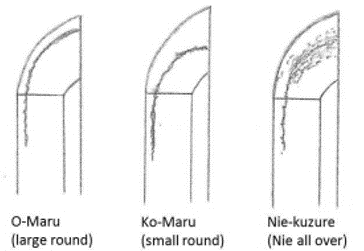
Boshi (鋩子: Tempered line at Kissaki area) ———- In the boshi area, a straight grain hamon pattern appears.  Yakizume or kaen. (Refer to Chapter 12, Middle Kamakura period: Tanto).  O-maru, ko-maru, nie-kuzure.  (Refer to Chapter 14, Late Kamakura Period Sword.  See the illustration below.)


15 Omaru Komaru Niekuzure

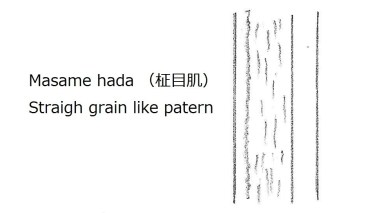
Ji-hada (地肌):Area between the shinogi and the tempered line)———— mostly masame-hada (straight grain pattern 柾目肌). Fine ji-nie, chikei, or yubashiri.  (Refer to Chapter 14, Late Kamakura Period Sword (鎌倉末太刀).  See below.)

16 Masame Hada

Nakago (Hilt) ———————– Often displays Higaki Yasuri (檜垣), the finishing file pattern, as illustrated below. 

16 Higaki Yasuri

Names of the Yamato School Sword-smiths

Taema(当麻) Group————–Taema Kuniyuki(当麻国行) Taema Tomokiyo(当麻友清) Shikkake (尻懸) Group———————————————-Shikkake Norinaga (尻懸則長) Tegai (手掻) group ——————Tegai Kanenaga (手掻包永) Tegai Kanekiyo(手掻包清) Hoshou (保昌) group———Hosho Sadayoshi ( 保昌貞吉) Hosho Sadamune (保昌貞宗)

Yamato Senjuin Saya Enso (大和千手院沙弥円宗)  once my family sword