55 |Part 2 of —–21 Muromachi Period Sword (室町時代刀)

Chapter 55 is a detailed section of Chapter 21, Muromachi Period Sword.  Please read Chapter 21 before reading this part.

57 Muromach-timeline size 22

                         The circle above indicates the time we discuss in this section

After the Muromachi period, swords shifted to katana(刀) from tachi (太刀), as described in Chapter 21, Muromachi Period Sword.  Refer to Chapter 21, Muromachi Period Sword.  By the end of the Nanboku-cho period, sword lengths had shortened to about 2 feet ± a few inches.  The 3-to-5-foot-long swords seen during the Nanboku-cho period were no longer produced.  This change occurred because, during the Nanboku-cho period, warriors mainly fought on horseback, but after the Muromachi period, infantry combat became more common.

Oei Bizen (応永備前)                                                                                                              The pronunciation of Oei is “O” as in “Oh” and “ei” as in “A” from ABC.  The Muromachi period was a declining time for sword-making.  The swords made during the early Muromachi period in the Bizen area is known as Oei BizenOsafune Morimitsu (長船盛光), Osafune Yasumitsu (長船康光), and Osafune Moromitsu (長船師光) were the main Oei Bizen swordsmiths.  Soshu Hiromasa (相州広正) and Yamashiro Nobukuni (山城信國) were also similar to the Oei Bizen style.  Please refer to Chapter 21, Muromachi Period Sword, for details on the  Muromachi sword shape, Hamon, Boshi, and Ji-hada.
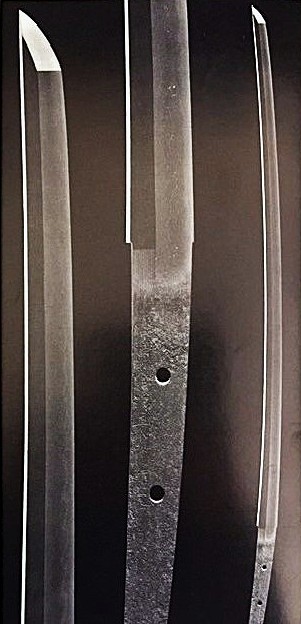
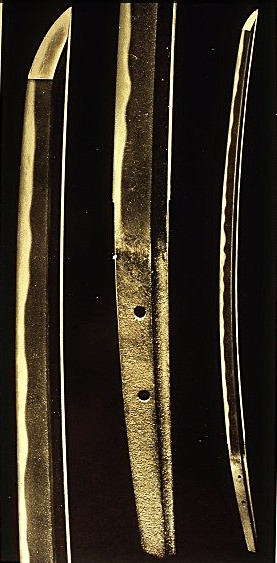
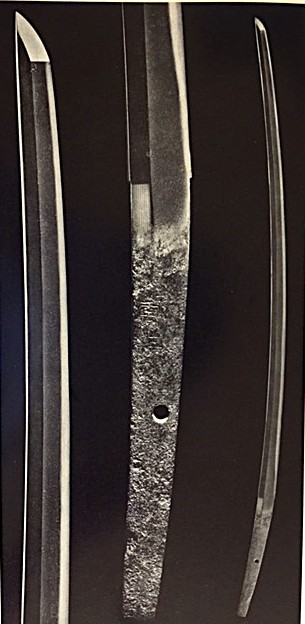
                       Bishu Osafune Moromitsu (備州長船師光)   from Sano Museum Catalogue ((permission granted)

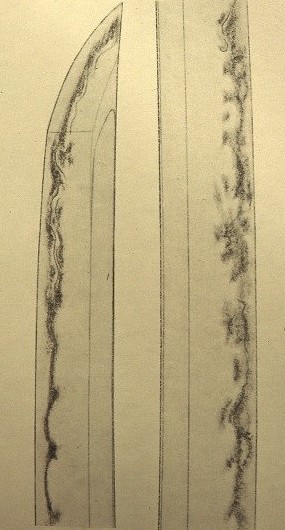
The Osafune Moromitsu sword shown above measures 2 feet 5 inches in length and has a medium kissaki.  Its hamon has a small wave-like pattern with continuous gunome (a lined half-circle pattern).  The boshi area shows irregular waviness with a slightly pointed tip.  Very faint bo-utsuri (a soft shadow shaped like a strip of wood) appears on ji-hadaBo-utsuri is a distinctive feature among all the Oei Bizen

Before the Muromachi period, many swordsmith groups operated in the Bizen region. However, by the Muromachi period, Osafune (長船) was the only remaining group.

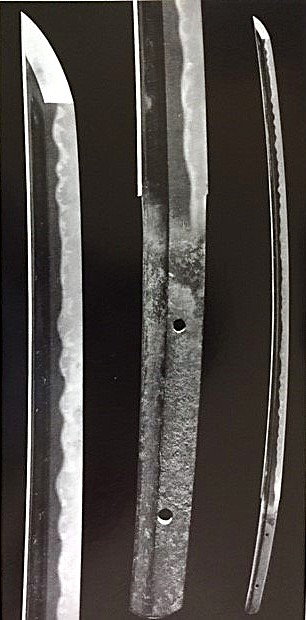
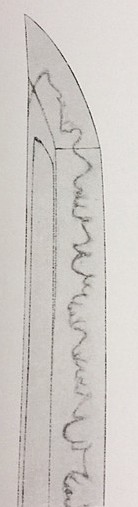
Osafune (長船) is the name of a region, but it became the surname of swordsmiths during the Muromachi period.  Two other well-known swordsmiths from Oei Bizen are Osafune Morimitsu (盛光) and Osafune Yasumitsu (康光).  The hamon created by Morimitsu and Yasumitsu is more detailed than that of the sword in the photo above.  Chapter 21, Muromachi period swords, shows the hamon of Morimitsu and Yasumitsu and describes the typical characteristics of swords from the Muromachi period.

                                                 Hirazukuri Ko-Wakizashi Tanto
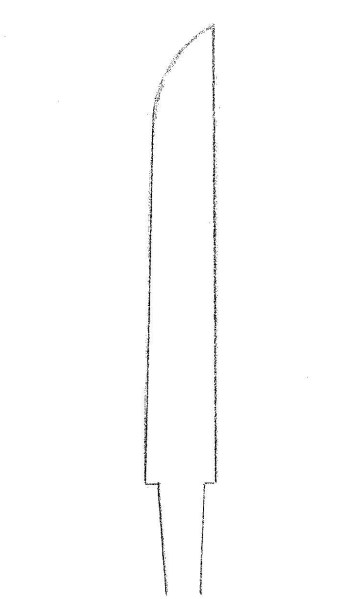
58 Hirazukuri Ko-Wakizashi Tanto

Hirazukuri Ko-Wakizashi Tanto Shape                                                                       

Hirazukuri ko-wakizashi tanto was a popular style during the early Muromachi period. Swordsmiths from various regions produced tantos similar to the one shown above. However, most of these types were made by Oei Bizen swordsmiths.

The characteristics of the Hirazukuri ko-wakizashi tanto ————-Typically about one foot and 1 or 2 inches long.  No yokote line, no shinogi, and no sori (meaning no curvature, straight back).  Average thickness.  Narrow width.  Gyo-no-mune (refer to Chapter 12, Middle Kamakura Period Tanto).
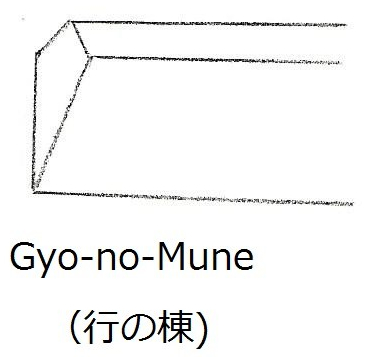
13 Mune drawing

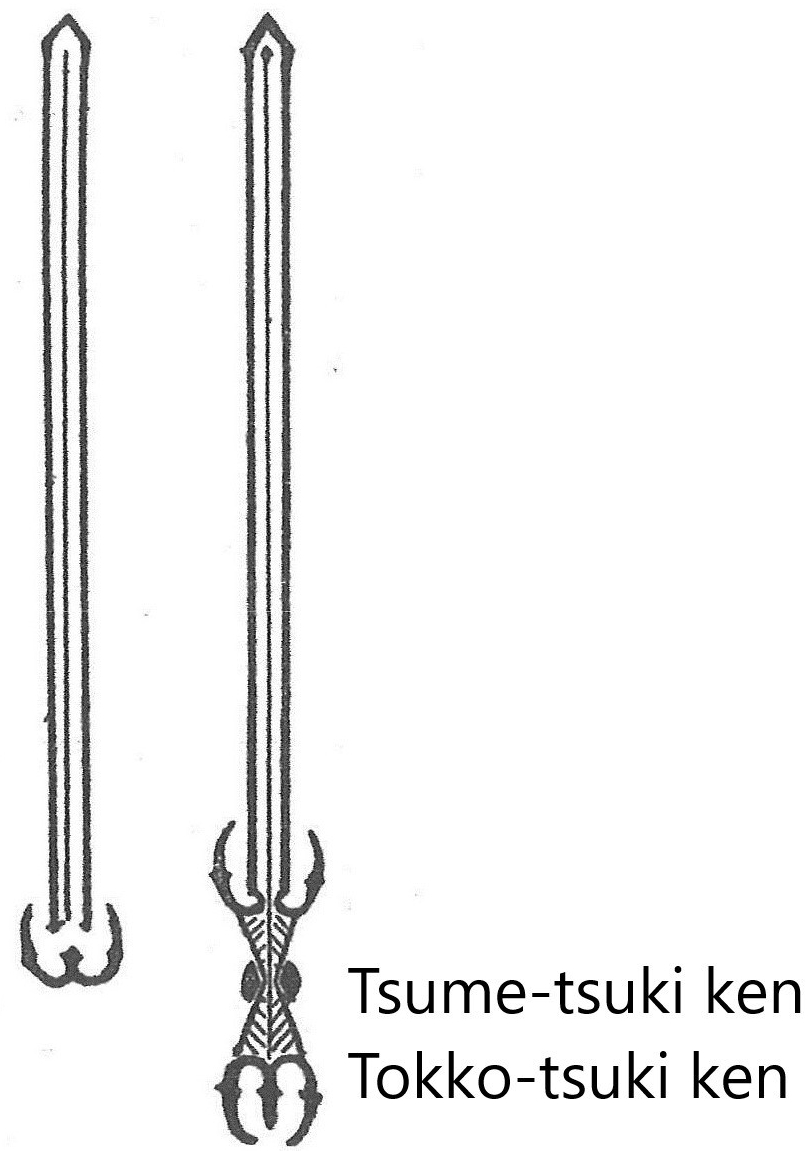
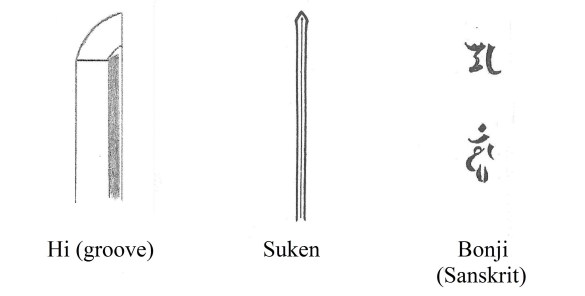
Hirazukuri Ko-wakizashi tanto often shows many engravings.  Hi with soe-hi (double lines, wide and narrow side by side), Tokko-tsuki-ken, Tsume-tsuki-ken, Bonji, and more.

.
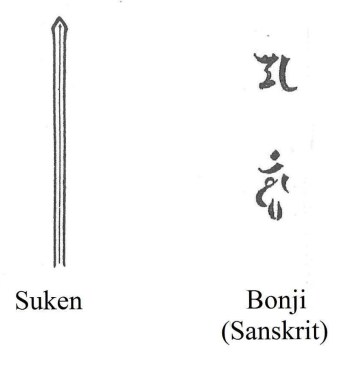
9 Hi, Suken, Bonji20 Tokko, tume Ken  58 tsumetukiken and Hi

*drawings from “Nihonto no Okite to Tokucho” by Honami Koson


48|Part 2 of — 14|Late Kamakura Period Sword : Early Soshu Den (鎌倉末刀)

This is a detailed section of Chapter 14| Late Kamakura Period Sword.  Please read Chapter 14 before this part.

0-timeline - size 24 Late Kamakura

                         The red circle above indicates the time we discuss in this section.

14 Ikubi kissaki Damadge

In Chapter 14, “Late Kamakura Period Sword (鎌倉末太刀),” the ikubi-kissaki sword is explained.  The illustration above shows a flaw caused when the damaged area was repaired.  To compensate for this flaw, swordsmiths developed a new sword style during the late Kamakura period.  They forged swords with a longer kissaki and lowered the tip of the hi below the yokote line.   This way, if the yokote line were lowered during repairs, the tip of the hi would remain below the yokote line.

15 Masamune (Sano)   15 Masamune hamon (Sano)

The above photo shows a sword by Goro Nyudo Masamune (五郎入道正宗).  Please observe the size and shape of the kissaki.  This differs from the previous ikubi-kissaki and ko-gissaki stylesThis style represents a typical late Kamakura period kissaki style.  It is o-suriage (a largely shortened form). 

Under the Kamakura Bakufu, many swordsmiths moved to KamakuraThey were Toroku Sakon Kunituna (藤六左近国綱) of the Yamashiro Awataguchi group (山城粟田口), Fukuoka Ichimonji Sukezane (福岡一文字助真), and Kunimune (国宗) from the Bizen area.  They were the origin of Soshu-den (相州伝)Eventually, Tosaburo Yukimitsu (藤三郎行光) and his famous son, Masamune (正宗), emergedIn the drawing above, kinsuji and inazuma are shown within the hamon.  The shining lines inside the hamon are inazuma and kinsuji.  Inazuma and kinsuji are collections of nie.  Masamune is well-known for his inazuma and kinsuji.  He lived in Kamakura, a seaside town, and his hamon resembles ocean waves when viewed from the side.

50 part 2 of 15 吉岡.photo 50 part 2 of 15 吉岡

The picture above shows a sword made by the swordsmith Yoshioka Ichimonji group (吉岡一文字).  The kissaki resembles one of Masamune’s swordsIt is longer than the previous ikubi-kissaki or ko-gissaki.  This is chu-gissaki.  The kissaki, like this, is one of the key points in determining the period when the sword was made.  The hamon has choji, gunome, togariba (pointed tip), and very tight nie.

50 part 2 of 15 運生 photo 50 part 2 of 15 運生 

The photo above shows a sword by Ukai Unsho (鵜飼雲生) from Bizen-den.  This sword is also from the late Kamakura period, but it has a ko-gissaki.  This sword does not have the late Kamakura period chu-gissaki style.  Narrow hoso-suguha are more characteristic of an earlier time than the late Kamakura periodThis sword indicates that swords do not always exhibit the style of their period.  To kantei*: first examine the style and shape, then give yourself an idea of the period it was made in.  However, the kissaki in this case does not indicate the late Kamakura period.  The next step is to look at the various characteristics of the sword one by one, such as the hamon, nie or nioi, ji-hada, etc., to determine the period, the den, and the province, and then come up with the name. This process is called kantei.

*Kantei – the process of identifying a swordsmith’s name by analyzing the sword’s characteristics without seeing the mei (the inscribed smith’s name).  The mei might be gone if it has been shortened.   All the photos above are from the Sano Museum Catalogue.  Permission to use them is granted.

21| Muromachi Period Sword (室町時代刀)

0-timeline - size 24 Muromach

       The red circle above indicates the time we discuss in this section

The Muromachi period was a relatively peaceful and prosperous time until shortly before the “Onin-no-ran,” which occurred at the end of the Muromachi periodRefer to Chapter 20, Muromachi Period History (室町時代歴史).   The Nanboku-cho style long swords became outdated; as a result, they were shortened.  The shortened blade is called suriage.  Overall, the Muromachi period was a declining time for sword-making.

Tachi and Katana 

Until the end of the Nanboku-cho period or the beginning of the Muromachi period, samurai wore swords suspended from their waists with the blade facing down.  When a sword was worn this way, the swordsmith inscribed his name on the side facing outward, meaning the blade is on your right when you see the inscription.  In this case, the sword is called a tachi.

During the Muromachi period, a sword was worn between the belt, with the blade facing up.   The swordsmith inscribed his name so that it faced outward when it was worn. Therefore, when you see the inscription, the cutting edge is to your left.  This is classified as a katana. 

Around the beginning of the Muromachi period, samurai started to wear a pair of swords called dai-sho (大小), meaning large and small.  The longer sword is a katana, and the shorter one is a wakizashi.  In general, a tachi is longer than a katana.  A katana is longer than a wakizashi, and a wakizashi is longer than a tanto.  Here is the order of their lengths. 

                                       Tachi   >   Katana   >   Wakizashi   >  Tanto                                  Tachi and katana differ in how they are worn, not in length.   

O-suriage ( 大磨上: Katana shortened by great length) 

How much the sword should be shortened depends on its original length and how much the owner wants it shortened.  O-suriage is a type of sword that is significantly shortened.  Once the blade is shortened by that length, the inscription of the maker’s name is cut off.  When the Hon’ami family (本阿弥家, a family of sword connoisseurs who have appraised Japanese swords for generations from the Muromachi period to today) appraises such a suriage sword, they write the make of the sword and the swordsmith’s name on the front side of the hilt, and the connoisseur’s name with his kaou (similar to a signature) on the back.  There are several levels of writing.  The level at which it should be done depends on the sword’s quality and the owner’s preference.  Below is the order of levels (high to low).

Shu-Mei (朱明 )————————————————————-name written in Vermilion  Kinpun-Mei (金粉名 )———————————————–name lacquered in gold powder  Gin-Zougan (銀象嵌 )————————————————————name inlaid in silver  Kin-Zougan (金象嵌 )————————————————————-name inlaid in gold

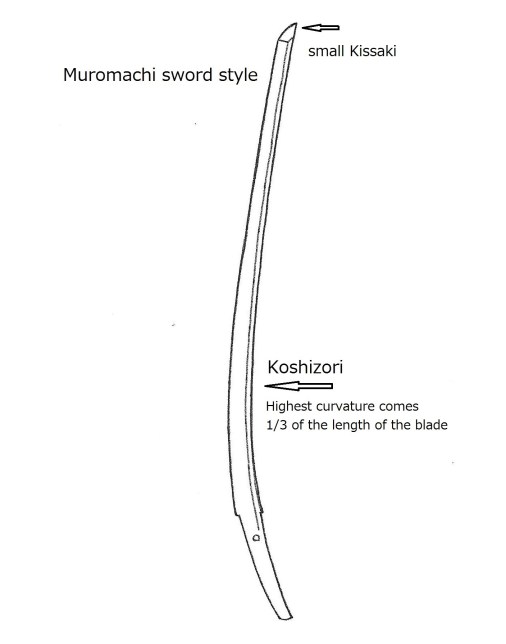
Sugata (姿: Shape) ——— The average length is typically two feet three to four inches (68~71cm).  The shape of the Muromachi period katana is somewhat similar to that of the Heian period tachi.  However, Muromachi katana are less grand or graceful than those from the Heian period swords.  The curvature is usually of the koshizori style.  Koshizori refers to the highest curvature being near the lower part of the blade.  The length and shape are suitable for wearing between the body and the belt.  The width and thickness are well-balanced with the size of the sword.  Small kissaki.

22 Muromachi sword shape

Hirazukuri-Wakizashi ———– Hirazukuri refers to a flat surface without a shinogi or yokote line.  Usually, it is 1 foot and 1 to 2 inches long.  No curvature.  Hirazukuri-wakizashi appeared during the Muromachi period.

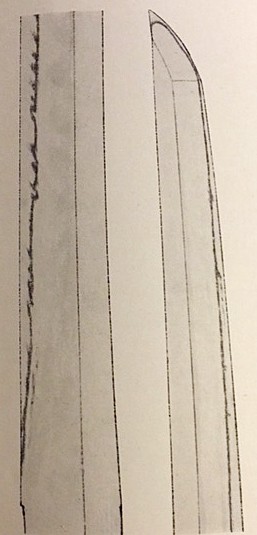
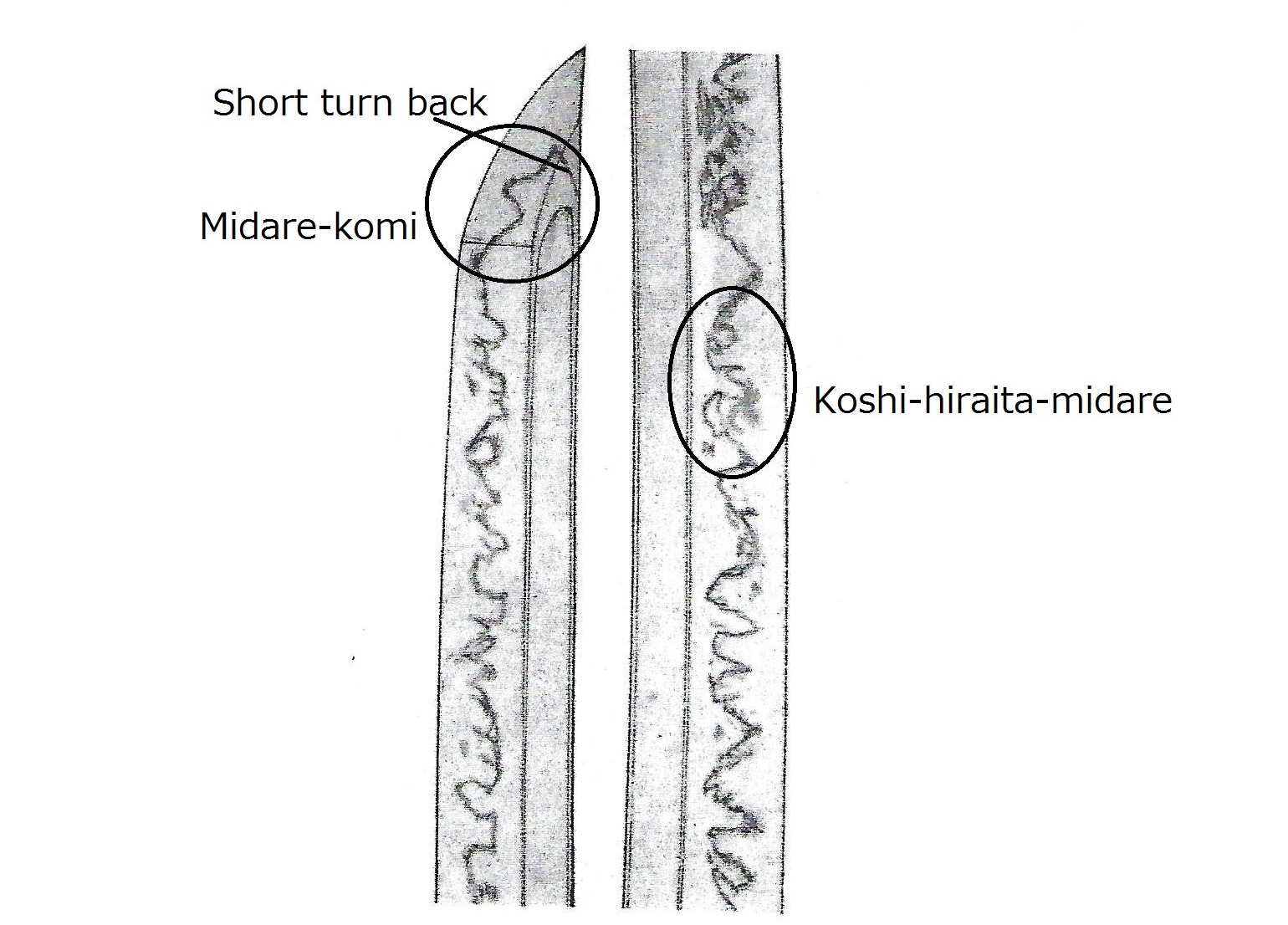
Hamon (刃文: tempered line) ———————- Nioi base.  The tempered area is well balanced with the blade’s width.  Koshi-hiraita-midare is mixed with choji-midare.

22Hamon (Koshi Hiraita midare)
from Sano Museum Catalogue (permission granted)
  • Boshi (Tempered line at Kissaki area) ————– Midare-komi, a short turn back.  See the above illustration.  Midare is an irregular wave-like pattern.
  • Ji-hada (地肌: An area between the tempered line and Shinogi)- Soft look, a large wood grain pattern, Ji-utsuri (faint smoke or cloud-like effect) shows.
  • Horimono (彫物Engravings) ———- Bo-hi (single groove), Soe-hi (a thin groove alongside the main hi), Futasuji-hi (double narrow groove), Sanskrit, Tokko-tsuki ken, Tsume-tsuki Ken, name of God, and dragon.  Carvings became elaborate.

8 Hi, Suken, Bonji                  21 Tsume-tuki-ken tokko with caption

Sword Smiths during Muromachi Period

  • Bizen Den ——–Osafune Morimitsu (長船盛光), Yasumitsu (康光), Moromitsu (師光)
  • Yamashiro Den————————————————-Yamashiro Nobukuni (山城信国)

21 Muromachi sword from Sano

Ise Masashige (伊勢正重),                     Bizen Osafune Naomitsu (備前長船尚光)         Juyo Token(重要刀剣)                           Sano Museum Catalogue (permission granted)    once my family sword


18| Nanboku-Cho Period Sword (南北朝太刀)

0-timeline - size 24 Nanboku-cho

                           The circle indicates the time we discuss in this section

During the Nanboku-cho period, samurai sought large, elaborate, impressive, yet practical swords.  The Soshu-den style sword from Nanboku-cho time was just that.    This was the most popular style at the time.  The Nanboku-cho period marked the peak and height of the Soshu-den sword.  Many swordsmiths moved from other provinces to the Kamakura area and forged Soshu-den style swords.  Other schools and provinces outside the Kamakura area also produced Soshu-den-style swords in their own areas.


19 Nanboku-cho Sword style

Sugata (姿: Shape) —————–The original length of a sword ranged from three to five feet, but it was later shortened to about two and a half feet.  A significantly shortened blade is called o-suriage. 

The Nanboku-cho style sword features shallow kyo-zori (also called torii-zori).  Refer to Chapter 5, Heian Period Sword.  The highest curvature occurs around the middle of the body. It has a wide body, high shinogi, narrow shinogi-ji  (Chapter 3, Names of parts),  and thin kasane (blade thickness), which are distinctive features of the Nanboku-cho style.  High gyo-no-mune or shin-no-mune, and sometimes a maru-mune (round back).

19 Nanboku-cho 3 kinds Mune

Hi (: groove) and Horimono (彫刻: engraving) ——– Often, a single hi (bo-hi), double hi, suken (dagger), Bonji (Sanskrit), and/or dragon are engraved on the shinogi-ji area.  Refer to Chapter 3, Names of Parts.

9 Hi, Suken, Bonji

Hamon (: Tempered line) —- The lower part of the body exhibits a narrow-tempered line; gradually, this line becomes wider and showier.  Course nie. O-midare (large, irregular, wavy hamon), Notare-midare (wavy, irregular hamon), and Gunome-midare (a combination of repeated half-circular and irregular hamon). Inazuma and kinsuji (see Chapter 14, Late Kamakura Period Sword) sometimes appear.

19 Hamon Notare 319 Mamon choji gunome19 Hitatsura Hamon Hiromitsu

                                  *From Sano Museum Catalogue ( Permission granted).

Ji-hada (地肌: the area between the shinogi and the tempered line) ———————-Wood-grain pattern (itame 板目). Sometimes tobiyaki (patchy tempered spots) appear on ji-hada.  For ji-hada, refer to Chapter 3, Names of Parts.

Kissaki (切っ先) and Boshi (tempered line at the kissaki area) ———- O-kissaki (long and large kissaki). Fukura kareru (less arc kissaki).  Midare-komi (the body and boshi have a similar tempered pattern), with kaeri-fukashi (hamon deeply turns back), and sometimes hitatsura (entirely tempered).  See the illustration above.

Sword-smiths during Nanboku-Cho Period Soshu Den (school)

  • From Soshu—————————————————Hiromitsu (広光)  Akihiro (秋広)  
  • From Yamashiro ———————————————Hasebe Kunishige (長谷部国重) 
  • From Bizen (called So-den Bizen)——-Chogi (長儀 )group  Kanemitsu (兼光 ) group 
  • From Chikuzen ———————————————————-Samoji (左文字 ) group

Chogi (長義)from The Sano Museum catalog. Permission to use is granted

The distinctive characteristics of the Nanboku-Cho period sword in the photo above      

  • The trace of an engraving of suken on the inside of the nakago indicates that this area was once a part of the main body.
  • Large and long kissaki

13| Late Kamakura Period: Genko (鎌倉末元寇)

0-timeline - size 24 Late Kamakura

                       The circle represents the time we discuss in this section

GENKO 元寇  (1274 and 1281)

Kublai Khan, the grandson of Genghis Khan, attempted to invade Japan twice, in 1274 and 1281.  Both times, a powerful typhoon struck Japan.  The Mongols sent a large number of soldiers, along with all kinds of supplies, on numerous ships to Japan.  These ships had to stay very close to each other, side by side, front and back, within the limited offshore area of Kyushu.  When the strong winds arrived, the ships swayed, collided, and capsized.  Many people fell into the ocean, drowned, and lost supplies in the water.

Although Mongol soldiers landed and fought against the Japanese army, they had little choice but to retreat from Japan due to a typhoon and shipwrecks.   As a result of this strong wind, Japan was saved, and it seemed like Japan had won.  This was when the famous Japanese word “kamikaze” (divine wind) was created.

The Mongols had far superior weapons compared to the Japanese.  They had guns, which the Japanese did not.  Their team fighting tactics were far more effective than the Japanese’s one-on-one combat style.

After the Mongolian invasion, it became clear that the Ikubi-kissaki style sword needed to change.  When swords were used in battle, the most frequently damaged part was the kissaki.  Japanese soldiers primarily used ikubi-kissaki swords in this war.  An ikubi-kissaki tachi has a short kissaki.  When the damaged part of the kissaki is whetted out, the top part of the yakiba (tempered area) disappears, and the hi (a groove) rises too high into the boshi area (the top, triangle-like section).  The short ikubi-kissaki becomes even shorter, and the hi rises too high into the boshi area.  Aesthetically, this appears unattractive.  Functionally, it does not work well.  To fix this flaw, a new style started to emerge toward the end of the Kamakura period.

14 Ikubi kissaki Damadge

During the latter part of the Kamakura period, swordsmiths began creating a new style to address this flaw.  Additionally, pride and confidence grew among people after driving the Mongols away, which was reflected in the appearance of swords.  Generally, the hamon and the sword’s shape became stronger, more pronounced, and showier.

The Kamakura area prospered under the Hojo family’s rule.  Many swordsmiths moved to Kamakura from Bizen, Kyoto, and other regions during this time and created a new style.  This marks the beginning of the Soshuden (Soshu is the Kanagawa area today).  Many renowned swordsmiths appeared during this period.

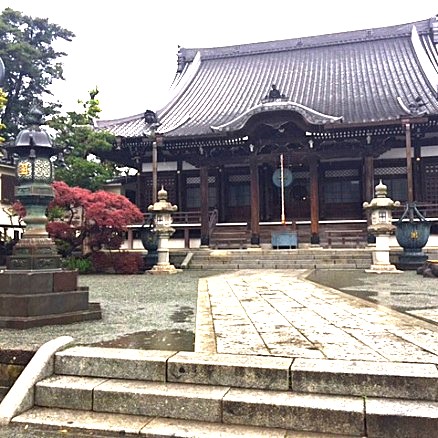
One of the famous swordsmiths is Goro-nyudo Masamune (五郎入道正宗).  You can easily visit Masamune’s tomb in Kamakura.  It is located at Honkaku-Ji Temple, about a 5 to 6-minute walk from Kamakura train station. 

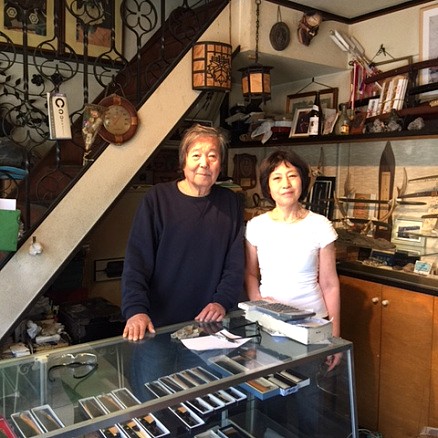
While I was attending Mori Sensei’s (teacher) sword study group, I studied with a student who is a twenty-fourth-generation descendant of Masamune.   Although he does not carry the Masamune name, he has been making excellent swords in Kamakura.  He also makes high-quality kitchen knives.  His shop is called “Masamune Kogei (正宗工芸).”  It is a short walk from Kamakura Station.  To find his shop, ask at the information center at the train station.

            with  Mr. Tsunahiro Yamamura                    Honkaku-Ji Temple

5 |Heian Period Swords  (平安時代太刀)

0-timeline - size 24 Heian

                       
                                      The circle indicates the time we discuss in this section

The Heian period is when the sword shape changed to the current curved form.  Before that, swords were straight.  It is widely accepted that the study of Japanese swords begins in the Heian period.   Swords made before the Heian period are considered archaeological artifacts.  The main reason is that sword-making techniques improved significantly after the start of the Heian period.

The elegant and graceful lifestyle of Heian culture is reflected in the style of swords.  A group of swordsmiths in the Kyoto region developed a specific sword style called Yamashiro-den (Yamashiro School).  The shape of their swords exhibits a graceful line.  The most famous sword of this period is Sanjo-Munechika (三条宗近 page 20), a national treasure today.  The Yamashiro-den represents the swords of the Heian period.                                                                                                                                 


                                                                                                      6a Heian period sword style

General Heian period sword style

The shape —————The length of a sword is about 30 inches ± a few inches.  It has an elegant, graceful shape, with a narrow blade and a small kissaki (小切先).  The curvature is deep.  This style is called Kyo-zori (京反り) or Torii-zori (鳥居ぞり).  In the Kyo-zori style, the deepest part of the curvature is near the middle of the blade.  The lower part of the sword flares out, creating an A-line shape similar to the lower part of the Eiffel Tower.  This flared shape is called funbari (踏ん張り).                                                                      

6b A line bottom

Hamon(刃文)———- Hamon is the line formed during the process of tempering.  The hamon on Heian period swords is narrow and usually suguha (直刃).  Suguha means a straight line.  The hamon is also Nie-based.  Nie(沸) are tiny particles in the hamon.   As shown below, if you look closely, you can see fine sand-like particles within the hamon line.

6 Straigh tempered line(Suguha)

10 Nie & Nioi

Ji-hada (地肌) ——–Fine wood-grained pattern.  The location of ji-hada (or ji-tetsu) is between the hamon and shinogi (see Chapter 3 |Names of Parts).

Nakago (中心)——– The nakago is the hilt area.  Sword makers inscribed their names there. During the Heian period, the nakago was often shaped like a kijimomo (雉腿), meaning a pheasant’s thigh.

6 Kijimomo-nakago

Hi and engrave ———- Hi (樋) means an engraved straight line.  Hi and other engraved designs were rare during the Heian period.  These became more common later on.

Kissaki (切先) ———– The shape of kissaki on a Heian sword is ko-gissaki, meaning small kissaki. The hamon line at the kissaki is called boshi.  During this period, the type of boshi design is called komaru, meaning small, round, and wrapping around the tip.

Names of the Heian period swordsmiths

  • Yamashiro School——–  Sanjo Munechika(三条宗近) Sanjo Yoshiie(三条吉家)                                                 Gojo Kanenaga(五条兼長) Gojo Kuninaga (五条国永)
  • Yamato School ————-Senju-in (千手院)
  • Bizen School ————— Bizen Tomonari(備前友成) Bizen Masatsune(備前正恒)                                                  Bizen Kanehira (備前包平)
  • Hoki (伯耆) —————–  Yasutsuna (安綱) Sanemori (真守)
  • Buzen (豊前) ————–   Cho-en (長円) Sinsoku (神息)
  • Satsuma (薩摩) ———— Naminohira (波平)