45|Part 2 of –11 Ikubi Kissaki (continued from Chapter 44)

This chapter is a detailed section of Chapter 11, Ikubi-kissaki, and continues from Chapter 44|Part 2 of 11 Ikubi-kissaki Sword.  Please read Chapter 11 and Chapter 44 before proceeding with this section.

0-timeline - size 24 Middle Kamakura

 The red circle above indicates the time we discuss in this section.

Bizen Saburo Kunimune (備前三郎国宗)

Another swordsmith worth mentioning in this section is Bizen Saburo Kunimune (備前三郎国宗).  During the middle Kamakura period, the Hojo clan invited top swordsmiths to Kamakura.  Awataguchi Kunitsuna (粟田口国綱) from Yamashiro in Kyoto, Fukuoka Ichimonji Sukezane (福岡一文字助真) from the Bizen area, and Bizen Kunimune (備前国宗) from the Bizen area moved to Kamakura with their circle of people.  These three groups started the Soshu-den (相州伝).  Refer to Chapter 14, Late Kamakura Period Swords.

  • Sugata (shape)  ——————— Ikubi-kissaki style.  Sometimes Chu-gissaki.  Thick body.  Koshi-zori. Narrow Shinogi width.                                                                                                
  • Horimono (Engravings)  —————- Often narrow Bo-hi (single groove)
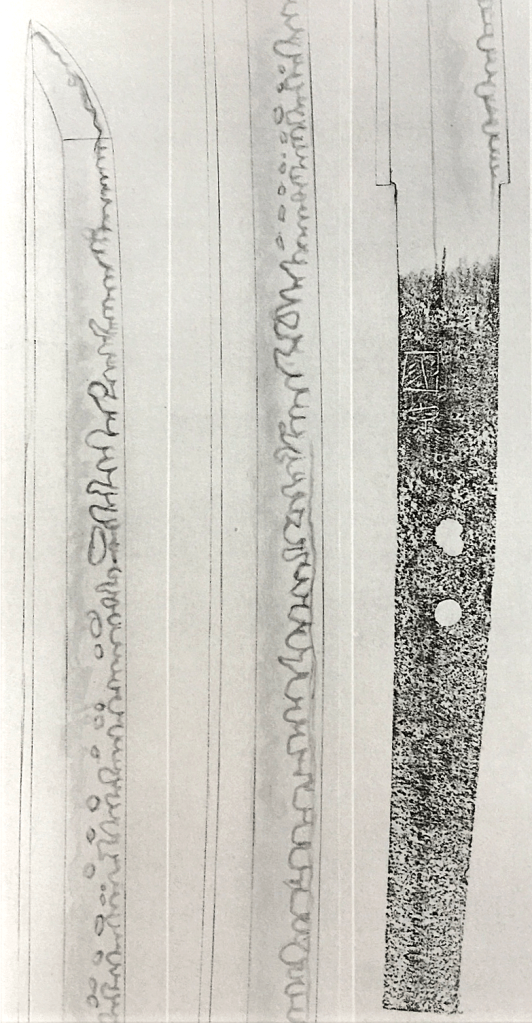
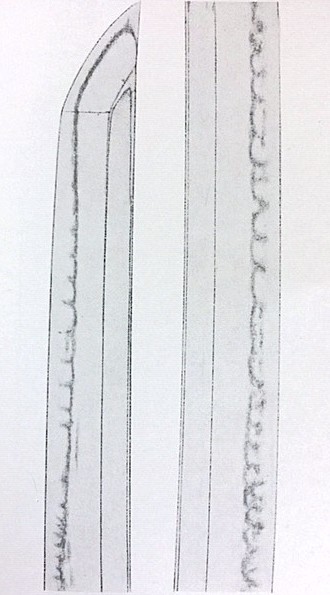
  • Hamon (Tempered line) ————- O-choji Midare (irregular large clove shape) with Ashi.  Or Ko-choji Midare (irregular small clove shape) with AshiNioi base with Ji-nie (Nie in the Hada area).  Some Hamon appear squarish with less Kubire (less narrow at the bottom of the clove).   Hajimi (刃染み rough surface) may show.  The Kunimune swords often show a lower part with Choji and an upper part with less activity without Ashi                                                                                                                                                                                                                        

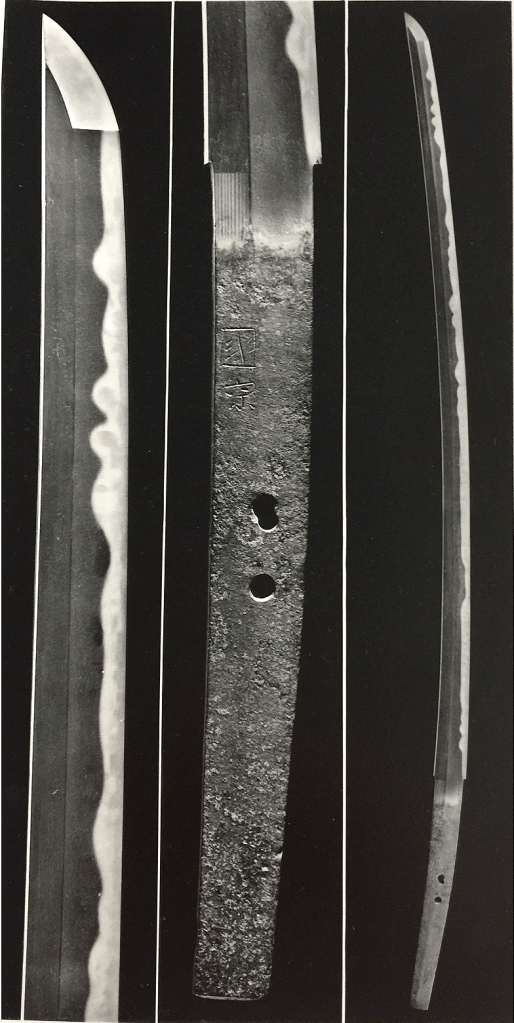
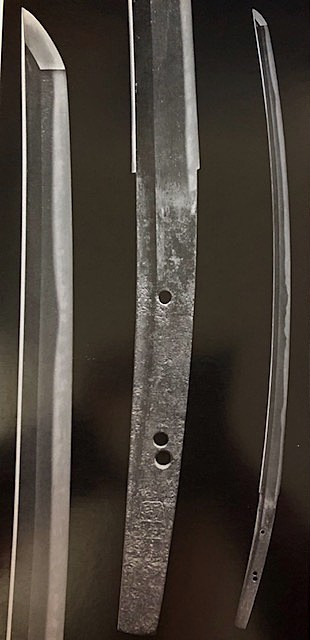
Kunimune Compton 1 Kunimune Compton 2Bizen Saburo Kunimune (備前三郎国宗)   Photo from “Nippon-to Art Sword of Japan, ” The Walter A. Compton Collection.   National Treasure

  • Boshi  ———————— Small irregular.  Yakizume or short turn back.
  • Ji-hada —————-Wood-grain pattern.  Fine Ji-hada with some Ji-nie (Nie inside Ji-hada).  Midare-utsuri (irregular shadow) is visible.  A few Hajimi (rough surface).
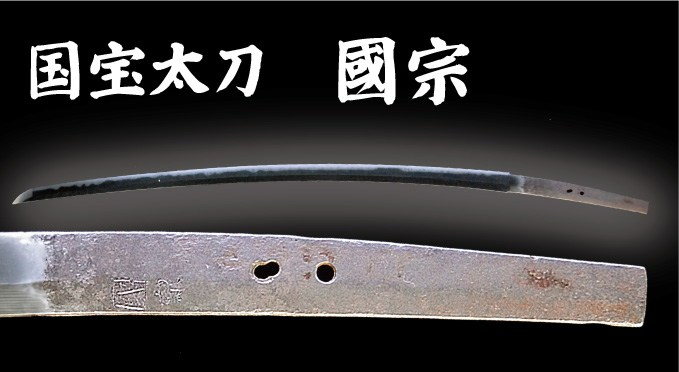
12 (second part 2) 照国神社The above photo is from the official website of the Terukuni Jinja Shrine in Kyushu.    http://terukunijinja.pkit.com/page222400.html

This is the national treasure, Kunimune, preserved at the Terukuni Jinja Shrine in Kagoshima Prefecture.  See the photos on the previous page.  This Kunimune sword was lost after WWII.  Dr. Compton, chairman of the board at Miles Laboratories in Elkhart, Indiana, found it in an antique shop in Atlanta.  I mentioned Dr. Compton in Chapter 32, Japanese Swords, after World War II.  When he saw this sword, he realized it was not just an ordinary sword.  He bought it and inquired at the Nihon Bijutsu Token Hozon Kyokai (The Japanese Sword Museum) in Tokyo.  It turned out to be the famous missing national treasure, Kunimune, from the Terukuni Jinja shrineHe returned the sword to the shrine without compensation in 1963. 

My father became close friends with him around this time through Dr. Homma and Dr. Sato, both leading sword experts.  Later, Dr. Compton asked Dr. Honma and my father to examine his collection of swords at his house, where he had many, as well as those at the Metropolitan Museum of Art in New York, the Philadelphia Museum of Art, and the Museum of Fine Arts in Boston.  My father wrote about this trip and the swords he examined in those museums and published a book in 1965 titled “Katana Angya (刀行脚).” 

For Dr. Compton and my father, those days must have been the best times of their lives.  Their business was doing well, and they could spend a lot of time on their interests and enjoy themselves.  It was also the best time for me.  One time, when I visited Compton’s house, he spent hours showing me his swords in the basement for hours, nearly all day.  His house was large, and the basement, which he had built as his study, had a fire prevention system. The lighting system was perfect for viewing swords and other art objects. 

His wife, Phoebe, told him he shouldn’t keep a young girl (I was a college student at the time) in the basement all day.  He agreed and took me to his cornfield to pick some corn for dinner.  From a basement to a cornfield, not much of an improvement?  So, Phoebe decided to take me shopping and have lunch in Chicago.  Good idea,  but it was too far.  Compton’s house was in Elkhart, Indiana.  The distance between Elkhart and Chicago was about 2.5 hours by car. It was too far just for shopping and lunch.  To my surprise, the company’s employee flew us to the rooftop of a department store, we did some shopping, had lunch, and then flew back.

Miles Laboratories and a well-known Japanese large pharmaceutical company had a business partnership at that time.  Dr. Compton frequently traveled to Japan for business purposes.  However, whenever he visited Japan, he spent days with sword people, including my father, and I usually followed him.  One of the female workers’ jobs at this pharmaceutical company was to translate the sword book into English. 

My parents’ house was filled with Miles’ products.  Miles Laboratories had a large research facility in Elkhart, Indiana.  I visited there several times.  One day, I sat with Dr. Compton in his office, looking into a sword book with our heads close together.  That day, movie actor John Forsythe visited the research lab.  He was the host of a TV program sponsored by  Miles Laboratories.  All the female employees were making a big fuss over him.  Then he entered Dr. Compton’s room to greet him, expecting the chairman to be sitting in his big chair at his desk, looking like a chairman.  But he saw Dr. Compton looking into the sword book seriously, with his head against mine.  Dr. Compton’s appearance was just like that of any chairman of the board of a major company, as one might imagine, and I was a Japanese college student looking like a college student.  John Forsythe showed a strange expression as if he did not know what to think.


41| Part 2 of — 8 Middle Kamakura Period: Yamashiro Den 鎌倉中期山城伝

This chapter is a detailed part of Chapter 8| Middle Kamakura Period –Yamashiro Den(鎌倉中期山城伝).   Please read Chapter 8 before reading this chapter.

0-timeline - size 24 Middle Kamakura

      The red circle indicates the time we discuss in this section

During the middle Kamakura period, the Yamashiroden consisted of 3 main groups: the Ayano-koji (綾小路) group, the Awataguchi (粟田口) group, and the Rai (来) group.

When referring to a specific group, we use terms like “xxx ha,” “xxx ippa,” or “xxx ichimon.”   We use these three terms interchangeably.  They all mean “group.”   For example, when we say “Ayano-koji ippa,” we refer to the Ayano-koji group.

Ayano-koji Ippa (綾小路)

Sugata (shape) —————–Generally, a gentle or graceful kyo-zori shape.  The difference in width between the yokote line and the machi is minimal.  The sword is slender, yet thick, with a small kissaki.                                                                                                                         

Hi and Engraving ———————– Bo-hi (single groove) or futasuji-hi (double grooves) 

Hamon ——————— Nie base with ko-choji (small clove shape) and ko-midare (small irregular).  Small inazuma (lightning-like lines) and kinsuji (golden streaks) may be present.   Double ko-choji (two ko-choji side by side) may appear.   

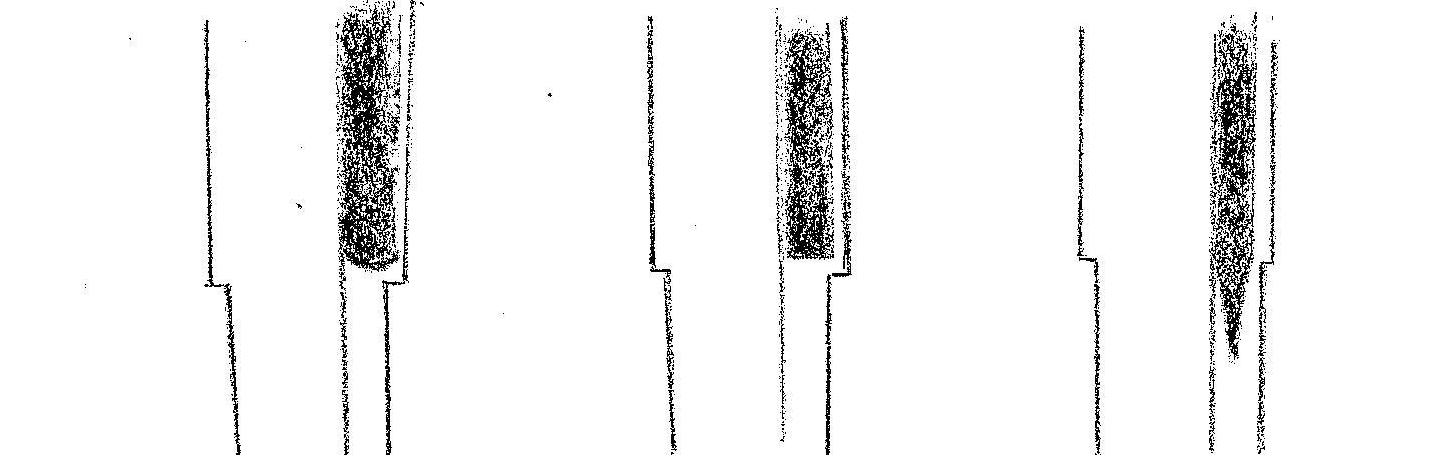
Boshi (tempered line at the kissaki area) ———————– Ko-maru (small round), yakizume (see the illustration below ), and kaen (flame-like pattern)   

Ji-hada —————– Small wood grain with a little masame (straight grain).  Ji-nie shows. 

Nakago (hilt) ———————— Long, slightly thick feel  

Ayano-koji Ippa swordsmiths ———-Ayano-koji Sadatoshi (綾小路定利)  Sadanori (定則)        

Awataguchi Ichimon (粟田口)

Many swordsmiths from the Awataguchi Ichimon (or Awataguchi group) were honored as the Goban Kaji (the top swordsmith) by Gotoba Joko, Emperor Gotoba (後鳥羽上皇).  Their general characteristics are as follows.

Sugata (Shape) ————————- Elegant torii-zori (or kyo-zori) shape.     

Hi and Engraving ————– The tip of the hi extends all the way up and fills in the ko-shinogi.   The end of the hi can be maru-dome (the end is round), kaku-dome (the end is square), or kakinagashi.


9 «part 2» 大小丸,焼詰,丸角止, 掻流     

              Maru-dome (rounded end)             Kaku-dome (square)          Kakinagashi

  • Hamon ———— The slightly wider tempered line at the bottom, then it becomes narrower at the top.  Nie base (called Nie-hon’i).  A straight tempered line mixed with ko-choji (small cloves) or a wide straight line combined with choji.  Awataguchi-nie appears.  Awataguchi-nie, which refers to a fine, deep, sharp, shiny nie that appears around the tempered line area. Fine inazuma (lightning-like lines) and kinsuji (golden streaks) emerge.

  • Boshi (tempered line at the tip area) —————— Ko-maru (small round)  and/or O-maru (large round).   The return is sharrow.  Yakizume, Nie Kuzure, and Kaen (flame)9-«part-2»-大小丸焼詰丸角止-掻流-1-e1547925390685.jpg

       Yakizume      O-maru     Ko-maru         Yakikuzure
  • Ji-hada ————– Fine ko-mokume (wood swirls) with ji-nie.  Ji-nie is nie on ji-hada. Yubashiri and/or chikei appear.                                                                               
  • Nakago ——————————– Often featuresa two-letter inscription
  • Names of Awataguchi swordsmiths —– Awataguchi Kunitomo (粟田口国友 ),  Hisakuni (久国), Kuniyasu (国安),  Kuniyasu (国安), Kunikiyo (国清)

 Rai Ha ()

The general characteristics of the Rai group are as follows.  However, each swordsmith has their own unique traits.

Sugata (shape) ——– Graceful and dignified.  Thick body.  Rai forged Ikubi Kissaki.         Hi and Engravings ————————- Wide and shallow hi.                                      Hamon ————————- Nie base.  Suguha (straight).  Wide suguha with ko-midare (small irregular) and choji (cloves).  Sometimes, there is a large choji at the lower part and a narrow suguha at the top.  Inazuma and Kinsuji appear around the yokote area.      Boshi ————————————- Komaru, yakizume (see the illustration above)            Ji-hada ——————— Finely forged itame (small wood grain).  Sometimes mixed with masame (parallel grain).  Fine nie.  Rai group’s swords occasionally show yowai tetsu (weak surface), which may be the core iron.    

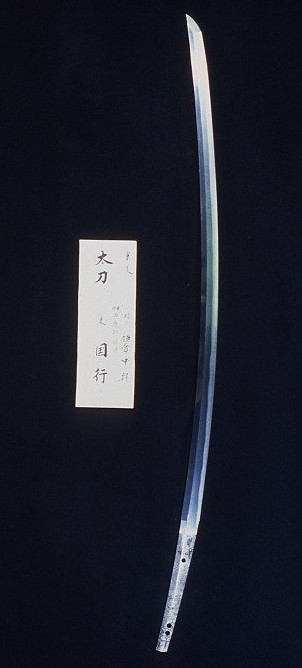
Rai Ha swordsmiths———————- Rai Kuniyuki (来国行),  Rai Kunitoshi (来国俊) or Niji Kunitoshi (二字国俊),  Ryokai (了戒 ).  Rai Kunitoshi is said to be the son of Rai Kuniyuki. Ryokai is said to be the son of Rai Kunitoshi.

img017

    Rai Kuniyuki (来国行)Once my family sword, photo taken by my father with his  writing.    
9 «part 2» Rai Kuniyuki photo.jpg       Rai Kuniyuki hamon
 
Rai Kuniyuki (来国行)Sano Museum Catalogue (佐野美術館)  (permission granted)

14| Late Kamakura Period Sword (鎌倉末太刀)

0-timeline - size 24 Late Kamakura

The red circle above indicates the time we discuss in this section

The beginning of the Soshu style

A new sword style called Soshu-den appeared after the Mongolian invasion during the later part of the Kamakura period.  The Kamakura region became prosperous under the rule of the Hojo family (北条).  Many swordsmiths moved to Kamakura.  These included the Kunitsuna group (国綱)  from the Yamashiro area and Fukuoka Ichimonji Sukezane (福岡一文字助真) and Kunimune (国宗) from the Bizen area.  They are the originators of Soshu-den (相州伝).  A well-known swordsmith, Goro-Nyudo-Masamune (五郎入道正宗), emerged during this time.

15 Soshu sword with explanation

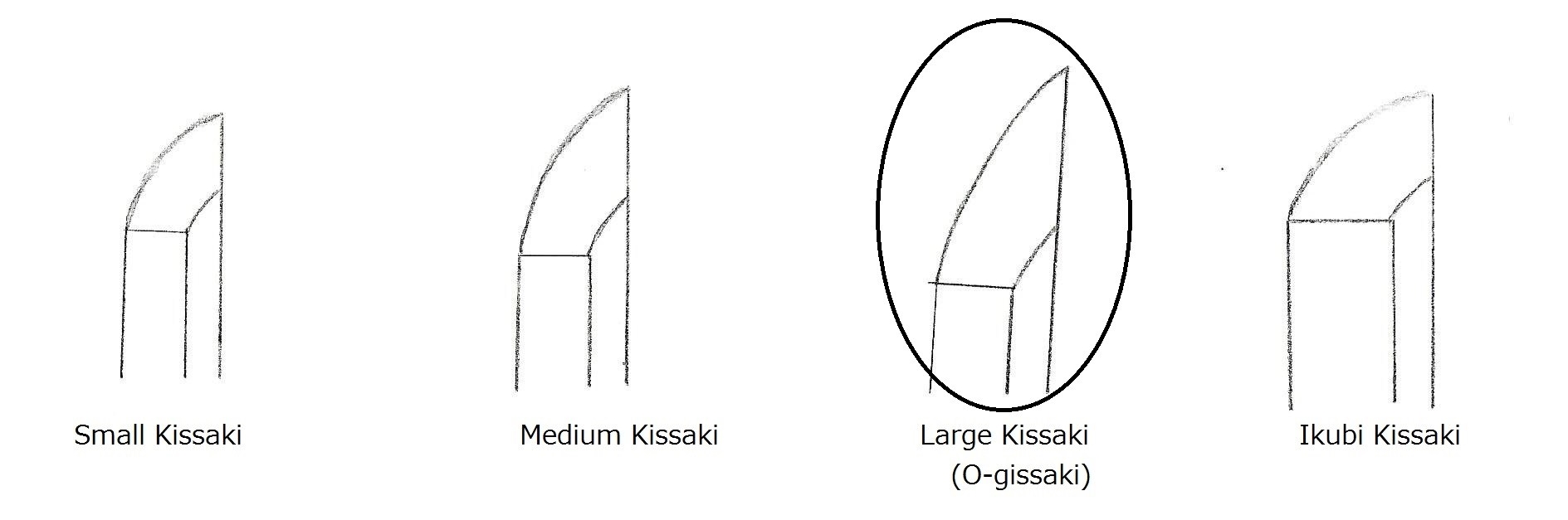
Sugata (Shape 姿) ——- Okissaki (large kissaki: 大切先) and chu-kissaki (medium kissaki: 中切先).   The tip of the hi ends lower (see the illustration below).  Hamaguriha is no longer in style.  The body has become thinner.  The original length was approximately three feet or longer, but most were later shortened to two feet, three inches, or four inches.  The shortened sword is called o-suriage (大磨上).

15 Kissak shape of 4

14 Hi end lower

Hamon——————–Narrow Hamon and wide Hamon.     

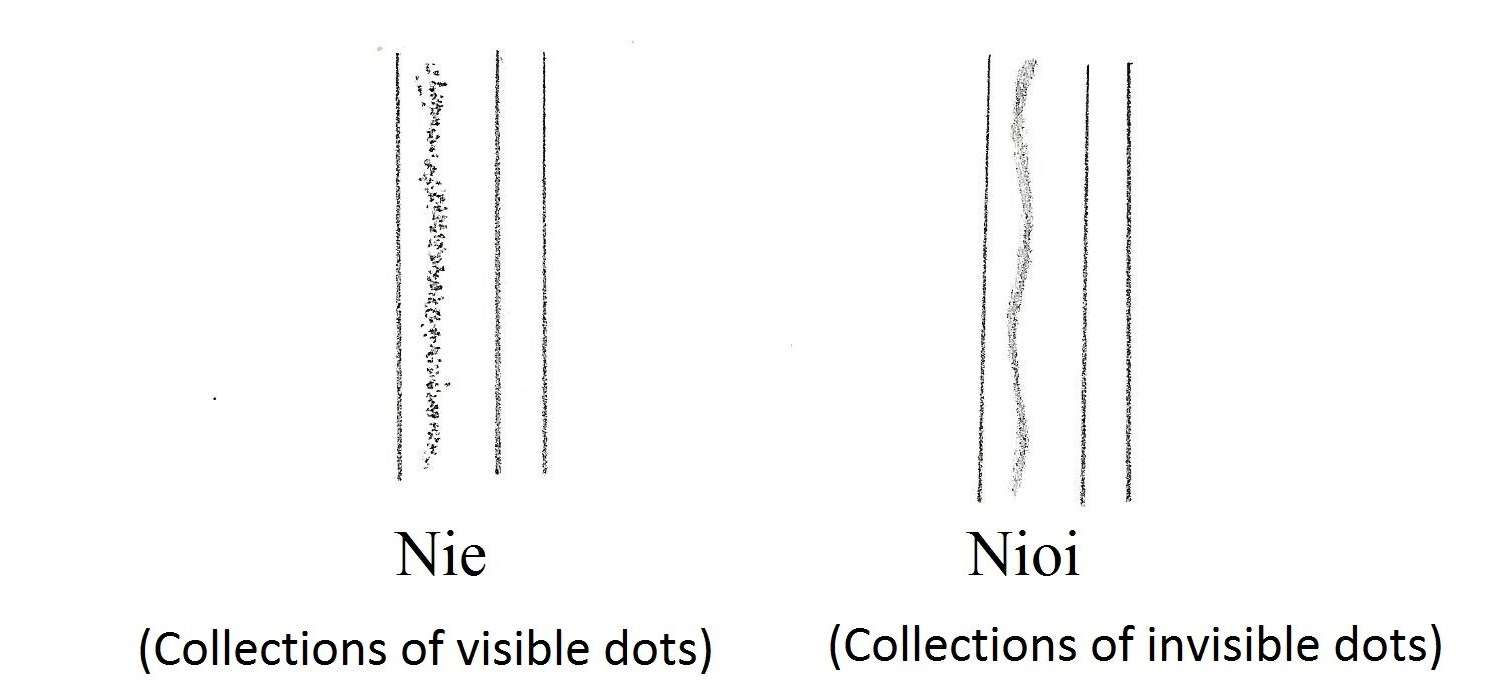
Narrow Hamon ——- A mix of Suguha (straight),  Ko-choji (small clove-like pattern), and Ko-gunome (small half-circle pattern).  Small Nie base. (shown below)

10 Nie & Nioi

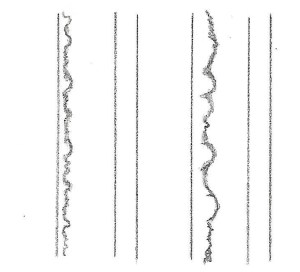
Wide Hamon ——– Notare midare (wavy).  O-gunome.  Nie base.  Ashi-iri (short line toward the blade, the right drawing below). Inazuma (lightning-like line) or kinsuji (bright line) may appear on a tempered line.  However, inazuma and kinsuji require trained eyes to detect.  It is difficult for beginners to see inazuma or kinsuji.  

15 Late Kamakura Soshu Hamon

Boshi————The main body and boshi have the same type of hamon.  At the tip of the kissaki, angle it back slightly or yakizume.  You might also see o-maru (large round), ko-maru (small round), kaen (flame-like), or nie-kuzureYakizume and kaen (Chapter 12).

15 three boshi name

Ji-hada (between the shinogi and the tempered line) ——-Strong ji-nie (地沸), which are sand-like small dots appearing on the ji (between the tempered line and the mune).  Yubashiri (a cluster of ji-nie), kinsuji (a bright, radiant line formed by nie), inazuma (a lightning-like irregular line), or chikei (similar to kinsuji) may appear on the ji-hada.

15 Yubashiri, Chikei, Inazuma

Late Kamakura Period Soshu School Sword Smiths

From Bizen————–Fukuoka Ichimonji Sukezane (福岡一文字助真) Kunimune (国宗 )   From Yamashiro ————————————–Toroku- Sakon- Kunituna (藤六左近国綱) 

The three swordsmiths mentioned above originated the Soshu-den (school) in Kamakura.  Later, Tosaburo Yukimitu and his son, the famous Goro Nyudo Masamune, emerged.

More  Soshu Den swordsmiths other than above

From Yamashiro (山城)———- Rai Kunitsugu (来国次), Hasebe Kunishige (長谷部国重) From Etchu (越中) province ———————Gou- no-Yoshihiro (郷義弘) Norishige (則重) From   Mino (美濃) province ——————————————-Kaneuji (兼氏) Kinjyu (金重) From   Chikuzen (筑前) province —————————————————-Samoji (左文字)

Goro Nyudo Masamune (正宗): his hamon is like ocean waves. (Sano Museum permission granted)        

Masamune  (政宗)                                          Yoshioka Ichimonji (吉岡一文字)

Once owned by my family