42|Part 2 of — 9 Middle Kamakura Period : Bizen Den (鎌倉中期備前伝)

This chapter is a detailed part of Chapter 9.  Please read 9 | Middle Kamakura Period (Bizen Den) 鎌倉中期備前伝  before reading this chapter.

0-timeline - size 24 Middle Kamakura

                         The red circle indicates the time we discuss in this section

The middle Kamakura period marked the height of the Bizen-den.  In many regions outside Bizen, sword styles often reflected local preferences and politics in specific areas.  However, the Bizen sword has its own style and has not been significantly influenced by these elements throughout time.  The clients of Bizen swords come from across the country.  Therefore, Bizen swordsmiths created swords that appealed to everyone. 

The general style of Bizen Den

  • In general, their style appeals to everyone.
  • The shape, the width of the blade, the thickness of the body, and the tempered line are of standard size or usual design, rarely out of the ordinary.
  • Nioi base
  • Soft feeling Ji-gane (steel)
  • Utsuri (cloud-like shadow) appears.
  • The tempered line tends to have a consistent width, neither too wide nor too narrow.

Fukuoka Ichimonji group

 Names of swordsmiths among the Fukuoka Ichimonji group

Fukuoka Ichimonji Norimune (福岡一文字則宗) and Fukuoka Ichimonji Sukemune (福岡一文字助宗) were the leading swordsmiths of the Fukuoka Ichimonji group (福岡一文字).   From this group, six swordsmiths, including Norimune and Sukemune, received the honor of “Gobankaji” from Emperor Gotoba (後鳥羽上皇).   I saw Fukuoka Ichimonji Muneyoshi (福岡一文字宗吉) in Mori Sensei’s class on June 25, 1972.  My notes pointed out a lot of utsuri (shadows) on the blade.

Sugata (shape) ——————- A graceful and elegant shape.  Generally, it has well-balanced proportions.  The difference between the top width and the bottom width is minimal.  Occasionally, a stout-looking kissaki called ikubi-kissaki (refer to Chapter 11, Ikubi Kissaki (猪首切先) appears.

Hi and Engraving ———–The tip of the hi may follow the ko-shinogi line.  See below.  The end of the hi goes under machi, ends with a square or kakinagashi (see Chapter 41)

44 hisaki agaru

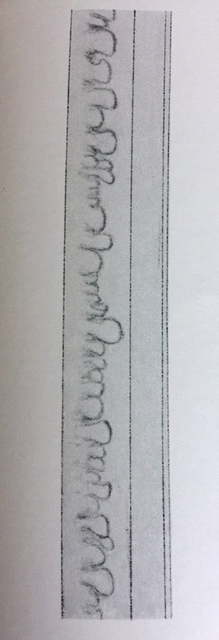
Hamon  ———- Wide ichimonji-choji tempered line.  It indicates the consistent width of the tempered line from the bottom to the top.  The same hamon appears on both sides.  O-choji-midare  (large clove-like pattern), juka-choji (overwrapped-looking choji).  Nie base.  Inazuma and/or kinsuji may appear.

Boshi ————– Same Hamon continues into the Boshi area and ends with Yakizume or turns slightly.  Sometimes O-maru.

Jihada ———– A fine and soft appearance.  Itame (woodgrain pattern).   Lots of utsuri (cloud-like shadow or reflection)
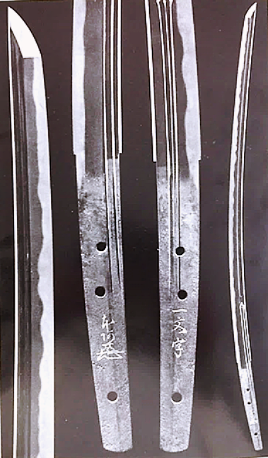
                   44 Ichimonjio hamon

                 Ichimonji  Sano Museum Catalogue (佐野美術館) Permission granted

*The sword above is o-suriage.  The end of the hi is lower than the mekugi-ana inside the nakago.


41| Part 2 of — 8 Middle Kamakura Period: Yamashiro Den 鎌倉中期山城伝

This chapter is a detailed part of Chapter 8| Middle Kamakura Period –Yamashiro Den(鎌倉中期山城伝).   Please read Chapter 8 before reading this chapter.

0-timeline - size 24 Middle Kamakura

      The red circle indicates the time we discuss in this section

During the middle Kamakura period, the Yamashiroden consisted of 3 main groups: the Ayano-koji (綾小路) group, the Awataguchi (粟田口) group, and the Rai (来) group.

When referring to a specific group, we use terms like “xxx ha,” “xxx ippa,” or “xxx ichimon.”   We use these three terms interchangeably.  They all mean “group.”   For example, when we say “Ayano-koji ippa,” we refer to the Ayano-koji group.

Ayano-koji Ippa (綾小路)

Sugata (shape) —————–Generally, a gentle or graceful kyo-zori shape.  The difference in width between the yokote line and the machi is minimal.  The sword is slender, yet thick, with a small kissaki.                                                                                                                         

Hi and Engraving ———————– Bo-hi (single groove) or futasuji-hi (double grooves) 

Hamon ——————— Nie base with ko-choji (small clove shape) and ko-midare (small irregular).  Small inazuma (lightning-like lines) and kinsuji (golden streaks) may be present.   Double ko-choji (two ko-choji side by side) may appear.   

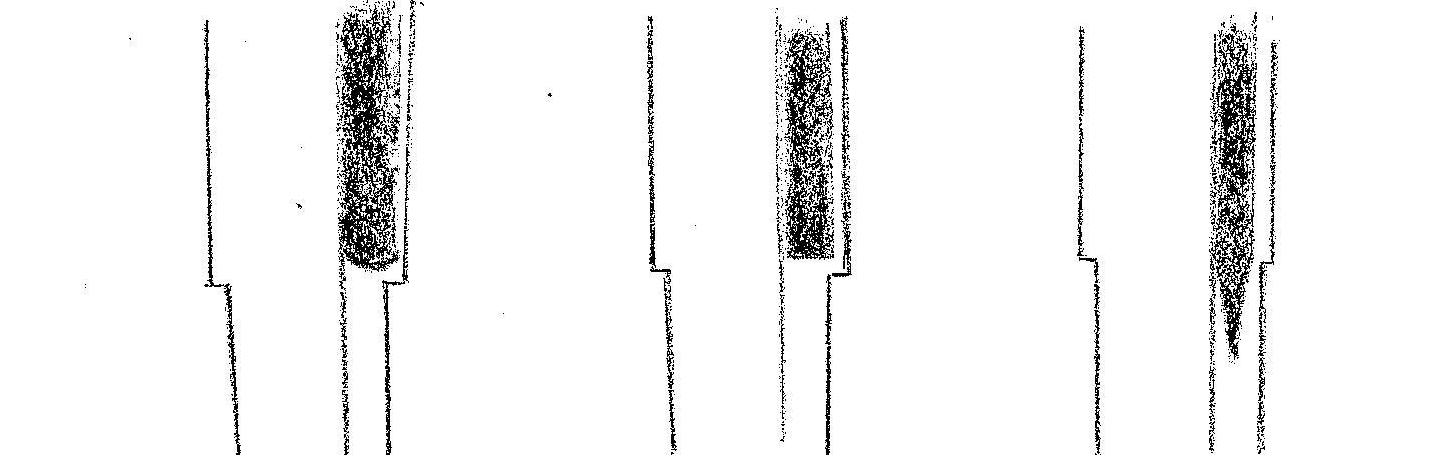
Boshi (tempered line at the kissaki area) ———————– Ko-maru (small round), yakizume (see the illustration below ), and kaen (flame-like pattern)   

Ji-hada —————– Small wood grain with a little masame (straight grain).  Ji-nie shows. 

Nakago (hilt) ———————— Long, slightly thick feel  

Ayano-koji Ippa swordsmiths ———-Ayano-koji Sadatoshi (綾小路定利)  Sadanori (定則)        

Awataguchi Ichimon (粟田口)

Many swordsmiths from the Awataguchi Ichimon (or Awataguchi group) were honored as the Goban Kaji (the top swordsmith) by Gotoba Joko, Emperor Gotoba (後鳥羽上皇).  Their general characteristics are as follows.

Sugata (Shape) ————————- Elegant torii-zori (or kyo-zori) shape.     

Hi and Engraving ————– The tip of the hi extends all the way up and fills in the ko-shinogi.   The end of the hi can be maru-dome (the end is round), kaku-dome (the end is square), or kakinagashi.


9 «part 2» 大小丸,焼詰,丸角止, 掻流     

              Maru-dome (rounded end)             Kaku-dome (square)          Kakinagashi

  • Hamon ———— The slightly wider tempered line at the bottom, then it becomes narrower at the top.  Nie base (called Nie-hon’i).  A straight tempered line mixed with ko-choji (small cloves) or a wide straight line combined with choji.  Awataguchi-nie appears.  Awataguchi-nie, which refers to a fine, deep, sharp, shiny nie that appears around the tempered line area. Fine inazuma (lightning-like lines) and kinsuji (golden streaks) emerge.

  • Boshi (tempered line at the tip area) —————— Ko-maru (small round)  and/or O-maru (large round).   The return is sharrow.  Yakizume, Nie Kuzure, and Kaen (flame)9-«part-2»-大小丸焼詰丸角止-掻流-1-e1547925390685.jpg

       Yakizume      O-maru     Ko-maru         Yakikuzure

  • Ji-hada ————– Fine ko-mokume (wood swirls) with ji-nie.  Ji-nie is nie on ji-hada. Yubashiri and/or chikei appear.                                                                               
  • Nakago ——————————– Often featuresa two-letter inscription
  • Names of Awataguchi swordsmiths —– Awataguchi Kunitomo (粟田口国友 ),  Hisakuni (久国), Kuniyasu (国安),  Kuniyasu (国安), Kunikiyo (国清)

 Rai Ha ()

The general characteristics of the Rai group are as follows.  However, each swordsmith has their own unique traits.

Sugata (shape) ——– Graceful and dignified.  Thick body.  Rai forged Ikubi Kissaki.         Hi and Engravings ————————- Wide and shallow hi.                                      Hamon ————————- Nie base.  Suguha (straight).  Wide suguha with ko-midare (small irregular) and choji (cloves).  Sometimes, there is a large choji at the lower part and a narrow suguha at the top.  Inazuma and Kinsuji appear around the yokote area.      Boshi ————————————- Komaru, yakizume (see the illustration above)            Ji-hada ——————— Finely forged itame (small wood grain).  Sometimes mixed with masame (parallel grain).  Fine nie.  Rai group’s swords occasionally show yowai tetsu (weak surface), which may be the core iron.    

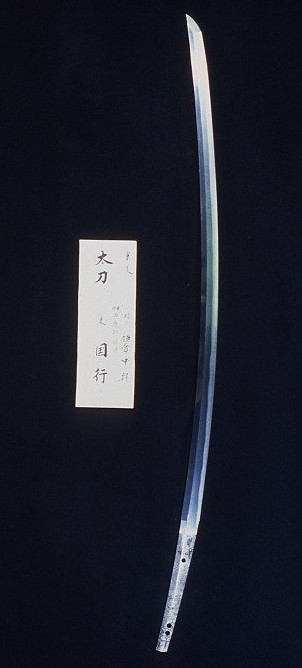
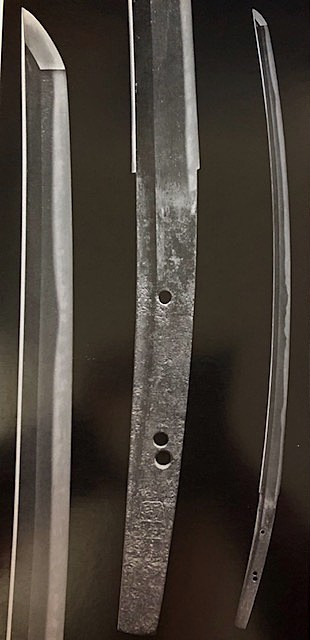
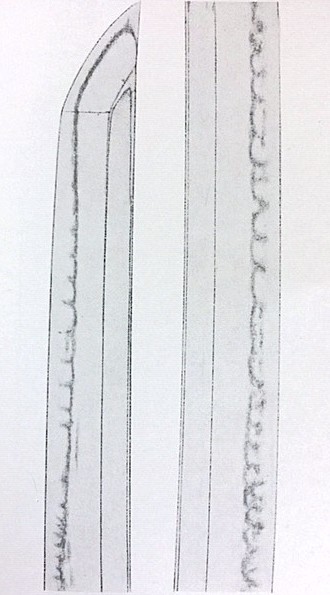
Rai Ha swordsmiths———————- Rai Kuniyuki (来国行),  Rai Kunitoshi (来国俊) or Niji Kunitoshi (二字国俊),  Ryokai (了戒 ).  Rai Kunitoshi is said to be the son of Rai Kuniyuki. Ryokai is said to be the son of Rai Kunitoshi.

img017

    Rai Kuniyuki (来国行)Once my family sword, photo taken by my father with his  writing.    
9 «part 2» Rai Kuniyuki photo.jpg       Rai Kuniyuki hamon
 
Rai Kuniyuki (来国行)Sano Museum Catalogue (佐野美術館)  (permission granted)