58|Part 2 of — 24 Sengoku Period Tanto (戦国時代短刀)

Chapter 58 is a detailed section of Chapter 24, Sengoku Period Tanto.  Please read Chapter 24, Sengoku Period Tanto, before reading this part. 

0-timeline - size 24 Sengoku Period

           The red circle above indicates the time we discuss in this section  

Muramasa (村正)

This chapter discusses the famous Muramasa (村正).  Usually, many well-known swordsmiths come from one of the Goka-den (五家伝: the five main schools: Yamashiro-den, Bizen-den, Soshu-den, Yamato-den, and Mino-den).  However, Muramasa was not from Goka-den but from Ise Province.  The first-generation Muramasa was known as a student of He’ian-jo Nagayoshi (平安城長吉) of Yamashiro-den.  The Muramasa family existed through the mid-Muromachi period.  They spanned three generations from the mid-Muromachi to the Sengoku period

61 Ise map

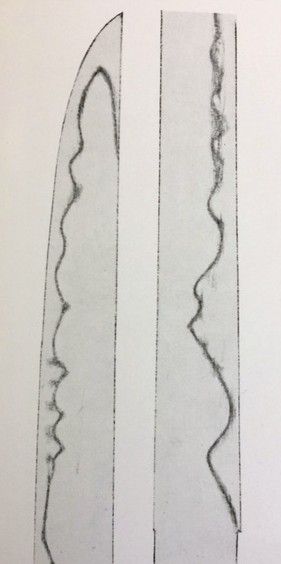
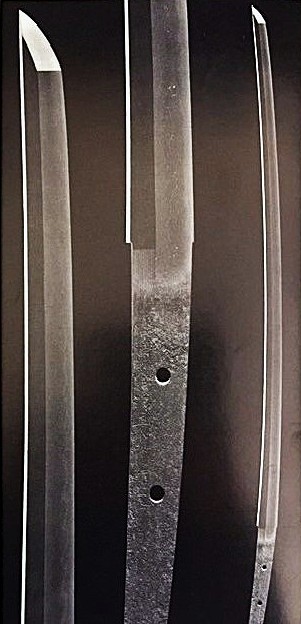
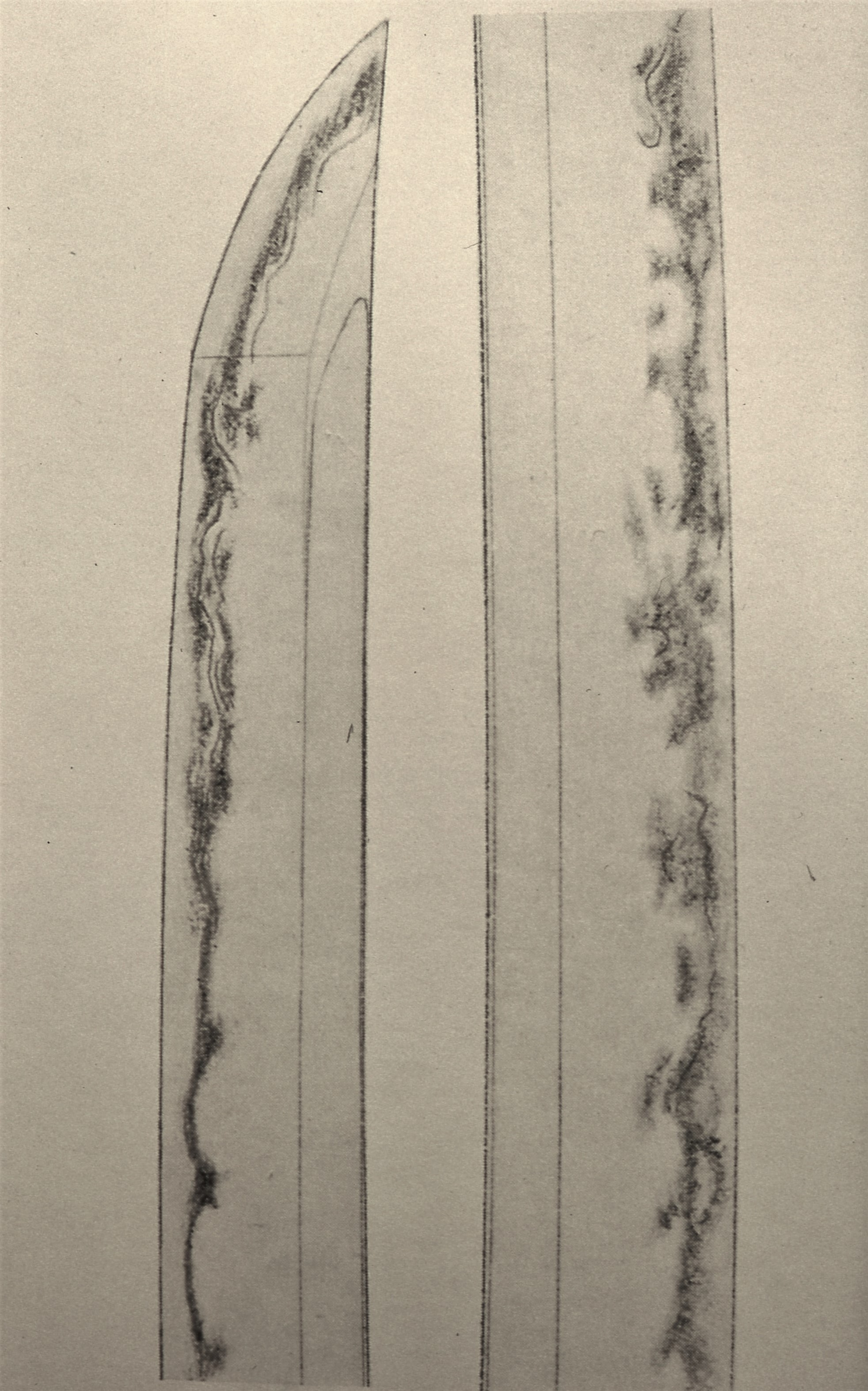
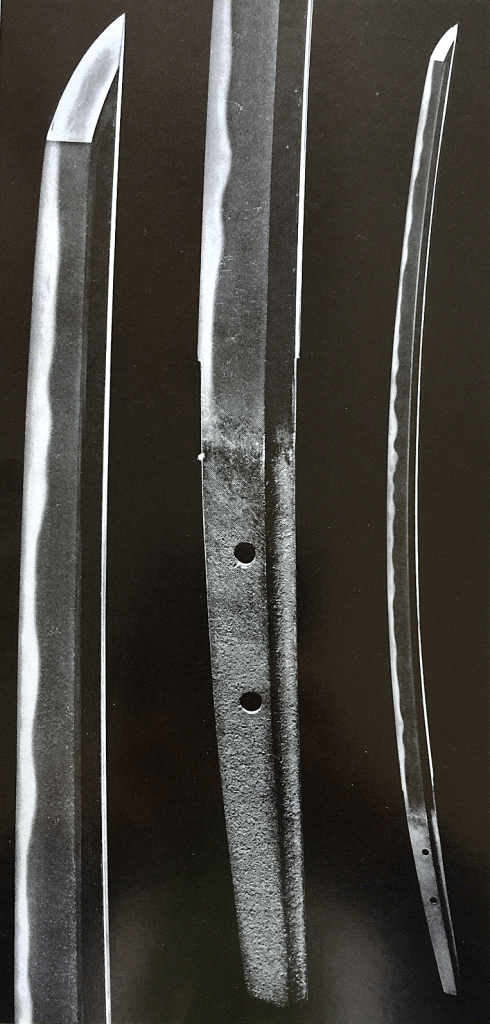
Below is one of Muramasa’s tantos, made during the Sengoku period.  Since it was made during the Sengoku era, the blade shows the style of Sengoku-period swords.  It reflects Mino-den characteristics, combined with Soshu-den traits. 


 Muramasa (村正) from Sano Museum Catalogue (permission granted)

Characteristics  on this Tanto

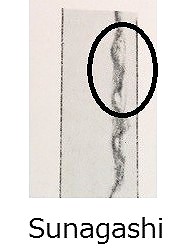
Muramasa’s tantos are typically about ten inches ± half an inch or so.  Hirazukuri (平作り). Thin blades with a sharp look.  The nioi base with small nie and sunagashi patterns (brushed sand-like patterns, as shown in the illustration below) appears.  The boshi (the top part of the hamon) is jizo (a side view of a human head).  The tempered line varies with both wide and narrow areas.  Some areas are so narrow, almost close to the edge of the blade, while others are broader.  Hako midare (box-like shape) and gunome (lined-up bead pattern) appear.  O-notare (large, gentle waviness) is a signature characteristic of Muramasa.  The pointed-tempered line is a typical characteristic of Mino-den (Sanbon-sugi).  Refer to Chapter 23, Sengoku Period Sword, and Chapter 24, Sengoku Period Tanto.


55 |Part 2 of —–21 Muromachi Period Sword (室町時代刀)

Chapter 55 is a detailed section of Chapter 21, Muromachi Period Sword.  Please read Chapter 21 before reading this part.

57 Muromach-timeline size 22

                         The circle above indicates the time we discuss in this section

After the Muromachi period, swords shifted to katana(刀) from tachi (太刀), as described in Chapter 21, Muromachi Period Sword.  Refer to Chapter 21, Muromachi Period Sword.  By the end of the Nanboku-cho period, sword lengths had shortened to about 2 feet ± a few inches.  The 3-to-5-foot-long swords seen during the Nanboku-cho period were no longer produced.  This change occurred because, during the Nanboku-cho period, warriors mainly fought on horseback, but after the Muromachi period, infantry combat became more common.

Oei Bizen (応永備前)                                                                                                              The pronunciation of Oei is “O” as in “Oh” and “ei” as in “A” from ABC.  The Muromachi period was a declining time for sword-making.  The swords made during the early Muromachi period in the Bizen area is known as Oei BizenOsafune Morimitsu (長船盛光), Osafune Yasumitsu (長船康光), and Osafune Moromitsu (長船師光) were the main Oei Bizen swordsmiths.  Soshu Hiromasa (相州広正) and Yamashiro Nobukuni (山城信國) were also similar to the Oei Bizen style.  Please refer to Chapter 21, Muromachi Period Sword, for details on the  Muromachi sword shape, Hamon, Boshi, and Ji-hada.

                       Bishu Osafune Moromitsu (備州長船師光)   from Sano Museum Catalogue ((permission granted)

The Osafune Moromitsu sword shown above measures 2 feet 5 inches in length and has a medium kissaki.  Its hamon has a small wave-like pattern with continuous gunome (a lined half-circle pattern).  The boshi area shows irregular waviness with a slightly pointed tip.  Very faint bo-utsuri (a soft shadow shaped like a strip of wood) appears on ji-hadaBo-utsuri is a distinctive feature among all the Oei Bizen

Before the Muromachi period, many swordsmith groups operated in the Bizen region. However, by the Muromachi period, Osafune (長船) was the only remaining group.

Osafune (長船) is the name of a region, but it became the surname of swordsmiths during the Muromachi period.  Two other well-known swordsmiths from Oei Bizen are Osafune Morimitsu (盛光) and Osafune Yasumitsu (康光).  The hamon created by Morimitsu and Yasumitsu is more detailed than that of the sword in the photo above.  Chapter 21, Muromachi period swords, shows the hamon of Morimitsu and Yasumitsu and describes the typical characteristics of swords from the Muromachi period.

                                                 Hirazukuri Ko-Wakizashi Tanto

58 Hirazukuri Ko-Wakizashi Tanto

Hirazukuri Ko-Wakizashi Tanto Shape                                                                       

Hirazukuri ko-wakizashi tanto was a popular style during the early Muromachi period. Swordsmiths from various regions produced tantos similar to the one shown above. However, most of these types were made by Oei Bizen swordsmiths.

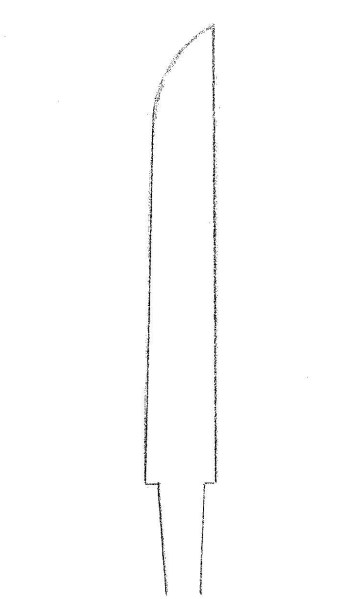
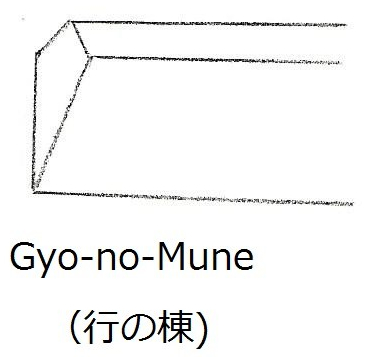
The characteristics of the Hirazukuri ko-wakizashi tanto ————-Typically about one foot and 1 or 2 inches long.  No yokote line, no shinogi, and no sori (meaning no curvature, straight back).  Average thickness.  Narrow width.  Gyo-no-mune (refer to Chapter 12, Middle Kamakura Period Tanto).

13 Mune drawing

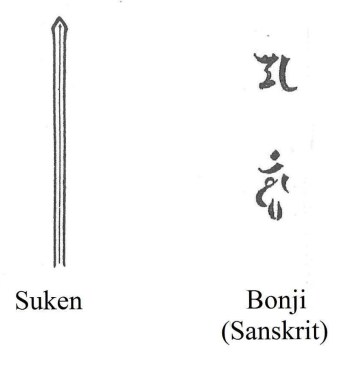
Hirazukuri Ko-wakizashi tanto often shows many engravings.  Hi with soe-hi (double lines, wide and narrow side by side), Tokko-tsuki-ken, Tsume-tsuki-ken, Bonji, and more.

.

9 Hi, Suken, Bonji20 Tokko, tume Ken  58 tsumetukiken and Hi

*drawings from “Nihonto no Okite to Tokucho” by Honami Koson


54|Part 2 of — 20|Muromachi Period History (室町時代歴史)

This is a detailed section of Chapter 20, Muromachi Period History.  Please read Chapter 20 before reading this part.


0-timeline - size 24 Nuromach & Sengoku

                      The red circleabove indicate the time we discuss in this chapter

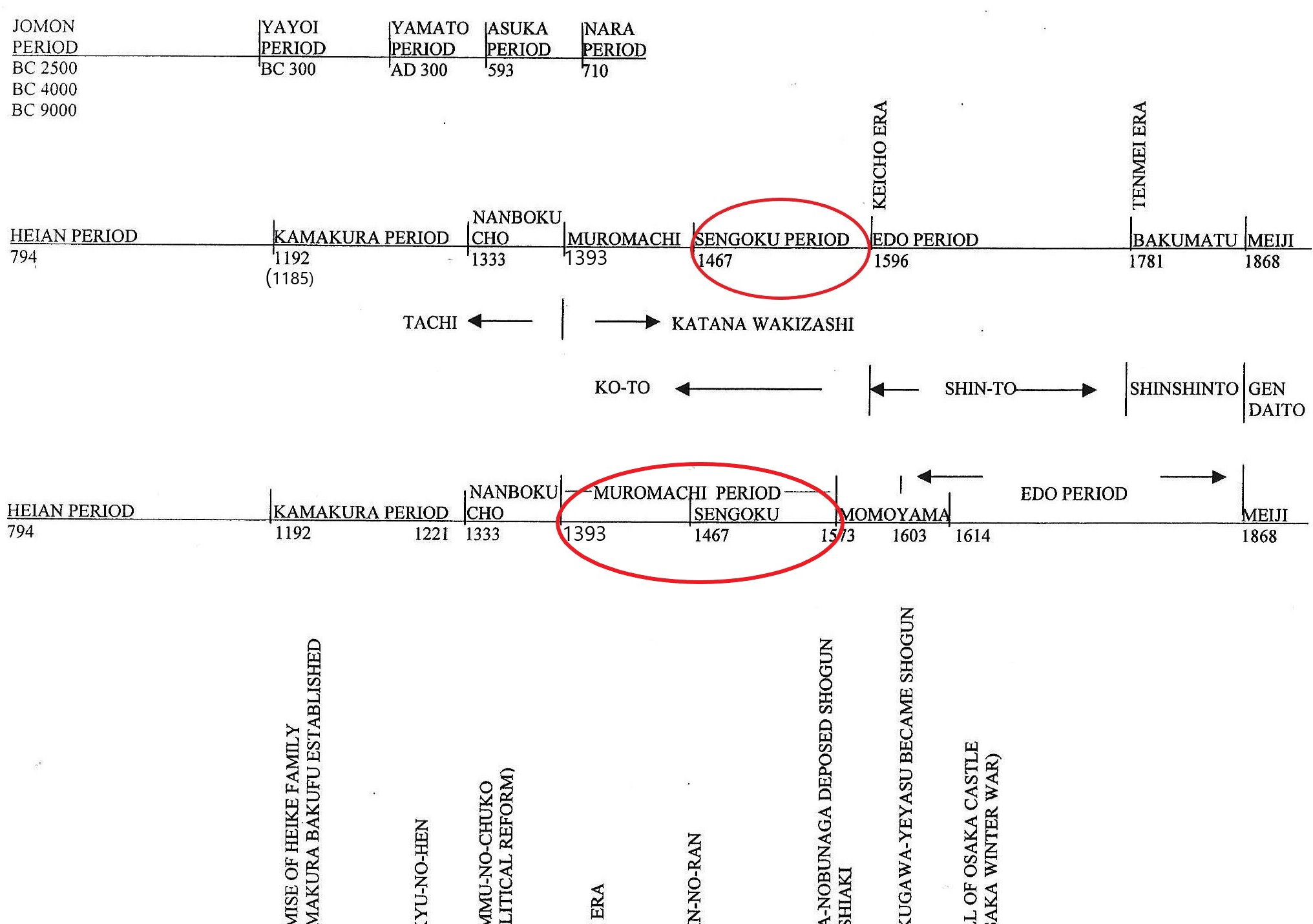
Until the Muromachi (室町) period, the study of political history and sword history ran in parallel.  The timelines above show that the middle line represents sword history, and the bottom line represents political history.  

The styles of swords were distinctly different between the Muromachi and Sengoku periods (戦国時代).  Therefore, for sword study, the Muromachi and Sengoku periods should be separated.   Japanese history textbooks define the Muromachi period as 1393 (the end of the Nanboku-cho) to 1573, when Oda Nobunaga (織田信長) deposed Shogun Ashikaga Yoshiaki (足利義昭) from Kyoto (the fall of the Muromachi bakufu).   In these textbooks, the Sengoku period is considered part of the Muromachi period.  However, we need to distinguish between the Muromachi and Sengoku periods for the study of swords.

 Ashikaga Yoshimitsu (足利義満)

The best period during the Muromachi era was when Shogun Ashikaga Yoshimitsu (足利義満: grandson of Ashikaga Takauji) was in power.  He moved the bakufu to Muromachi (室町) in Kyoto; therefore, this era is called the Muromachi period.  By the time most of the South Dynasty’s samurai had surrendered to the North Dynasty, the South Dynasty had accepted Shogun Yoshimitsu’s offer to stop fighting against the North.  This acceptance established the Ashikaga family’s power within the Muromachi Bakufu

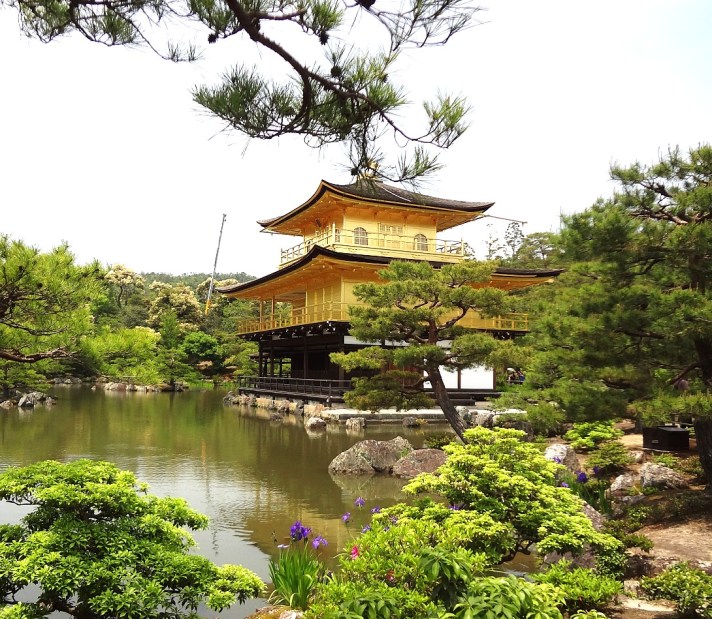
Shogun Ashikaga Yoshimitsu generated tremendous profits from trade with China (Ming). He built a famous resort villa in Kyoto, the Golden Pavilion (Kinkaku-ji Temple 金閣寺*). It is believed that he created the Golden Pavilion to display his power and wealth. The beautiful culture known as Kitayama Bunka (Kitayama culture 北山文化) flourished during this period.

*Golden Pavilion (金閣寺: Kinkaku-ji Temple) —– Its official name is Rokuon-ji Temple (鹿苑寺).  Saionji Kintsune (西園寺公経) originally built it as his resort house during the Kamakura period.  Shogun Yoshimitsu acquired it in 1397 and turned it into his villa.  He also used it as an official guesthouse. 

After Shogun Yoshimitsu’s death, the villa was converted into Rokuon-ji Temple.  It is part of the Rinzaishu Sokoku-ji Temple, which served as the main temple of a Zen sect denomination, called the Rinzaishu Sokoku-ji group (臨済宗相国寺派).  Kinkaku-ji is a reliquary hall that contains relics of the Buddha.  Kinkaku-ji Temple represents the grand Kitayama Bunka (Kitayama culture).  In 1994, it was designated a UNESCO World Cultural Heritage Site. https://www.shokoku-ji.jp/kinkakuji/


57 Kinkakuji trip 2019                                                               My photo  May 2019,

Ashikaga Yoshimasa (足利義政)

After the death of Shogun Ashikaga Yoshimitsu (足利義満), the Muromachi bakufu became less financially stable, and its military power declined.  Consequently, the daimyo (feudal lords) increased their control.  A few generations after Shogun Yoshimitsu, Ashikaga Yoshimasa, the eighth Shogun, took power.  His wife was the well-known Hino Tomiko (see Hino Tomiko in Chapter 20, Muromachi Period History). 

It is said that Shogun Yoshimasa was not interested in his role as shogun; instead, he was more interested in art and culture.  He laid the foundation for today’s Japanese art and culture, including the Japanese garden, Shoin-zukuri (書院造) interior design, the tea ceremony, flower arrangements, painting, and other art forms.  His cultural influence is known as Higashiyama Bunka (Higashiyama culture (東山文化).  

As described in Chapter 20, Muromachi Period History (室町時代), Shogun Yoshimasa did not have any children.  His brother Yoshimi (義視) was expected to become the next Shogun. However, his wife, Hino Tomiko, gave birth to a son, Yoshihisa (義尚).  Hino Tomiko sought support from Yamana Sozen (山名宗全: a powerful family) to back her son.  Meanwhile, the brother, Yoshimi, was connected with Hosokawa Katsumoto (細川勝元: another powerful family).  The problem was that Shogun Yoshimasa paid too much attention to his cultural pursuits and failed to address the issue he created by not being clear about who should succeed him as Shogun.  He did not hand over the shogunate to either party. 

In 1467, in addition to the succession problem and conflicts of interest among powerful daimyo, a civil war, known as “Onin-no-run (応仁の乱),” broke out.  All daimyo were divided, siding with either the Hosokawa or the Yamana factions.   Eventually, the war spread throughout Japan and lasted more than 10 years.  Finally, in 1477, after the deaths of Hosokawa Katsumoto and Yamana Sozen, Shogun Yoshimasa decided to transfer the shogunate to his son Yoshihisa.  As a result of this war, Kyoto was devastated, and the power of the Muromachi Bakufu declined significantly. 

While all this was happening and people were suffering, Yoshimasa continued to spend money on building the Ginkaku-ji Temple (銀閣寺: The Silver Pavilion).  He died before seeing the completion of Ginkaku-ji Temple.  The Onin-no-ran would lead to the next Sengoku period, a 100-year-long Warring States period.

*Shoin-zukuri (書院造)———- A traditional Japanese residential interior style with Tatami mats, a nook, and shoji screens (sliding doors).  This style forms the basis for interior design in modern Japanese homes.

Shoin Zukuri style Japanese room

57 Shoin zukuri

Public Domain   GFDL,cc-by-sa-2.5,2.0,1.0 file: Takagike CC BY-SA 3.0view terms      File: Takagike Kashihara JPN 001.jpg

My japanese room                                                                      My Japanese room

22| Sengoku Period History (戦国時代歴史)

0-timeline - size 24 Sengoku Period 0

The red circle above indicates the time we discuss in this section

The timeline above shows two circles.  In political history, the Sengoku period (戦国時代) is part of the Muromachi period (室町), which is the lower circle.   However, in sword history, we separate the Muromachi and Sengoku periods (Warring States period), the top circle.  In sword history, we divide the time this way because, during those two periods, sword styles changed, and the environment of sword-making also changed.

After the Onin-no-ran (応仁の乱) began (discussed in 20|Muromachi Period History), the beautiful capital city of Kyoto (京都) was in a devastated condition.  The shogun’s (将軍) power reached only over a small area.  The rest of the country was divided into about thirty small independent states.  The leaders of these independent states were called shugo daimyo (守護大名).  They were originally government officials who were appointed and sent there by the central government.

Powerful local samurai often became the leaders of these states.  They fought against each other to take over each other’s land.  During the Sengoku period, vassals would kill their lords and steal their domains, or farmers would revolt against their lords.  A state like this is called “gekoku-jo” (lower-class samurai overthrow the superior). 

This was the time of the Warring States, known as the Sengoku period.  The leader of each state was called a Sengoku daimyo (戦国大名: Warlord).  The Sengoku period lasted about 100 years.  Gradually, powerful states defeated weaker ones through long, fierce battles, expanding their territory.  Around thirty small countries became twenty, then ten, and so on.  Eventually, only a few dominant sengoku daimyo (warlords) remained.  Each daimyo from those states fought their way to Kyoto and tried to become the top ruler of Japan.  The first one who almost succeeded was Oda Nobunaga (織田信長).  However, he was killed by his vassal, Akechi Mitsuhide (明智光秀), and soon Akechi was killed by his colleague, Toyotomi Hideyoshi (豊臣秀吉).  

After Toyotomi Hideyoshi defeated Akechi Mitsuhide, his troops, and other major warlords, he nearly completed the unification of Japan.  Yet, Hideyoshi still had one more rival to deal with to finish his goal.  That was Tokugawa Iyeyasu (徳川家康).  Now, Toyotomi Hideyoshi and Tokugawa Ieyasu are the last contenders for the top position.  Both recognized that their opponents were smart and capable.  Any wrong move could be disastrous.  Therefore, they decided to maintain a friendly coexistence on the surface for the time being.  Although Toyotomi Hideyoshi tried to make Tokugawa Ieyasu his vassal, Tokugawa Ieyasu somehow managed to avoid that.  In Tokugawa Ieyasu’s mind, being younger than Toyotomi Hideyoshi, he knew he could simply wait until Hideyoshi‘s natural death, which eventually happened. 

After Hideyoshi’s death, Tokugawa Ieyasu fought Hideyoshi’s vassals and won at the Battle of Sekigahara (関ヶ原の戦い) in 1600.  Then, in 1615, at the Battle of the Osaka Natsu-no-jin (Osaka Summer Campaign: 大阪夏の陣), Tokugawa defeated Hideyoshi’s son’s army.  Following this, the Toyotomi clan was dissolved entirely, and the Edo (江戸) period began.  It is called the Edo period because Tokugawa Ieyasu lived in Edo, which is now Tokyo (東京).

*The Sengoku period is frequently depicted in TV dramas and movies.  People who lived through that era had a tough time, but it was also the most exciting time for creating TV shows and films.  The lives of Oda Nobunaga, Toyotomi Hideyoshi, and Tokugawa Ieyasu are among the most popular stories in Japan.  In particular, the story of Toyotomi Hideyoshi is among the most popular.  His background was that of a poor farmer, but he rose to become the top ruler of Japan.  That is a fascinating success story.


23 Toyotomi_hideyoshi

Portrait of Toyotomi Hideyoshi (豊臣秀吉) by Kano Mitsunobu, owned by Kodai-Ji Temple      From Wikimedia Commons, the free media repositon.

20|Muromachi Period History (室町時代歴史)    

0-timeline - size 24 Muromach
                   The red circle iabove ndicates the time we discuss in this section

The Muromachi period started after Ashikaga Takauji (足利尊氏) and several other key leaders ended the Nanboku-cho period.  Discussed in 17|Nanboku-cho Period History (1333-1393).

The grandson of Ashikaga Takauji, Ashikaga Yoshimitsu (足利義満, often called Shogun Yoshimitsu), constructed a beautiful new palace in the Muromachi (室町) area of Kyoto.  The palace became the center of government, known as the Muromachi bakufu (室町幕府: Muromachi government).   This is the beginning of the Muromachi period.  Ashikaga Yoshimitsu also built the famous “Kinkaku-ji Temple” * (Golden Pavilion) in Kyoto as his second residence.

Kinkaku-ji Temple* (金閣寺: Golden Pavilion) —————Ashikaga Yoshimitsu (足利義満) built Kinkaku-ji in 1397.   Later, it became a Rinzai-Shu (臨済宗) Buddhist temple, but it was originally built as the secondary residence of Ashikaga Yoshimitsu and a guest house for official visitors.  Today, it is a designated World Heritage site.  The temple was burned down by an arsonist in 1950 but was rebuilt in 1955.  Novelist Mishima Yukio wrote a novel, “Kinkaku-ji,” which relates to this temple and the arsonist.  A famous quote from his book is, “The ho-oh (a mythic golden bird, a Chinese version of the phoenix) on the roof of Kinkaku-ji Temple is stationary, but it flies through time eternally.”

During the Muromachi period, the emperor’s power declined.  The shogun (将軍) held all the political power.  Gradually, several groups of samurai who were officially appointed as shugo daimyo (守護大名: high-ranking officials) began to gain political and economic power by occupying key positions in the Muromachi bakufu.  They also owned extensive land.  Two powerful shugo daimyo families were the Hosokawa (細川) and Yamana (山名).

The Ashikaga family made great efforts to establish the Muromachi bakufu as a stable and strong government through political measures.  The beginning of the Muromachi period was peaceful and prosperous.  However, by the time Ashikaga Yoshimasa (足利義政) became the eighth shogun, the Muromachi bakufu had become severely corrupt.  Shogun Yoshimasa paid little attention to governing the country.  Instead, he pursued women (his mother scolded him for this), spent large amounts of money building the Silver Pavilion called “Ginkaku-ji Temple (銀閣寺),” and retreated there.  Since Shogun Yoshimasa did not have an heir, his brother, Yoshimi (義視), was appointed as the next shogun.

However, later, Yoshimasa’s wife, Hino Tomiko (日野富子)*, gave birth to a son, Yoshihisa (義尚).  Now, brother Yoshimi (義視) allied with the high-ranking officials, the Hosokawa (細川), while his son, Yoshihisa, allied with another powerful family, the Yamana (山名).  Several smaller samurai groups allied with either side, and the war broke out.  This war, called Onin-no-ran (応仁の乱), occurred in 1467.  It spread across the country and lasted for eleven years.

Hino Tomiko (日野富子)*————————-The wife of Shogun Yoshimasa.  She took advantage of her political privileges to generate substantial income by investing in the rice market, thereby controlling prices and selling at high profits.  Then, she loans this money to high-ranking officials at steep interest rates.  The corruption reached an uncontrollable level.

As a result of the Onin-no-ran, beautiful Kyoto was burned to the ground.  The authority of the Muromachi bakufu only extended to small areas of nearby Kyoto.  The Onin-no-ran led to the next period called the Sengoku period (戦国時代), or the Warring States period.  During the Sengoku period, Japan was divided into approximately thirty small, independent states that fought one another until Oda Nobunaga, Toyotomi Hideyoshi, and Tokugawa Ieyasu unified them.

57 Kinkakuji trip 2019

 The photo was taken in May 2019, a family trip to Kyoto

17| Nanboku-cho Period History 1333-1392(南北朝歴史)

0-timeline - size 24 Nanboku-cho

            The red circle above indicates the time we discuss in this section.

After Jokyu-no-ran (Chapter 10 Jokyu-no-ran), the power of the Imperial Court declined significantly.  The successor, the Hojo clan, which was a dominant force during the Kamakura period, also began to face financial difficulties and began to lose control over regional lords.  One reason was the costs incurred by the Mongol invasion.  The Kamakura bakufu (government) could not adequately reward the samurai who fought hard during the war.  As a result, they became very dissatisfied with the bakufu.  Seeing this as an opportunity, Emperor Go-Daigo attempted to attack the Kamakura bakufu twice but failed both times.  He was exiled to Oki Island.  In the meantime, Ashikaga Takauji (足利尊氏) and several groups of anti-Kamakura samurai gathered armed forces and succeeded in destroying the Kamakura bakufu in 1333.  This war ended the Kamakura period.                                                                                                                                                  

Emperor Go-Daigo, who had been exiled to Oki Island, returned to Kyoto and attempted political reforms.  This reform was known as Kenmu-no-chuko (or Kenmu-no-shinsei, 建武の中興).  However, his reforms failed to satisfy most of the ruling class.  Seeing an opportunity, Ashikaga Takauji attacked the Imperial Court in Kyoto, deposed Emperor Go-Daigo, and installed a member of a different branch of the Imperial family as emperor. 

Emperor Go-Daigo, however, insisted on his legitimacy, moved to Yoshino in the south of Kyoto, and established another Imperial court.  Thus, the Northern and  Southern Dynasties began.  With much strife between these rival courts and internal problems within each court,  more samurai groups began to move to the Northern Dynasty.  About sixty years later, the Southern Dynasty was forced to accept the Northern Dynasty’s proposal.  Consequently, the Northern Dynasty became the legitimate imperial court.  This sixty-year period is referred to as the Nanboku-cho or Yoshino-cho period. 

During the Nanboku-cho period, samurai preferred longer, more elaborate, yet practical swords.  The Soshu-den was at the height of its prominence.  However, the Soshu group was not the only one to produce Soshu-den-style swords.  Other schools and provinces in different areas also made Soshu-den-style swords.

Late Kamakura Period Swordsmiths (Early Soshu-Den time)

  • Tosaburo Yukimitsu (藤三郎行光)  
  • Goro Nyudo Masamune (五郎入道正宗)     
  • Hikoshiro Sadamune (彦四郎貞宗)

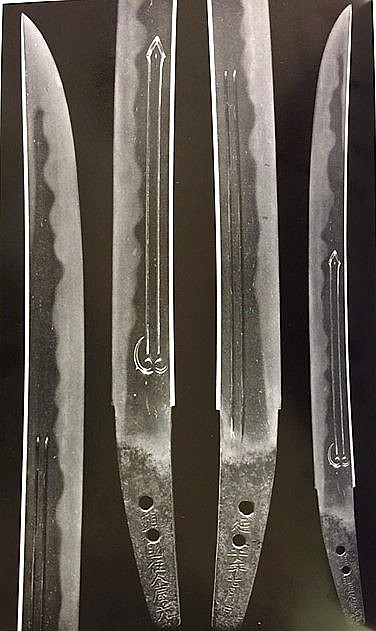
 17 Masamune hamon (Sano)             Masamune from Sano Museum Catalog (permission granted)
Nanboku-cho Period Swordsmiths  (Middle Soshu-Den time)

  • Hiromitsu (広光)   
  • Akihiro (秋広)

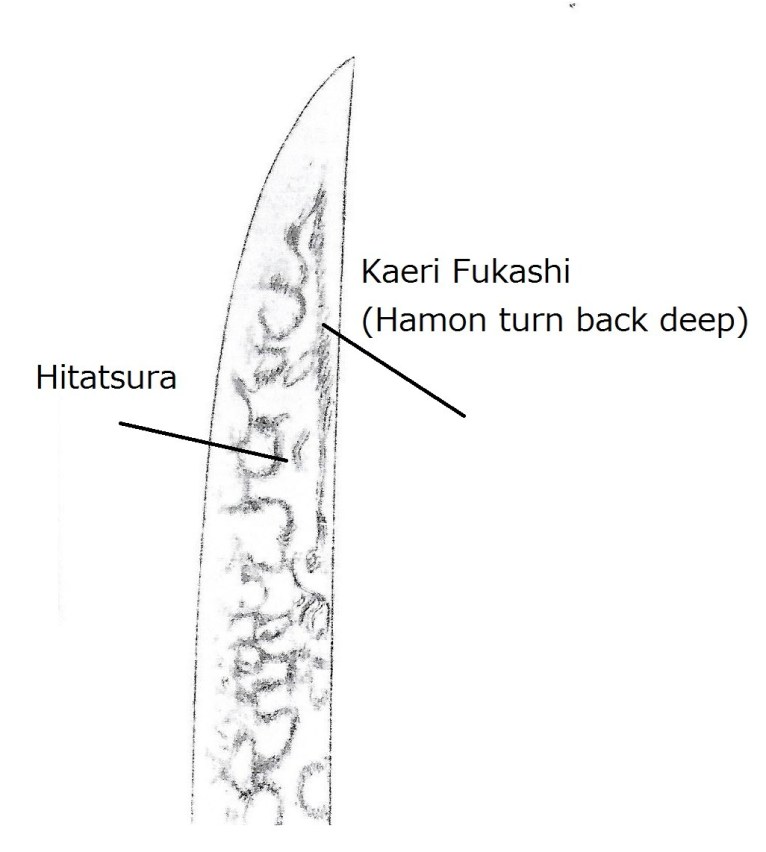
 20 Hitatsura Hiromitsu Hitatura )                  Hiromitsu from Sano Museum Catalog (permission granted)

Muromachi Period Swordsmiths (Late Soshu-Den time)

  • Hiromasa (広正)    
  • Masahiro (正広)