39|Part 2 of — 6 Kamakura Period History 1192 – 1333 (鎌倉時代歴史 )

This chapter is a detailed part of Chapter 6, Kamakura Period History 1192 – 1333. Please read Chapter 6 before reading this section. Since this continues from chapter 6, some of the information here may overlap with Chapter 6.

0-timeline - size 24 Kamakura Period                         The red circle above indicates the time we discuss in this section

Taira-no-Kiyomori (平清盛)

Chapter 6, Kamakura Period History, describes two major samurai groups, the Genji (源氏) and the Heishi (平氏), at the end of the Heian period.  The leader of the Genji was Minamoto-no-Yoshitomo (源義朝), and the leader of the Heishi (or Heike) was Taira-no-Kiyomori (平清盛).  They were childhood friends.  However, due to political situations and circumstances, they became enemies by the time they reached adulthood.  After several power struggles, the Genji lost, and Taira-no-Kiyomori gained considerable power.  He favored his followers, gave them high positions, and arranged for his daughter to marry the emperor.   As a result, Kiyomori’s power went even beyond that of the emperor.  This was when people would say, “If you are not a part of the Heishi family, you are not a human being.”   A situation like this created too many opponents against him.  Eventually, the suppressed Genji and other samurai groups united, raised an army, fought the Heishi, and defeated them.

While Taira-no-Kiyomori was in power, he began trading with China, which contributed to Japan’s economic prosperity.  The picture below is the Itsukushima Jinja Shrine (厳島神社), built by Taira-no-Kiyomori.  It is registered as a UNESCO World Heritage Site.

shutterstock_252533968-600x375

From Wikipedia.  The photo is in the public domain. Author: Rdsmith4      File Itsukushima Floating Shrine.jpg 8 /05/04

Minamoto-no-Yoshitsune (源頼朝)

Minamoto-no-Yoritomo (源頼朝) was the son of Minamoto-no- Yoshitomo(源義朝).  After Yoshitomo was defeated by Taira-no-Kiyomori (平清盛), the direct bloodline of Genji, Minamoto-no-Yoritomo was sent to Izu Island.  He was in his early teens. 

Yoritomo grew up as a young man on Izu Island, where he met Hojo Masako (北条政子).  She was the daughter of Hojo Tokimasa (北条時政), a local government official.  While Tokimasa was away on a business trip to Kyoto, Yoritomo and Masako had a baby.  Tokimasa feared that if the Heishi found out about his daughter and Yoritomo, the Hojo family could get into trouble.  So, he planned to have Masako marry someone else.  However, she eloped with Yoritomo the night before the wedding.  It is said that this story was written in the famous Japanese history book “Azuma Kagami: 吾妻鏡” and a few other books.  People started to believe this was how it happened between them

However, some argue that the story might not be exactly how it happened.  Meanwhile, in Kyoto, the Heishi became very powerful and tyrannical within the central government, called Chotei (朝廷), and suppressed their opponents.  All the angry, dissatisfied groups formed an army to attack the Heishi.  Minamoto-no-Yoritomo was the leader of these opposing groups, and his army grew larger and stronger with the help of Masako‘s father, Hojo Tokimasa.  By this time, Hojo Tokimasa came to realize that he would have had a better chance if he had sided with his son-in-law.  The Genji army pushed the Heishi all the way to the southern part of Japan.  The Heishi was defeated at a place called Dan-no-Ura (壇ノ浦) near Kyushu (九州) in 1185.

Yoritomo established the Kamakura Bakufu (Kamakura government) in Kamakura.  After Yoritomo‘s death, his wife Masako proved her ability as a leader. She saved the Kamakura bakufu when the central government, Chotei, attacked it. 

Here is a well-known story about her.  When Yoritomo used to go around to visit other women in Kamakura, Masako would send her men to follow her husband and had them set fire to the house of the woman whom her husband was after.  In her mind, the Hojo were the ones who made Yoritomo the head of the Kamakura bakufu.  Without the Hojo family’s assistance, Yoritomo could not have achieved his success.

1024px-Kaguraden-Hachimangu_Kamakura

Tsurugaoka Hachiman-gu  in Kamakura  Author: Urashimataro      From Wikipedia  Photo is public domain

Tsurugaoka Hachimangu is one of the main shrines in Kamakura.  It is within walking distance of the Kamakura train station.  The photo above shows a large shrine at the top of the long stairs.  Every year on Dec 31, a large number of people visit the shrine to hear the Joya-no-kane (除夜の鐘: the night watch bells on New Year’s Eve)

Minamoto-no-Yoshitsune (源義経)

Minamoto-no-Yoritomo (源頼朝) had several half-brothers.  Taira-no-Kiyomori (平清盛) saved the lives of these young boys on the condition that they would become monks when they grew up.  For Kiyomori, they were the sons of childhood friends, after all.  One of them was Ushiwaka-maru (牛若丸: later Minamoto-no-Yoshitsune源義経), whom Taira-no-Kiyomori raised as his own child.  Ushiwaka-maru believed that Kiyomori was his father.  Later, Yoshitsune was raised at Kurama Yama Temple. 

He lived there until he became a teenager.  After that, he went to live with the O-shu Fujiwara (奥州藤原) family.   They resided in the northern part of Japan, quite a distance away from Kyoto The O-shu Fujiwara clan was very wealthy.  They had a luxurious culture there.  Because of the distance from Chotei (the central government), they acted as if they were an independent country.   They created great wealth by mining gold and trading it with countries outside Japan. 

Yoshitsune lived there quite happily for a while, but when he heard that his half-brother Yoritomo had raised an army to attack the Heishi, he decided to join them.  Yoshitsune was highly skilled in battles.  He won many famous battles, which were critical for the Genji to win the war.  

Yoritomo had a grand political plan for how to proceed to take over the Heishi’s power.   However, Yoshitsune did not understand it.  He was a skilled warrior, but not a politician.  That made Yoritomo irritated and angry with him.  On top of that, Yoshitsune became quite popular in Kyoto.  That made Yoritomo anxious, and he decided to eliminate Yoshitsune

Yoshitsune fled to O-shu, Fujiwara.  Initially, the O-shu Fujiwara protected Yoshitsune but could not hold against Yoritomo’s army.  Ultimately, Yoritomo destroyed the O-shu Fujiwara entirely in the end.  Today, a grand structure built by the O-shu Fujiwara has been restored.  You can visit “Konjiki-do: 金色堂” inside “Chuson-ji Temple: 中尊寺.”

The  Chinese knew about the wealth of O-shu Fujiwara.  Later, Marco Polo heard about this wealthy small country further east. He mentioned this wealthy small island in his book, “The Travels of Marco Polo.”  In this book, he wrote, “All the houses are made of gold,” referring to O-shu Fujiwara.  Of course, not all the houses were made of gold.


Marco Polo introduced Japan as “Zipangu” in his book.  It means the golden country. The name “Zipangu” evolved into Japan.  However, we Japanese don’t call our country  Japan.  We call it “Nihon” or “Nippon,” and both are correct. 

25| Edo Period History 1603 – 1867  (江戸時代歴史)

 
edo Period with Momoym
The circle above indicates where we discuss in this chapter.

Between the Sengoku period (戦国時代) and the Edo period (江戸時代) in Japanese political history, there was a time called the Azuchi-Momoyama period (安土桃山).  It lasted from around 1573 to 1614, as shown in the third (bottom) timeline above.  This was the era when Oda Nobunaga (織田信長), Toyotomi Hideyoshi (豊臣秀吉), and Tokugawa Ieyasu (徳川家康) played central roles in politics. 

After Tokugawa Ieyasu (徳川家康) won the Battle of Sekigahara (関ヶ原の戦い) in 1600 and defeated Toyotomi’s vassals (Toyotomi Hideyoshi had already passed away by then), Tokugawa Iyeyasu became the shogun (将軍) in 1603.  This marked the start of the Edo Period (江戸).  In sword history, as shown in the middle timeline above, the Edo period follows immediately after the Sengoku period.

At the end of the Sengoku period and throughout the Azuchi-Momoyama period, the economy grew significantly, and new cultures flourished.  Beautiful and impressive art forms, such as paintings, architecture, and interior design, were created.  The tea ceremony was developed by Sen No Rikyu (千の利休), and Kabuki began to be performed during this period.  This era was somewhat similar to the European Renaissance. Interestingly, this emergence occurred in Japan and Europe around the same time.  

Around this time, many Europeans came to Japan.  That was during the era of European exploration in the East.  They were from England, Spain, Holland, and Portugal.  The novel “Shogun” by James Clavell is based on the true stories of William Adams and Jan Joosten Van Londersteyn*¹ from that period.  Today, you can see Jan Joosten’s statue at Tokyo Station.  I stay at a hotel near Tokyo Station on my yearly trip to Japan.  I often pass by in front of “Jan Joosten’s” statue.   It is located underground inside Tokyo Station, right in the busy shopping area.  It can be easily missed unless you look for it.  There is also another statue of him outside the station.

Shogun Tokugawa Iyeyasu hired William Adams and Jan Joosten (the Japanese call him Jan Joosten, not his full name) as his advisors, and he gained information about Europe from them.  Shogun Tokugawa Iyeyasu treated them well.  The area where Jan Joosten lived is now called Yaesu (八重洲), named after him.  William Adams changed his name to Miura Anjin and lived in the Miura area.  This place is about an hour and a half south of Tokyo today.  The records of these two men are well-kept and easily accessible. 

Europeans introduced many European goods and ideas to Japan.  Although Christianity became popular and spread widely during the early Azuchi-Momoyama period, Toyotomi Hideyoshi later banned it.  After the Meiji Era (1868), religious restrictions were lifted.

The Edo period started when Tokugawa Iyeyasu became shogun (1603) and ended with the Meiji (明治) Restoration in 1868. The Tokugawa bakufu, or Tokugawa government, was the sole governing entity in the country during this period.  Although emperors still existed, political power shifted to the Tokugawa bakufu.  

Gradually, ports for European ships were restricted.  Eventually, Spaniards were no longer allowed to come to Japan, and then the Portuguese.  The Japanese were also banned from traveling abroad.  By around 1640, Dejima, a port town in Hirato, Nagasaki Prefecture, was the only place in Japan where foreigners could do business with the Japanese.  Only the Dutch were allowed to arrive from Europe.  Japan isolated itself from the outside world until the Meiji Restoration (1868).

During the Azuchi-Momoyama and early Edo periods, many European ships visited Japan. Strangely, a lot of these ships wrecked near Japan’s shores. One reason is that Japan is a volcanic island. Even if the sea’s surface appears calm, there are many obstacles beneath the surface, such as underwater mountains and large hidden reefs. The Europeans lacked the waterway information common among Japanese seamen.

Additional stories to share just for fun

Another reason many ships were wrecked was that they were searching for gold.  When Marco Polo traveled to China, he heard from the Chinese people about a small island country farther to the east.  This land was prosperous, and the emperor’s palace was made of gold and silver.  After Marco Polo returned to Italy, he published a book (in the late 1300s) about his journey.  In his book, he mentioned what he had heard about the island nation of Japan in China, even though he had never visited Japan himself.  The book was widely read across many European countries.  Once traveling to the East became possible for Europeans, they came to Japan in search of gold. 

Yes, Japan produced a large amount of gold.  However, for the Europeans, it was too late.  By then, the Fujiwara family had already mined most of the gold in the Oh-shu area (奥州, northern Japan).  This area includes the present-day prefectures of Aomori, Akita, Fukushima, and Miyagi, where the devastating tsunami hit in 2011.  Toyotomi Hideyoshi also owned many gold mines, but they had already been mined as much as possible with the skills available at that time.  Japan once had many gold and silver mines across the country.  Those mines are now depleted, and only a few remain available for mining today.

Throughout history, there have been facts and rumors about “maizo-kin: 埋蔵金.”  Maizo-kin refers to gold buried or hidden by people such as the Tokugawa Shogun, Toyotomi Hideyoshi, wealthy daimyo, and merchants.  Without vaults, the only way to store gold was to bury it in secret places.  Several maizo-kins have been discovered, including one in the middle of Tokyo, Ginza.  There are still several large ones that haven’t been found yet.  These include Hideyoshi’s maizo-kin, the Tokugawa bakufu maizo-kin, and several othersAlthough several maps indicated the locations of these maizo-kin, they were, of course, fake.  Today, whenever the ground is dug up to build a large structure, people start discussing the discovery of a big maizo-kin.

Gold gradually flowed out of Japan over the centuries until the Meiji Restoration, because the exchange rate between gold and silver was much cheaper in Japan than elsewhere. Today, we still mine gold on a small scale.

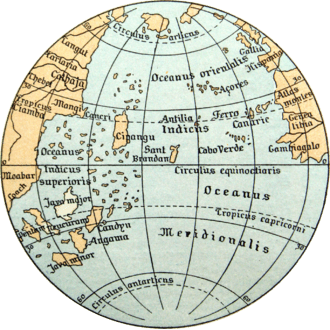
It is said that the name of the country, Japan, originates from Marco Polo’s book.  He referred to Japan as “Chipangu,” which means “gold country,” in his book. *²   From “Chipangu” to “Zipang” to ‘Jipang,” it eventually became “Japan.”  The Japanese don’t call the country Japan but “Nihon” or “Nippon” (日本).

ヤン ヨーステン Jan Joosten van Lodenstijn https://www.weblio.jp Or Jan Joosten van Londensteyn 

*² Wikipedia “Names of Japan” or Check (Click) right to go to the link Jipangu 

26 map of Cipangu1492

Cipangu was described in 1492 by Martin Beham’s globe                                                    From Wikimedia Commons, the free media repository (Names of Japan)