62|Part 2 of — 28 Shin-To Main 7 Region (part B)

This chapter is a detailed part of Chapter 28, Shin-t Main 7 Regions (part B).  Please read Chapter 28 before reading this chapter.  Below are regions 3 and 7.

0-timeline - size 24 Shin-to                           The red circle above indicates the time we discuss in this section    
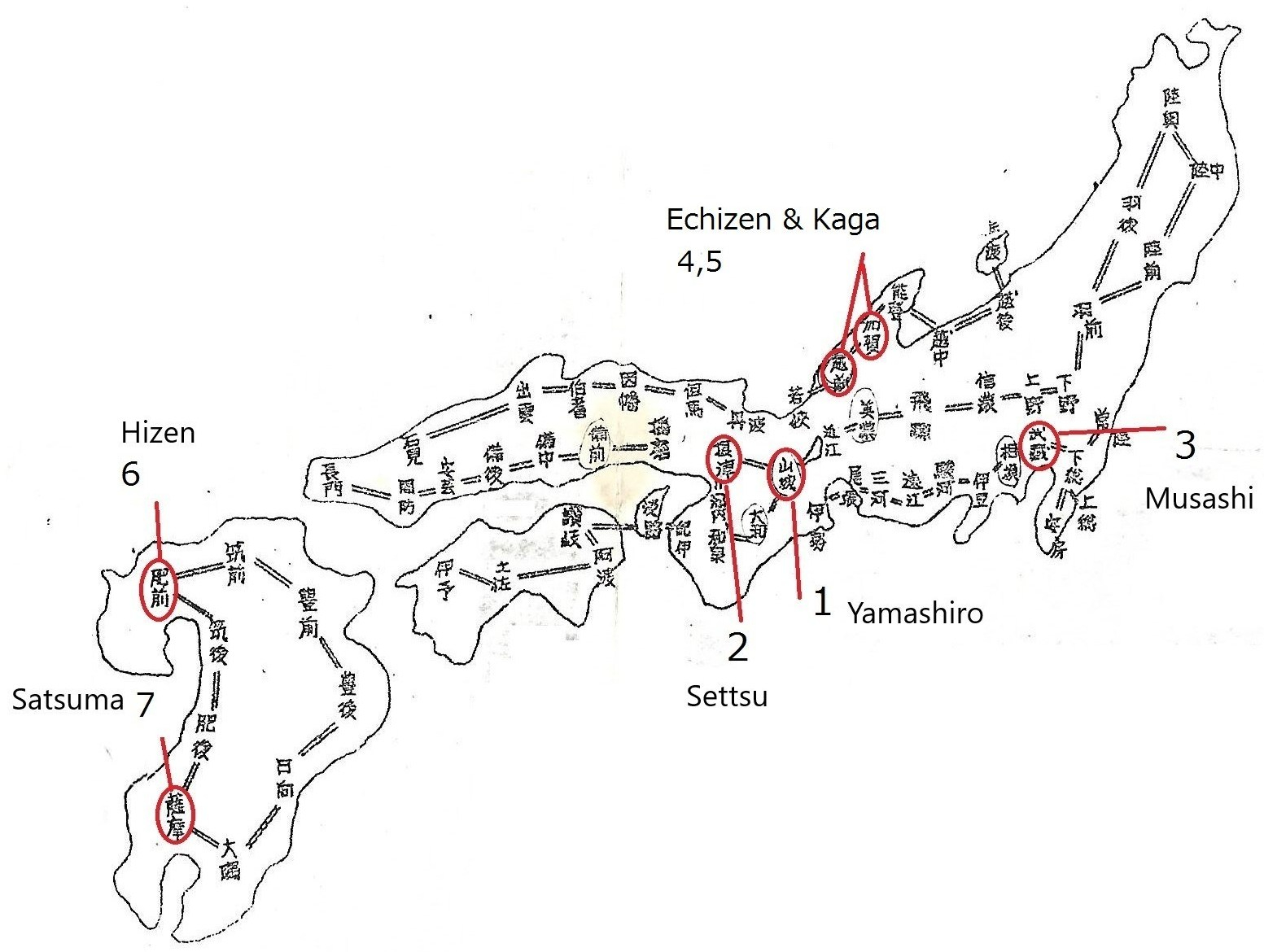
29 Map with number 7

3.Musashi (Edo)

We also find many famous swordsmiths in Edo.  They were Yasutsugu (康継), Kotetsu (虎徹), Noda Hankei (野田繁慶), Hojoji Masahiro (法成寺正弘), and their followers.

Two photos below are swordsmiths from Musashi (武蔵: Tokyo).  
                       Yasutsugu  From the Sano Museum Catalogue.  (Permission to use granted)

Characteristics of Yasutusgu (康継) ——Shallow curvature; chu-gissaki (medium kissaki); a wide notare hamon, midare, or o-gunome (occasionally double gunome); traces of Soshu-den and Mino-den; a wood-grain pattern mixed with masame on the shinogi-ji.
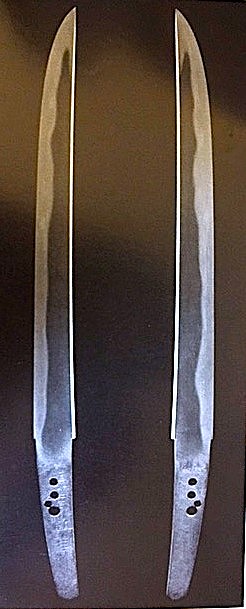
 

              Kotetsu (虎徹) from Sano Museum Catalogue, (permission to use granted)

Here is the famous Kotetsu.  His formal name was Nagasone Okisato Nyudo Kotetsu (長曽祢興里入道虎徹).   Kotetsu started making swords after turning 50.  Before that, he was an armor maker.  

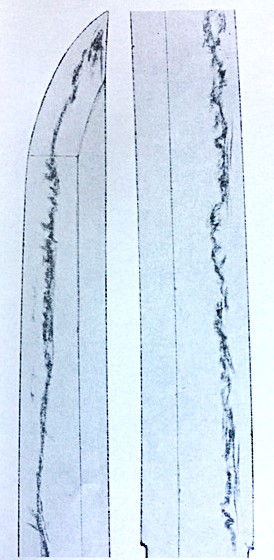
The characteristics of Kotetsu ———————— A shallow curvature and wide width, a wide tempered line with nie.  A small irregular hamon surrounds the machi area, transitioning into a wide suguha-like notare in the upper area.  Fine nie, komaruboshi with a short turn backThe ji-hada is a fine-grained wood with burl.  Occasionally, o-hada (black core iron shows through) appears in the lower part above the machi area.  The illustration above shows a thick-tempered line with nie, a typical feature of Kotetsu. Once you see it, you will remember it.   The next region is 7 (skip 4, 5, and 6)


  1. Satsuma (Kyushu) 

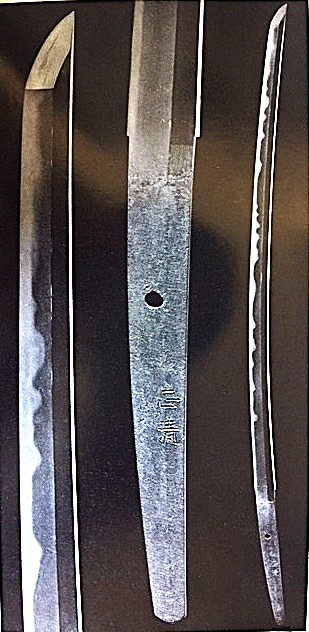
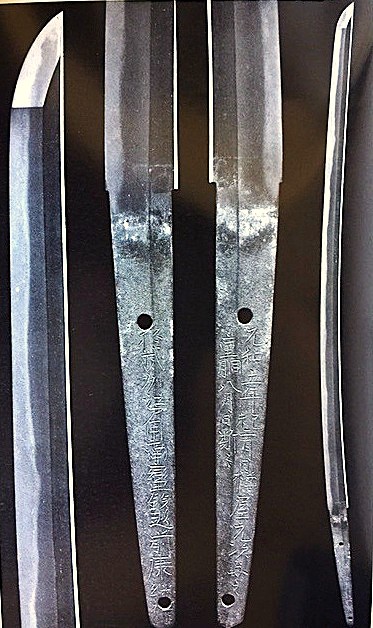
  Miyahara Mondonosho Masakiyo (宮原主水正正清) from Sano Museum Catalogue (permission to use granted).

Miyahara Mondonosho Masakiyo was highly respected by the Shimazu family of Satsuma- han (the Satsuma domain in Kyushu).  Later, he was chosen to travel to Edo to forge swords for Shogun Yoshimune

Mondonosho Masakiyo’s characteristics————- Well-balanced sword shape, shallow curvature, and wide and narrow hamon mixed with squarish hamon and pointed hamon as shown in the photo above.  He engraved the Tokugawa family’s Aoi crest (the hollyhock crest) on the nakago.

15| The Revival of Yamato Den(大和伝復活)

0-timeline - size 24 Late Kamakura

        The red circle above indicates the time we discuss in this section

It is believed that sword-making first started in Yamato province (now Nara Prefecture) during the Nara period (710 to 794).  In the early days of sword-making, the forging techniques were primitive.  At that time, many swordsmiths lived in Yamato, but over time, sword-making in this region declined.

At the end of the Kamakura period, several powerful Buddhist temples emerged in the Yamato area, leading to conflicts among them.  Temples held significant political and military power to control large territories called shoen (荘園) through their large numbers of warrior monks, known as sohei (僧兵).  The most dominant group was Nanto Sohei (南都僧兵)*.  These groups of sohei demanded more swords to arm themselves, which revitalized the Yamato-den (school) and increased the number of swordsmiths in the Yamato area.   As a result, the Yamato-den group became active again.  The Yamato-den style is somewhat similar to the Yamashiro-den.    

*Nanto Sohei (南都僧兵)—————-Since around the 11th century, Buddhist temples grew powerful under the protection of the Joko (retired emperors).  These temples had many sohei (low-level monks who also served as soldiers). When power struggles arose among the temples, sohei fought as their soldiers on the battlefields.  Nanto Sohei were such soldiers at Kofuku-Ji Temple (興福寺).  Several large temples, such as Todai-ji (東大寺) Temple, controlled the Yamato area.

Sugata (姿: Shape) —————- Not much difference in style during the early part of Yamatoden and Yamashiro-den.  Shinogi is high.  Mune is thin.   Some Yamato-den have a shallow sori (curvature).

16 Yamato sword cross section

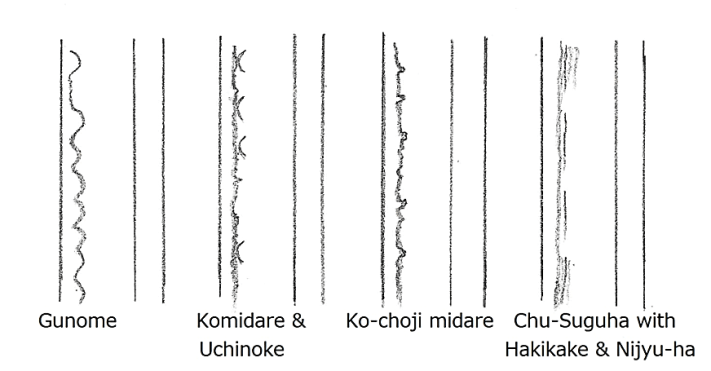
Hamon (刃文Tempered line) ——————Narrow tempered line.  Mainly nie (沸).  Chu-suguha-hotsure (中直刃ほつれ: a medium straight line with a frayed pattern), ko-choji-midare (小丁子: a mixture of small clove-like patterns and irregular wavy lines), ko-midare (小乱: small irregular wavy lines), ko-gunome-komidare (小五の目小乱: small continuous half-circles mixed with wavy lines). 

The main features of the Yamatoden style sword are masame (straight grain).  Its tempered line often shows nijyu-ha (double straight lines), hakikake (brush mark trace), uchinoke (a crescent-shaped line), or a combination of these.   See the illustration below.


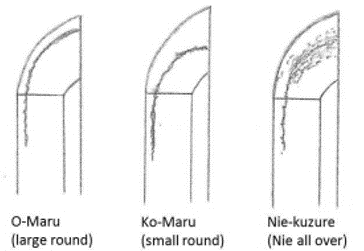
Boshi (鋩子: Tempered line at Kissaki area) ———- In the boshi area, a straight grain hamon pattern appears.  Yakizume or kaen. (Refer to Chapter 12, Middle Kamakura period: Tanto).  O-maru, ko-maru, nie-kuzure.  (Refer to Chapter 14, Late Kamakura Period Sword.  See the illustration below.)


15 Omaru Komaru Niekuzure

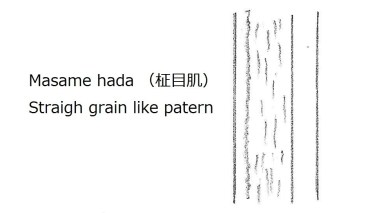
Ji-hada (地肌):Area between the shinogi and the tempered line)———— mostly masame-hada (straight grain pattern 柾目肌). Fine ji-nie, chikei, or yubashiri.  (Refer to Chapter 14, Late Kamakura Period Sword (鎌倉末太刀).  See below.)

16 Masame Hada

Nakago (Hilt) ———————– Often displays Higaki Yasuri (檜垣), the finishing file pattern, as illustrated below. 

16 Higaki Yasuri

Names of the Yamato School Sword-smiths

Taema(当麻) Group————–Taema Kuniyuki(当麻国行) Taema Tomokiyo(当麻友清) Shikkake (尻懸) Group———————————————-Shikkake Norinaga (尻懸則長) Tegai (手掻) group ——————Tegai Kanenaga (手掻包永) Tegai Kanekiyo(手掻包清) Hoshou (保昌) group———Hosho Sadayoshi ( 保昌貞吉) Hosho Sadamune (保昌貞宗)

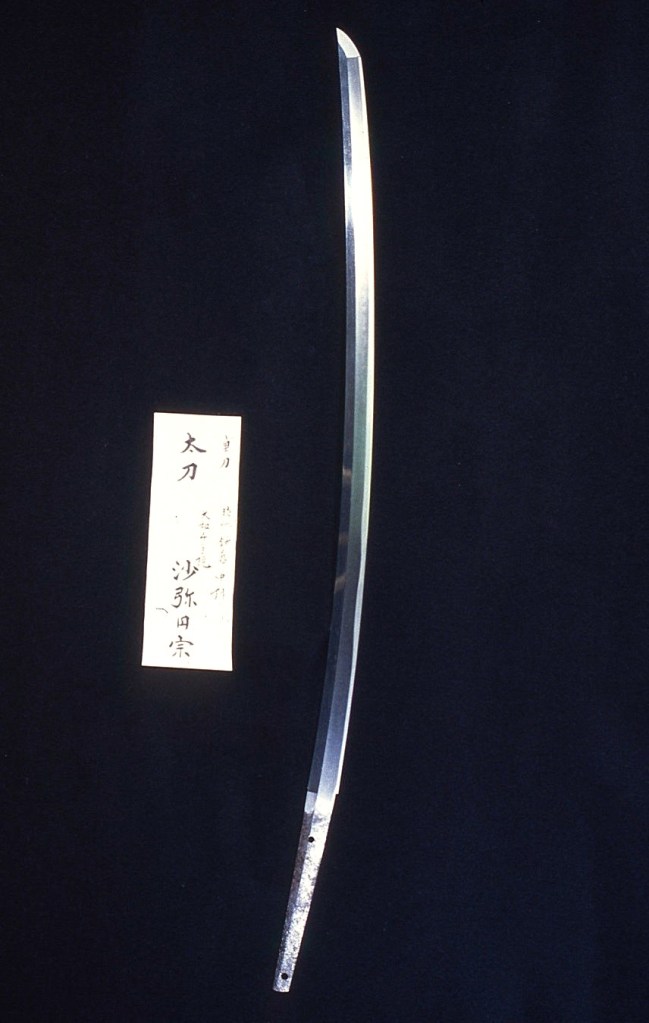
Yamato Senjuin Saya Enso (大和千手院沙弥円宗)  once my family sword