64| Part 2 of –30 Shin Shin-To : Bakumatsu sword (新々刀)

This Chapter is a detailed Chapter of the 30|Bakumatsu Period, Shin Shin-to.  Please read Chapter 30 before reading this chapter.

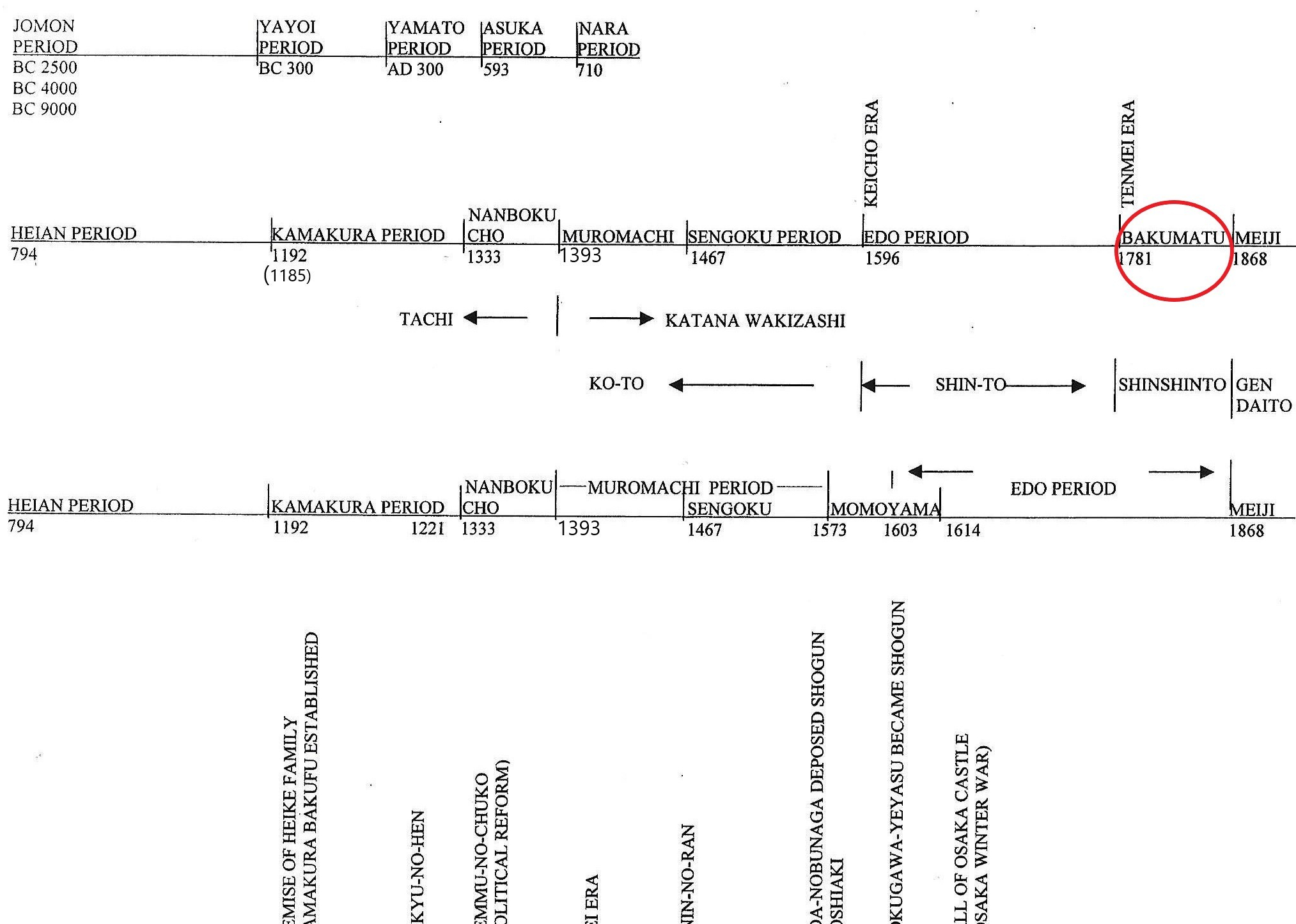
0-timeline - size 24 Bakumatsu

                  The circle Above indicates the time we discuss in this chapter.

Swords made between the Tennmei era (天明 1781) and the end of the Keio era (慶應) are called shin shin-to.  Please refer to the timeline above.  This period was when Japan was moving toward the Meiji Restoration, known as the Bakumatsu era.  During this time, sword-making became active again.  Below are the well-known swordsmiths from the main areas.

Musashi no Kuni  (武蔵の国: Tokyo today)                                                       

Suishinshi Masahide (水心子正秀) ——— When Suishinshi Masahide made Yamashiro-den style swords, their shapes resembled those of ko-to period swords; funbari, an elegant shape; chu-suguha (medium straight); komaru-boshi, with fine wood grain. When he forged in the Bizen style, he made a Koshi-zori shape, similar to a ko-to made by Bizen Osafune.  Nioi with ko-choji, and katai-ha (refer to  30| Bakumatsu Period Sword 新々刀).  In my old sword textbook, I noted that  I saw Suishinshi in November 1970 and October 1971.

Taikei Naotane (大慶直胤) ————————–Although Taikei Naotane was part of the Suishinshi group, he was one of the top swordsmiths.  He had an exceptional ability to forge a wide range of sword styles beautifully.  When he made a Bizen-den style, it resembled Nagamitsu from the Ko-to era, with nioi.  Also, he did sakasa-choji as Katayama Ichimonji had done.  Katai-ha appearsThe notes in my old textbook indicate I saw Naotane in August 1971.

Minamoto no Kiyomaro (源清麿) ————————– Kiyomaro wanted to join the Meiji Restoration movement as a samurai; however, his guardian recognized Kiyomaro’s talent as a master swordsmith and helped him become one.  It is said that because Kiyomaro had a drinking problem, he was not very eager to make swords.  At age 42, he committed seppukuKiyomaro, who lived in Yotsuya (now part of Shinjuku, Tokyo), was called Yotsuya Masamune because he was as good as Masamune.  His swords featured wide-width, shallow sori, stretched kissaki, and fukura-kereru.  The boshi is komaru-boshi.  Fine wood grain ji-gane.

Settsu no Kuni   ( 摂津の国:  Osaka today)

Gassan Sadakazu (月山貞一) ———- Gassan excelled in the Soshu-den and Bizen-den styles, but he was capable of making in any style.  He was as much a genius as Taikei Naotane.  You must pay close attention to notice a sword made by Gassan from genuine ko-to.  He also had remarkable carving skills.  His hirazukuri-kowakizashi, forged in the Soshu-den style, looks just like a Masamune or a Yukimitsu.  He forged in the Yamashiro-den style, with Takenoko-zori, hoso-suguha, or chu-suguha in nie.  Additionally, he forged the Yamato-den style with masame-hada.


61|Part 2 of — 27 Shin-to Main 7 Regions (part A)

Chapter 61 is a detailed part of Chapter 27, Shinto Main 7 Regions (part A).  Please read Chapter 27 before reading this section. 

0-timeline - size 24 Shin-to                        The red circle above indicates the time we discuss in this section

Chapter 27, Shin-to Main 7 Regions (Part A), and Chapter 28, Shin-to Main 7 Regions (Part B), describe an overview of the seven main regions.  This chapter and the next chapter show photos of representative swords from these regions.  They are Yamashiro (山城, in Kyoto), Settsu (摂津, today’s Osaka), Musashi (武蔵, Edo), and Satsuma (薩摩, Kyushu).  However, Echizen (越前), Kaga (加賀), and Hizen (肥前) are omitted.
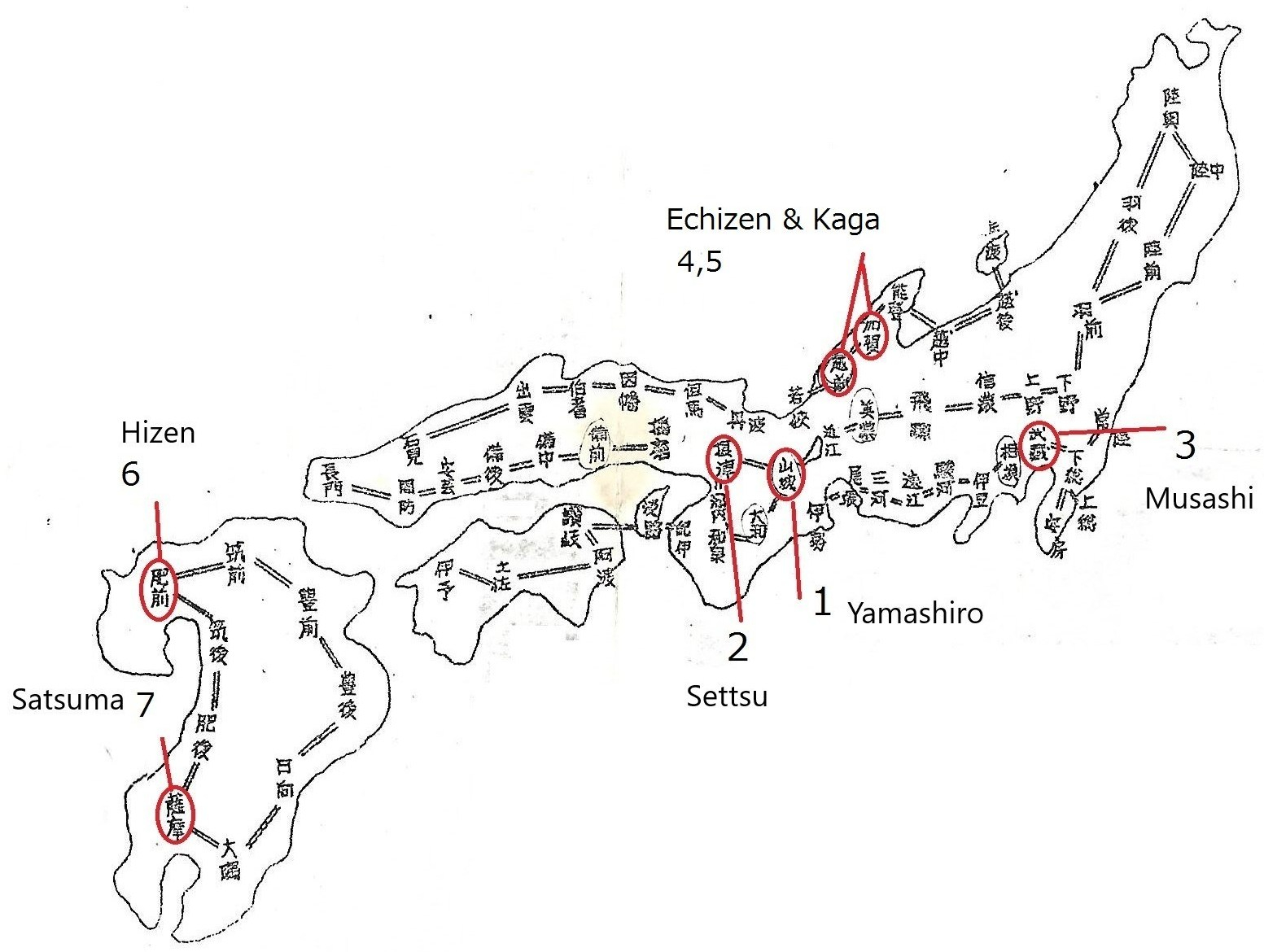
29 Map with number 7

With ko-to swords, features such as the condition of the hamon, kissaki size, length, and  shape of the nakago, etc., indicate when the sword was made.  During the ko-to period, Bizen swordsmiths produced Bizen-den swords, Yamashiro swordsmiths made Yamashiro-den swords, and Mino swordsmiths made Mino-den swords.  However, during the shin-to period, that is not the case.  The den and the swordsmith’s location often do not match.  For shin-to swords, we study the swordsmiths and swords from the seven main regions along with their characteristics.

Regarding swords made during the ko-to period, if a sword has a wide hamon line with  nie, usually, its ji-hada shows a large wood grain or a large burl grain.  Also, when you see a narrow hamon line, it typically features a fine ji-hada.

However, with shin-to swords, if a sword shows a wide hamon with nie, it often has a small wood grain or small burl grain pattern on ji-hada.  If it has a narrow hamon line, it may have a large wood grain pattern on the ji-hada.  This is a shin-to characteristic.   

Here is an exception: some early Soshu-den swords from the late Kamakura period may show a wide hamon with nie, which has small burls on the ji-hada.  Because of that, whether it is ko-to or shin-to can be confusing.  Even so, other features such as ji-hada or other parts should indicate whether it is shin-to or ko-to.

Yamashiro (山城: Kyoto)
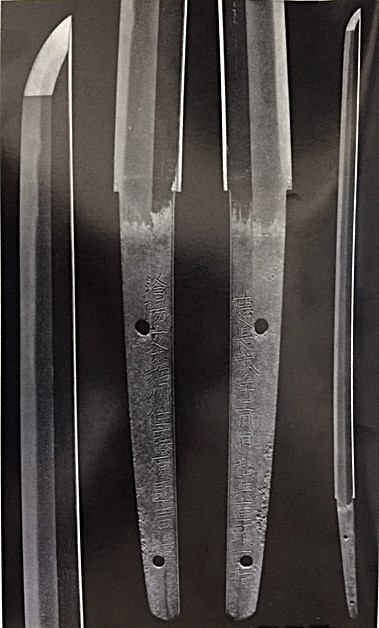
 Horikawa Kunihiro   (堀川国広)   From Sano Museum Catalogue (permission granted)

Horikawa Kunihiro (堀川国広)

Horikawa Kunihiro was regarded as a master swordsmith among shin-to swordsmiths.  He forged swords in many styles with various characteristics.  The hamon types are o-notare, o-gunome, togari-ba (pointed hamon), chu-suguha with hotsure (frayed look), hiro-suguha with a sunagashi effect, inazuma, and kinsujiKunihiro preferred to shape his swords to resemble an o-suriage (shortened Nanboku-cho style long sword).  Kunihiro‘s blades give a powerful impression.  Kunihiro‘s swords often feature beautiful carvings; designs include dragons, Sanskrit letters, and more.  Because he created swords in many different styles, there is no general characteristic that defines his work other than the hamon mainly being nie.  His ji-hada is finely forged.                                                                                                                                                                                                                                                                                                                                                     
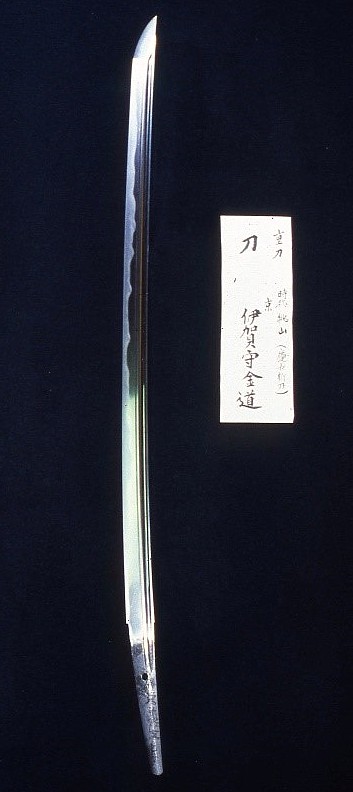
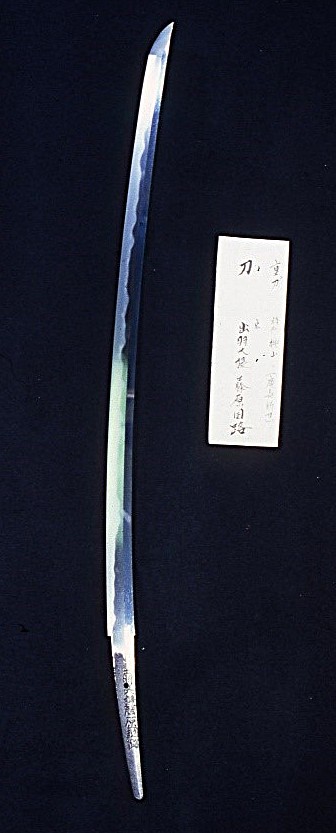
img067.jpg  img068.jpg      Iga-no-Kami Kinnmichi (伊賀守金道)           Dewa Daijyo Kunimichi (出羽大掾国路)        Both Juyo Token (重要刀剣), once my family owned, photos were taken by my father.

Iga-no-Kami Kinmichi ( 伊賀守金道)

The Kinmichi family is called the Mishina group.  Refer to 27 Shinto Main 7 Regions  Part A.   Iga-no-Kami Kinmichi was awarded the Japanese Imperial chrysanthemum crest. 

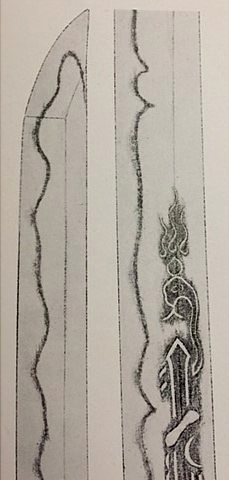
The characteristics of Kinmichi ——– Wide sword, shallow curvature, an extended kissaki, sakizori (curvature at 1/3 top),  a wide tempered line, kyo-yakidashi (see 27 Shinto Main 7 Regions  A ), hiro-suguha (wide straight hamon), o-notare (large wavy), yahazu-midare, hako-midare (refer to 24 Sengoku Period Tanto).  Mishina-boshi, refer to 27 Shin-to Main 7 Regions A.  Fine wood burl, masame appear in the shinogi-ji area.   

Dewa Daijo Kunimichi (出羽大掾国路)                                                                                 

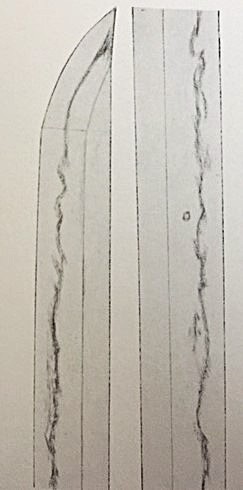
Dewa Daijo Kunimichi was the top student of Horikawa Kunihiro.  The right photo above.  Like Kunihiro, the sword resembles a shortened Nanboku-cho sword.  Shallow curvature, a wide body, a somewhat elongated kissaki, and fukura-kareru (less arch in fukura).  Wide tempered lines, large gunome, nie with sunagashi, or inazuma shows.  Double gunome (two gunome side by side) appears.  Fine ji-hada.                                                                                                                                                                                                                

  1. Settu (摂津) Osaka (大阪 )

Settu (Osaka) is home to many famous swordsmiths.  They are Kawachi-no-Kami Kunisuke (河内守国助), Tsuda Echizen-no-Kami Sukehiro (津田越前守助広), Inoue Shinkai (井上真改), and Ikkanshi Tadatsuna (一竿子忠綱), among others.                          The main characteristic of the Settsu (Osaka) sword ——– The surface is beautiful and fine, almost like a solid surface with no pattern or design.  The two photos below are of the Settsu sword.
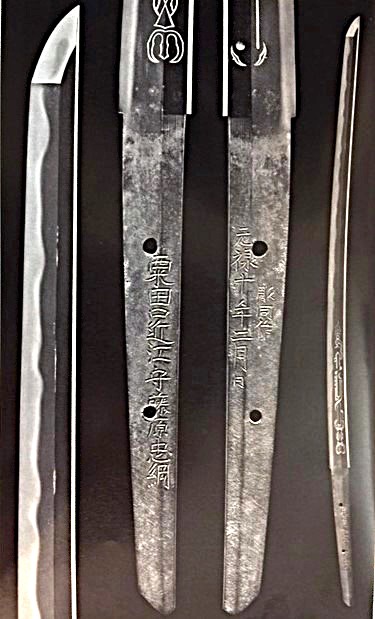
              Ikkanshi Tadatsuna from the Sano Museum Catalogue.  Permission granted to use.

Ikkanshi Tadatsuna (一竿子忠綱)

Ikkanshi Tadatsuna was famous for his carvings.  His father was also a well-known swordsmith, Omi-no-Kami Tadatsuna (近江守忠綱)Consequently, he was known as Awataguchi Omi-no-Kami Fujiwara Tadatsuna (粟田口近江守藤原忠綱), as shown in the nakago photo above.     

The characteristics of Ikkanshi Tadatsuna ——-A longer kissaki and a wide-tempered line with nie.  The Osaka yakidashi (transition between the suguha above machi and midare is smooth.  Refer to 27 Shin-to Sword – Main 7 Regions (Part A) for details on Osaka yakidashi.  O-notare with gunome, komaru-boshi with a turn back, and very fine ji-hada with almost no pattern on the surface.
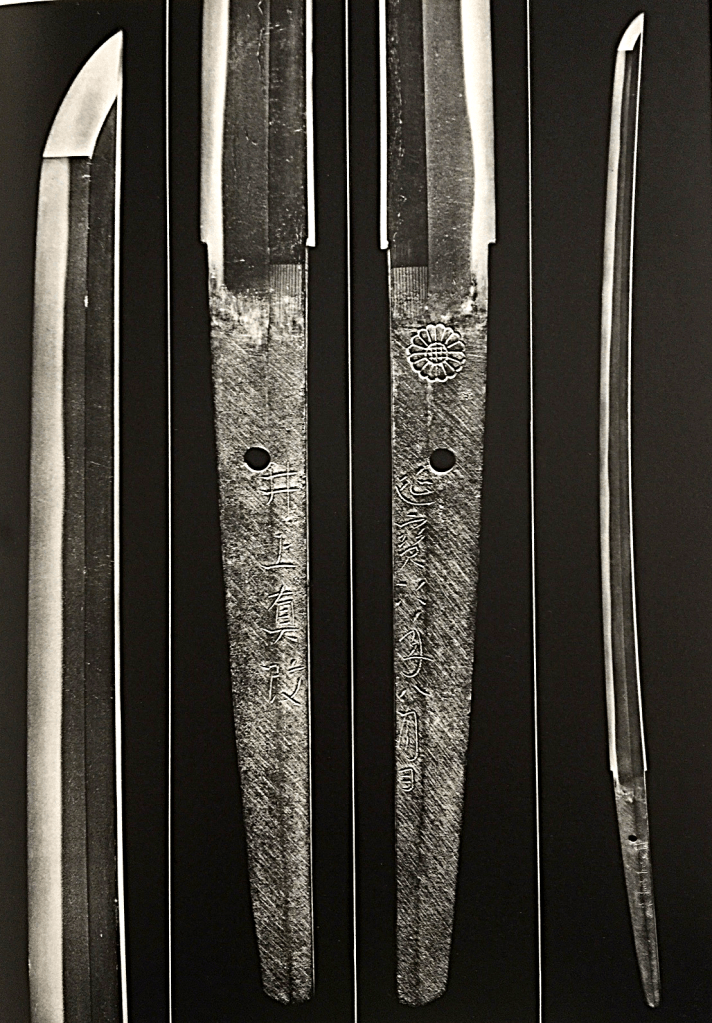
                        Inoue Shinkai (井上真改) from “Nippon-to Art Swords of Japan” The Walter A. Compton Collection

Inoue Shinkai (井上真改)

Inoue Shinkai was the second generation of Izumi-no-Kami Kunisada (和泉守国貞), who was a student of Kunihiro.                                                                                                  The characteristic of Inoue Shinkai’s swords —————- Osaka yakidashi, the tempered line gradually widens toward the top.  O-notare and deep nie.  Very fine ji-hada with almost no surface design.
19 | Nanboku-Cho Period Tanto(南北朝短刀)

0-timeline - size 24 Nanboku-cho
The circle indicates the time we discuss in this section

During the Nanboku-cho period, a type of tanto called hirazukuri ko-wakizashi sun-nobi tanto was made.  Hirazukuri means flat swords without the yokote line or shinogi.  Ko-wakizashi refers to a shorter sword.  Sun-nobi tanto means longer than a standard tanto.  This type is also known as Enbun Jyoji ko-wakizashi tanto because most of these tantos were created during the Enbun and Jyoji eras of the imperial period.  In Japan, a new imperial era begins when a new emperor ascends to the throne.  The Enbun era spanned 1356-1361, while the Jyoji period spanned 1362-1368.

20 Enbun Jyoji Kowakizashi Tanto

Sugata (姿: shape) ————A standard tanto measure is approximately one shaku.  Shaku is an old Japanese unit of measurement for length, and one shaku is roughly equal to one foot.  

8.5 sun (the sun is another old Japanese measurement unit of length) is approximately ten inches.  Ten inches is the standard size for a tanto, known as a josun tanto.  Anything longer than a josun tanto is called a sun-nobi tanto.  Anything shorter than a josun is called a sun-zumari tanto. 

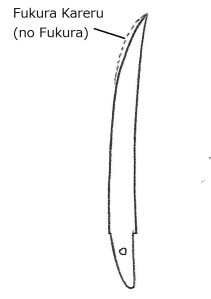
Most of the Nanboku-cho tantos are longer than a josun tanto, approximately one foot two inches.  Therefore, they are called hirazukuri ko-wakizashi sun-nobi tantoSaki-zori (curved outward at the top.  See the illustration above).   Wide in width and thin in body.  Fukura kareru (no fukura means less arc).  Shin-no-mune.  See the drawing below.

20 Fukura           20 Shin-no-Mune

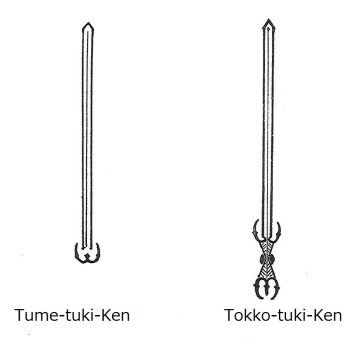
Hi, (: Grooves) and Horimono (彫り物: Engraving) ——- A groove or grooves on the mune side.  Bonji (Sanskrit, see Chapter 16 Late Kamakura Period (Early Soshu-Den Tanto),  koshi-bi (short groove),  tumetuki ken, and tokko-tsuki ken (see below) appear. The ken (dagger) is curved widely and deeply in the upper part and shallower and narrower in the lower part.  This is called Soshu-bori (Soshu-style carving).

20 Tokko, tume Ken

Hamon (: Tempered line) ——- The narrowly tempered section at the lower part gradually widens toward the top.  A similar wide hamon pattern extends into the boshi area.  The hamon in the kissaki area is kaeri-fukashi (deep turn back).  See the illustration below.  Coarse nie.  O-midare (large irregular hamon pattern).

20 Hitatsura

                                        From Sano Museum Catalogue

Ji-hada (地肌: the area between shinogi-ji and the tempered line) ——– a loose wood grain pattern called itame.  Yubashiri (see Chapter 16, Late Kamakura Period) and tobiyaki (irregular patchy tempered spots) appear.  Dense tobiyaki is called hitatsura (see the drawing above).

Nakago (: Tang) —- Short tanago-bara.  Tanago-bara refers to the shape of the belly of a Japanese fish called tanago (bitterling).

20 Tanago Bara

Tanto Swordsmiths during the Nanboku-Cho Period

Soshu Den ———————————————————-Hiromitu( 広光) Akihiro (秋広) Yamashiro Den ————————————————–Hasebe Kunishige (長谷部国重)   Bizen Den ——————————————————— Kanemitu (兼光) Chogi (長義 )

    Soshu Hiromitsu     “Nippon-To Art Sword of Japan “   The Walter A. Compton Collection

18| Nanboku-Cho Period Sword (南北朝太刀)

0-timeline - size 24 Nanboku-cho

                           The circle indicates the time we discuss in this section

During the Nanboku-cho period, samurai sought large, elaborate, impressive, yet practical swords.  The Soshu-den style sword from Nanboku-cho time was just that.    This was the most popular style at the time.  The Nanboku-cho period marked the peak and height of the Soshu-den sword.  Many swordsmiths moved from other provinces to the Kamakura area and forged Soshu-den style swords.  Other schools and provinces outside the Kamakura area also produced Soshu-den-style swords in their own areas.


19 Nanboku-cho Sword style

Sugata (姿: Shape) —————–The original length of a sword ranged from three to five feet, but it was later shortened to about two and a half feet.  A significantly shortened blade is called o-suriage. 

The Nanboku-cho style sword features shallow kyo-zori (also called torii-zori).  Refer to Chapter 5, Heian Period Sword.  The highest curvature occurs around the middle of the body. It has a wide body, high shinogi, narrow shinogi-ji  (Chapter 3, Names of parts),  and thin kasane (blade thickness), which are distinctive features of the Nanboku-cho style.  High gyo-no-mune or shin-no-mune, and sometimes a maru-mune (round back).

19 Nanboku-cho 3 kinds Mune

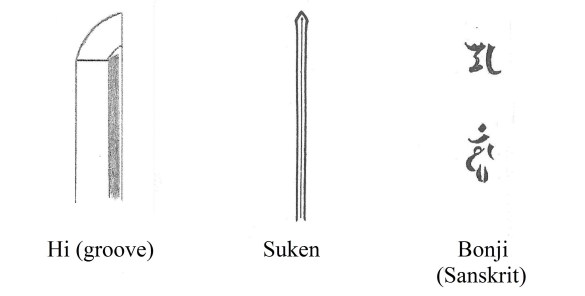
Hi (: groove) and Horimono (彫刻: engraving) ——– Often, a single hi (bo-hi), double hi, suken (dagger), Bonji (Sanskrit), and/or dragon are engraved on the shinogi-ji area.  Refer to Chapter 3, Names of Parts.

9 Hi, Suken, Bonji

Hamon (: Tempered line) —- The lower part of the body exhibits a narrow-tempered line; gradually, this line becomes wider and showier.  Course nie. O-midare (large, irregular, wavy hamon), Notare-midare (wavy, irregular hamon), and Gunome-midare (a combination of repeated half-circular and irregular hamon). Inazuma and kinsuji (see Chapter 14, Late Kamakura Period Sword) sometimes appear.

19 Hamon Notare 319 Mamon choji gunome19 Hitatsura Hamon Hiromitsu

                                  *From Sano Museum Catalogue ( Permission granted).

Ji-hada (地肌: the area between the shinogi and the tempered line) ———————-Wood-grain pattern (itame 板目). Sometimes tobiyaki (patchy tempered spots) appear on ji-hada.  For ji-hada, refer to Chapter 3, Names of Parts.

Kissaki (切っ先) and Boshi (tempered line at the kissaki area) ———- O-kissaki (long and large kissaki). Fukura kareru (less arc kissaki).  Midare-komi (the body and boshi have a similar tempered pattern), with kaeri-fukashi (hamon deeply turns back), and sometimes hitatsura (entirely tempered).  See the illustration above.

Sword-smiths during Nanboku-Cho Period Soshu Den (school)

  • From Soshu—————————————————Hiromitsu (広光)  Akihiro (秋広)  
  • From Yamashiro ———————————————Hasebe Kunishige (長谷部国重) 
  • From Bizen (called So-den Bizen)——-Chogi (長儀 )group  Kanemitsu (兼光 ) group 
  • From Chikuzen ———————————————————-Samoji (左文字 ) group

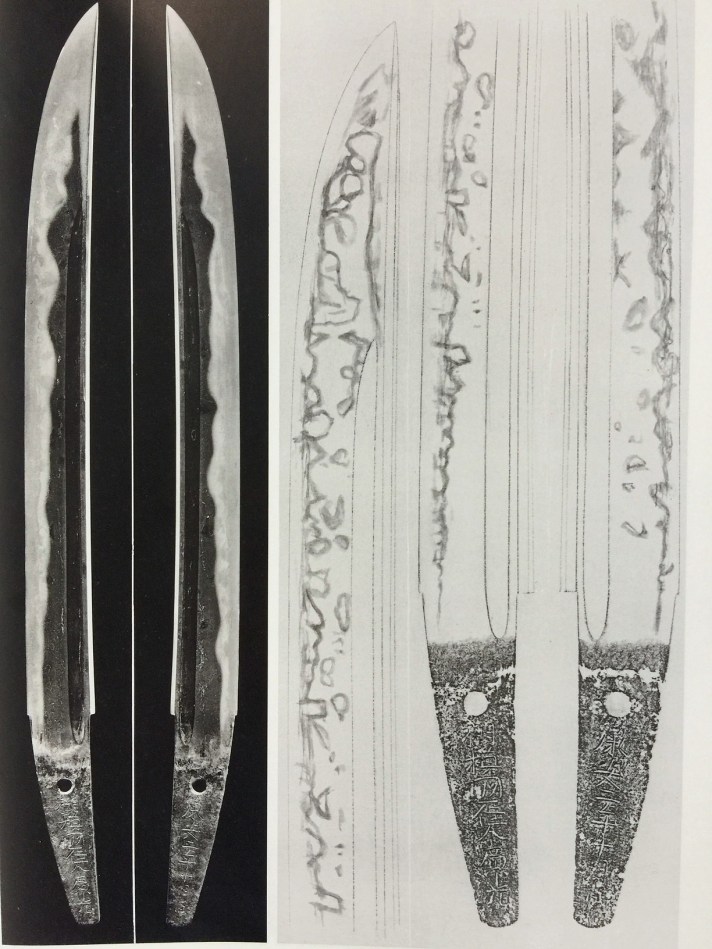
Chogi (長義)from The Sano Museum catalog. Permission to use is granted

The distinctive characteristics of the Nanboku-Cho period sword in the photo above      

  • The trace of an engraving of suken on the inside of the nakago indicates that this area was once a part of the main body.
  • Large and long kissaki

8| Middle Kamakura Period: Yamashiro Den (鎌倉中期山城伝)


0-timeline - size 24 Middle Kamakura                          The circle indicates the time we discuss in this section

The characteristics of Yamashiro Den swords

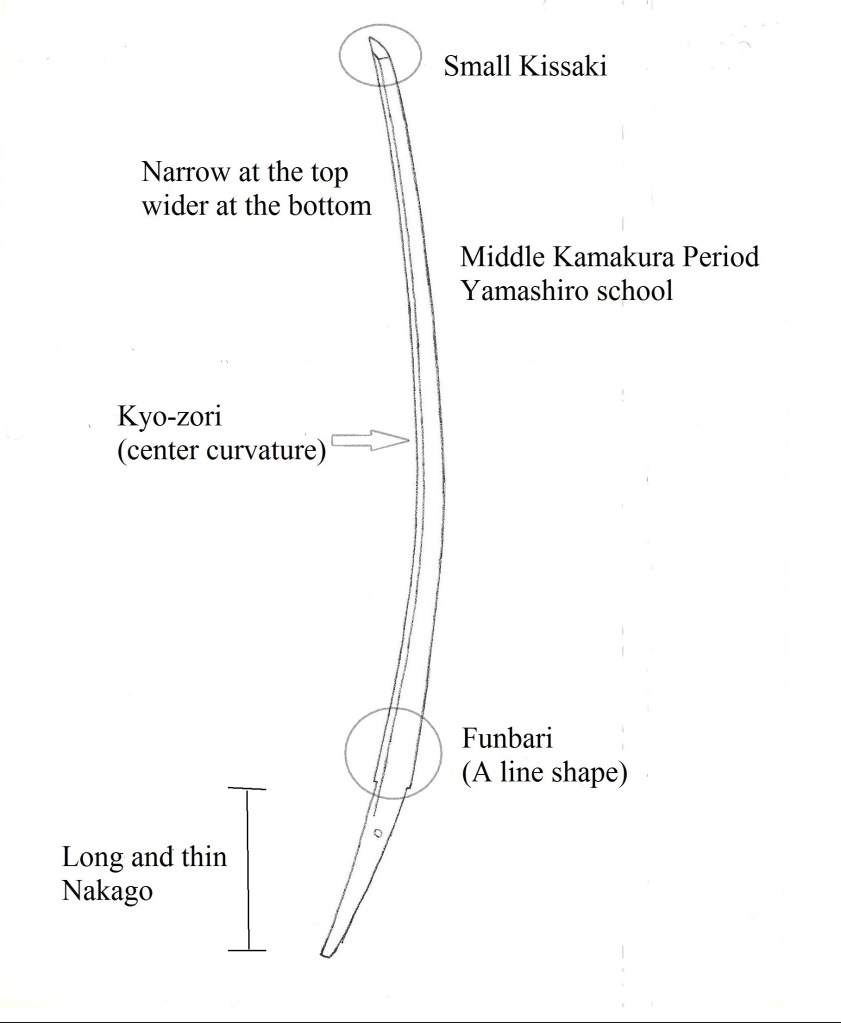
Sugata (shape)—– Generally, the blade is narrow, especially near the yokote line.  The bottom of the blade has funbari (an A-line shape).  Kasane is thick, and the curvature type is usually kyo-zori (the deepest curvature is around the middle).  It has a small kissaki with fukura.   Shinogi is thick, with gyo-no-mune or shin-no-mune.  Please refer to the three illustrations below for sugata.

13 Mune drawing

9 鎌倉中期刀姿

8 Fukura

Horimono (Engraving)—– The tip of a Hi (樋, groove) follows the exact shape of the Ko-shinogi line.  Sometimes you may see Bonj (Sanscrit) and Suken (see the illustration).

9 Hi, Suken, Bonji

Nakago (hilt: 中心) ——————–Long and thin with a slight curve.                                  Hamon (tempered line: 刃文) —————-Mostly suguha (straight line), niju-ba (double hamon), or suguha with an irregular wavy line.  Sometimes, a thin gold lightning-like line called inazuma appears faintly.  The tempered line is mostly nie.  Below is suguha.

 
豊後国行平(Bungo-no-Kuni-Yukihira)  Sano Museum Catalog permission granted

   * Bungo-no-Kuni-Yukihira was a Yamashiro Den swordsmith from the Bungo region.

Boshi(鋩子)——– Komaru-boshi (small round)   Omaru-boshi (large round)                    Ji-hada (地肌) ——-Well forged fine surface.  Small burl pattern.  Jinie (地沸) on the surface.

Names of the swordsmiths during the middle Kamakura period

  • Ayano-Koji group ———————————– Ayano-Koji Sadatoshi (綾小路 定利 )
  • Awataguchi group ————————————- Awataguchi kunitsuna (粟田口国綱)
  • Rai group ————————-Rai kuniyuki (来国行) Rai Nijikunitoshi (来ニ字国俊)

Rai Kunitoshi (来国俊)       Sano Museum Catalogue, Permission granted