50|Part 2 of –16 Late Kamakura Period: Tanto (Early Soshu-Den 鎌倉末短刀, 正宗墓)

Chapter 50 is a detailed part of  Chapter 16, Late Kamakura Period Tanto (Early Soshu-Den).  Please read Chapter 16 before this section.
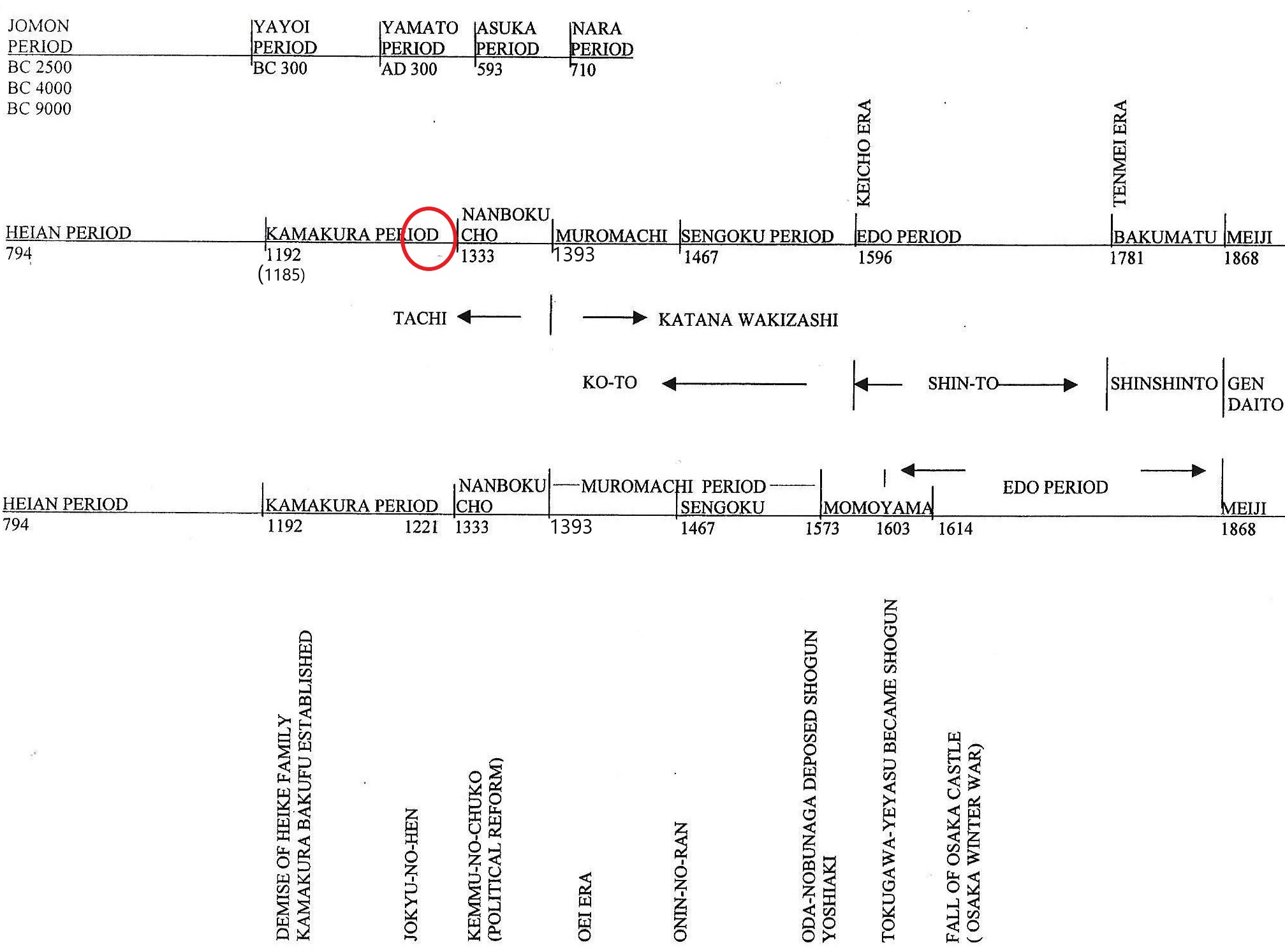
0-timeline - size 24 Late Kamakura

                     The red circle above indicates the time we discuss in this section.

In  Chapter 16, Late Kamakura Period Tanto (Early Soshu-Den), the general features of the late Kamakura period tanto style (early Soshu-den) are described.  The following two photos show the typical characteristics of early Soshu-den tanto.

Masamune

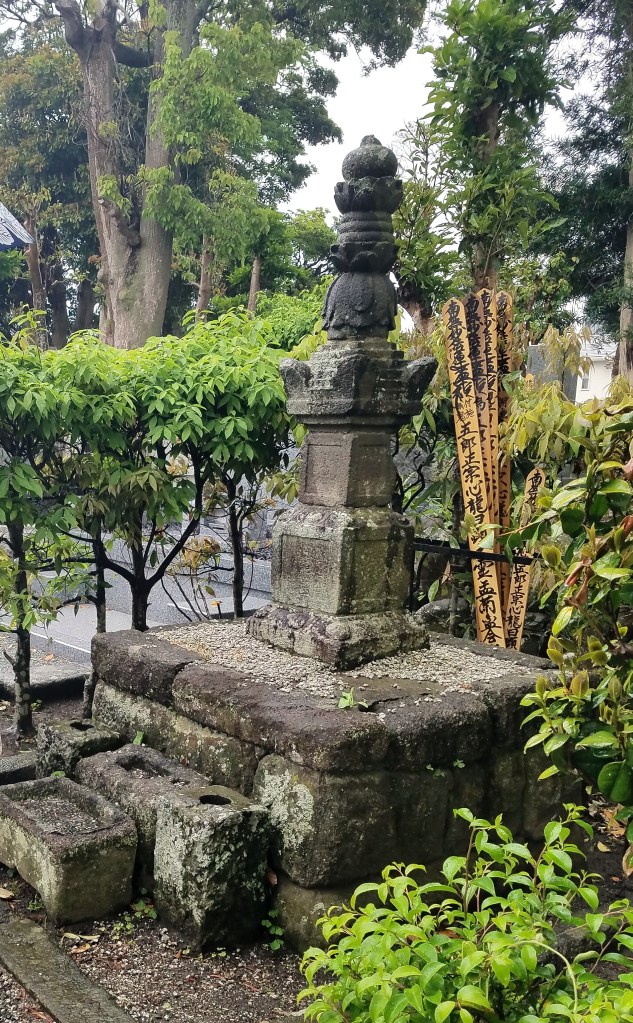
Goro Nyudo Masamune (五郎入道正宗) was born in Kamakura as the son of Tosaburo Yukimitu (藤三郎行光)Today, Masamune is a well-known swordsmith, even among those unfamiliar with Japanese swords.  His father, Tosaburo Yukimitsu, was also among the top swordsmiths in early Soshu-den.  Masamune’s tomb is located at Honkaku-ji (本覚寺) Temple, about a 6-minute walk from Kamakura Station. 
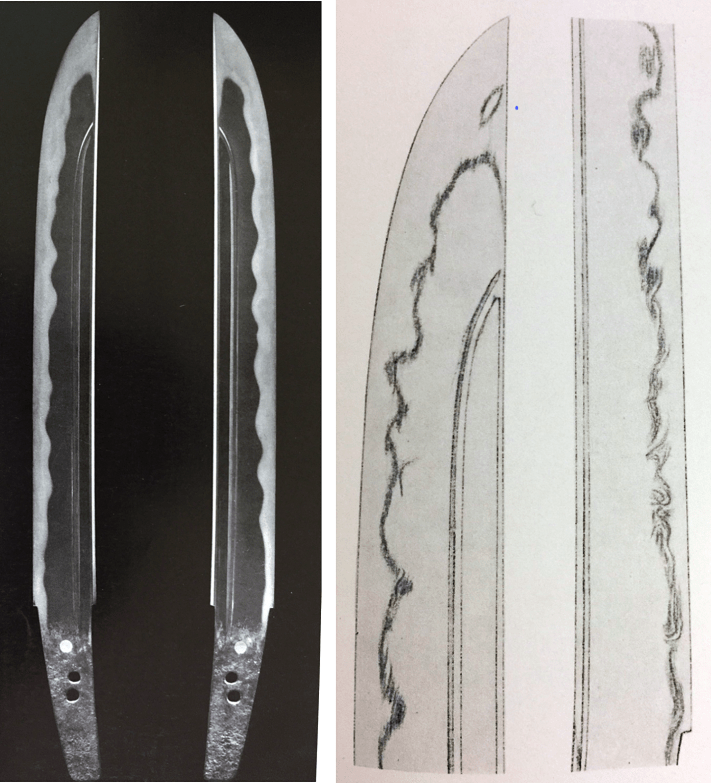
Goro Nyudo Masamune (五郎入道正宗) Sano Museum Catalog (permission granted)

Masamune photo (above) —– Hira-zukuri (flat).  Sakizori is very slightly curved (the tip area curves slightly outward).  Bo-hi and tsure-hi (parallel thin grooves).  Komaru-boshiItame-hada (wood grain pattern).  The Hamon is notare (wavy).  The illustration above shows sunagashi and niju-ba (double hamon).  This type of nakago is called tanago-bara.  The Masamune tanto is often mu-mei (unsigned). This particular tanto is called Komatsu Masamune (小松政宗).  The catalog from the Sano Museum’s description stated that connoisseurs in the past had difficulty determining this as a Masamune swordBecause the wide mihaba with sori and hamon slightly differed from those of another Masamune.  Judging from the clear nie, chikei, and kinsuji, it was determined to be a Masamune tanto.

Enju Photo below

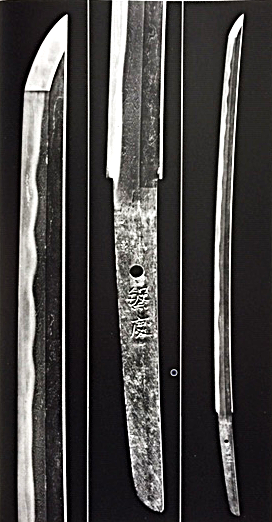
               Higo Province Enju Kunisuke from Sano Museum Catalog (permission granted)

The Enju (延寿) group lived in Higo (肥後) Province on Kyushu.  The characteristics of the Enju group closely resemble those of the Yamashiro-den because Enju Kunimura was related to Rai Kuniyuki, a member of the Yamashiro-den.

Enju (photo above) —-Hamon is hoso-suguha (straight temper line).  The boshi is komaru.  The front engraving is suken (above left photo, left side), and the engraving on the back is gomabashi (left photo, right side).  Tight itame ji-hada.  It can be confusing to kantei (determine who made the sword) a sword like this because, although it is from the late Kamakura period, it does not have the typical early Soshu-den appearance.

Masamune’s Tomb in Honkaku-ji Temple

Masamune’s (正宗) tomb is located inside Honkaku-ji Temple (本覚寺) in Kamakura.  Here is a map of Honkaku-ji Temple and the Masamune Kogei store in Kamakura.  The store is owned by Tsunahiro Yamamura, the 24th generation of MasamuneHonkaku-ji Temple is circled on the map, and the Masamune Kogei store is a red circle with an X.  Both are about a 6 to 7-minute walk from Kamakura Station. 

To reach to Honkaku-Ji Temple from Tokyo                                                                           Take the Yokosuka Line train from Tokyo Station (approx. one hour) → Get off at Kamakura Station (one stop after Kita-Kamakura) → Exit through the East Exit (front exit) → Walk straight and cross the street → Turn right and walk to the post office → Turn left at the post office (Honkaku-ji Temple sign is at the corner of the post office)
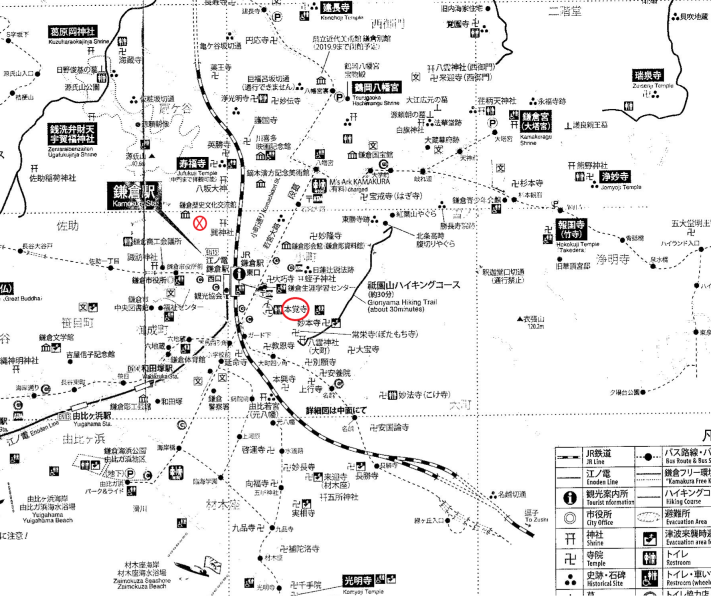
From Kamakura Tourist map
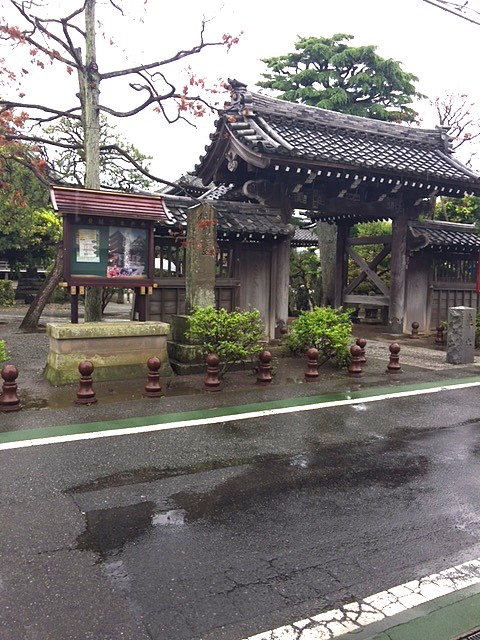
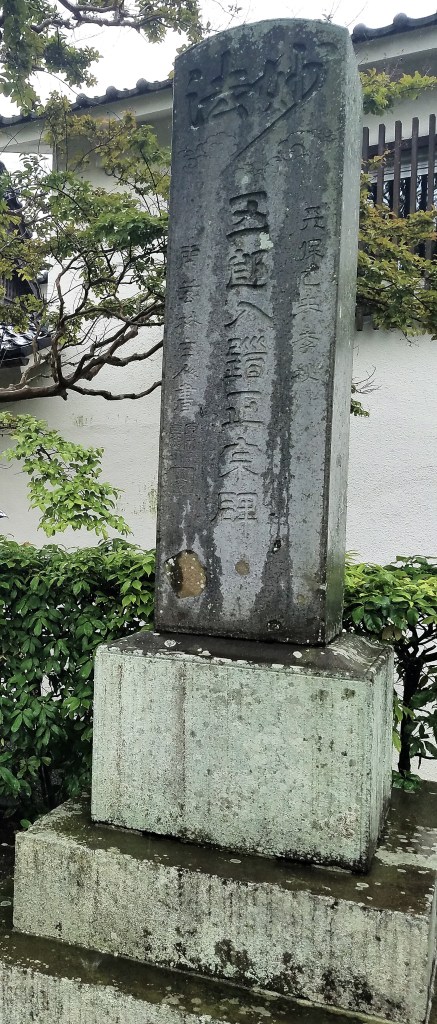
52 Honnkakuji 2 54 large Masamune monument only

52 Honkakuji 54 Small Masamune tomb only

Honkakuji Temple (本覚寺) and Masamune Tomb (正宗墓 )

28|Shin-to Sword — Main Seven Regions (part B 主要7刀匠地)


0-timeline - size 24 Shin-to
 The red circle indicates the subject of this chapter

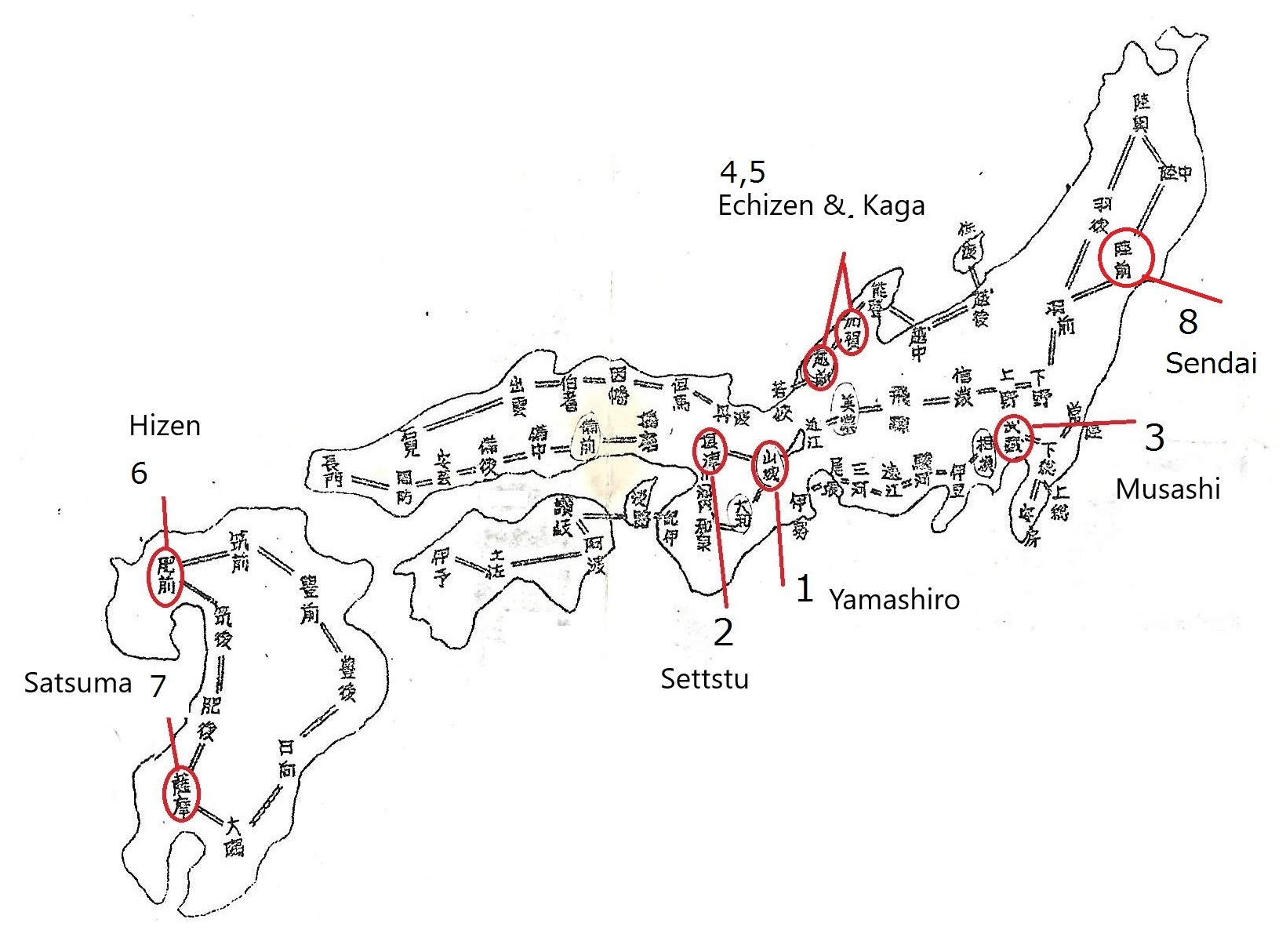
64Map with number with 8

3Musashi ( 武蔵 ) in Edo ( 江戸 )

The katana and wakizashi made in the Musashi area have a shallow sori (curvature).  Often, the width of the blade’s upper part is narrow.  Usually, the hamon begins with a slight irregular pattern, then gradually shifts to a larger irregular pattern, and a few inches below the yokote line, it becomes a small irregular pattern again.  The boshi is usually a komaru-boshi.  The ji-hada may be rough.  Masame-hada shows on shinogi-ji.

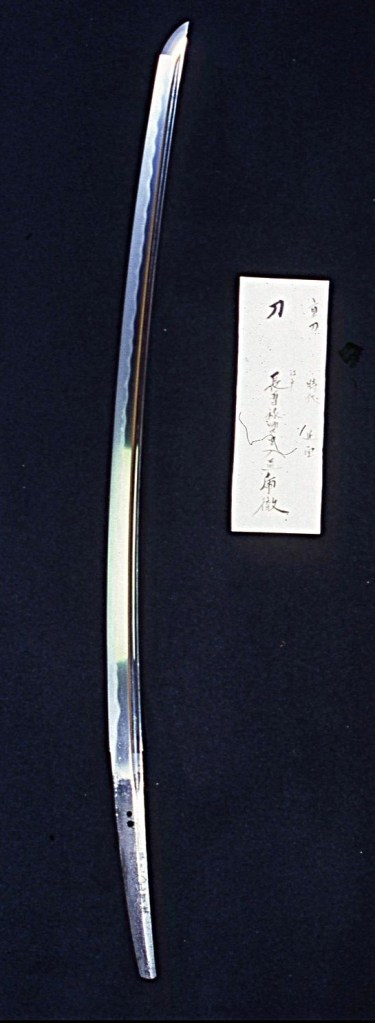
Well-known swordsmiths in Musashi ———————————-Noda Hannkei (野田繁慶)                                                      Nagasone Okisato Nyudo Kotetsu (長曽根興里入道虎徹)

Nagasone Okisato Nyudo Kotetsu                        Noda Hankei (野田繫慶)                                   (長曽根興里入道虎徹)                                   from Compton’s collection “Nippon-to”    Once, my family sword                                                                                                               

4. Echizen ( 越前 ) and 5. Kaga (加賀 )

Many swordsmiths from the Mino (美濃) area moved to the Echizen and Kaga areas (#4  & #5 on the map above).  Therefore, swords made in these areas are called Echizen-seki and Kaga-seki.  Refer to Chapter 23 Sengoku Period (戦国) Sword for Mino-den.             The style of Echizen Yasutsugu (越前康継) is similar to that of Mino-den.

Well-known swordsmith in Echizen ————————-Echizen Yasutsugu (越前康継 )

6. Hizen (肥前)

Both the katana and wakizashi from Hizen have well-balanced shapes.  The Hizen region tends to produce swords with a chu-suguha-hotsure (a medium-width straight hamon resembling frayed fabric) with fine nie (沸).  The boshi has a clean, regular line with a uniform width tempered line, as shown in the illustration below.  If you see a shin-to sword that has a chu-suguha hamon and a boshi that looks like the one below, it is often made by Hizen Tadayoshi (肥前忠吉).  Very fine Ji-hada (surface), sometimes called nukame-hada.

29 Hizen Tadayoshi Boshi

Well-known swordsmith in Hizen ——————————— Hizen Tadayoshi ( 肥前忠吉)

  1. Satsuma (薩摩 )

The swords made in Satsuma appear solid for both katana and wakizashi.  The kissaki (the top pointed area) is slightly stretched.  Yakidashi (a few inches above the machi ) shows a small, irregular hamon.  The hamon is o-midare with coarse nie called ara-nie. The ara-nie forms togari-ba (a pointed pattern; see the drawing below)One of the characteristics of this region.

The region is well known for its Satsuma-nie.  That is, the ara-nie around the hamon continues and blends into the ji-hada area.  Therefore, the border between ha-nie and ji-nie is unclear.  Inside the hamon, it sometimes shows a thick line shaped like lightning.  This line is called Satsuma-no-imozuru (sweet potato vine), and is less desirable than inazume and kinsiji.  This is the most prominent feature of the Satsuma sword.  Boshi has a narrow-tempered line with a small irregular patternThis is called satsuma-boshi.  On the ji-hada surface, chikei (a long, dark line) appears.  This is called Satsuma-gane (薩摩金).

29 Satsuma Togari-ba

Well-known swordsmiths in Satsuma ——————  Izunokami Masafusa (伊豆守正房)                                                                                                 Ichinohira Yasuyo (一平安代)                                                                                       Mondonosho Masakiyo (主水正正清)