62|Part 2 of — 28 Shin-To Main 7 Region (part B)

This chapter is a detailed part of Chapter 28, Shin-t Main 7 Regions (part B).  Please read Chapter 28 before reading this chapter.  Below are regions 3 and 7.

0-timeline - size 24 Shin-to                           The red circle above indicates the time we discuss in this section    
29 Map with number 7

3.Musashi (Edo)

We also find many famous swordsmiths in Edo.  They were Yasutsugu (康継), Kotetsu (虎徹), Noda Hankei (野田繁慶), Hojoji Masahiro (法成寺正弘), and their followers.

Two photos below are swordsmiths from Musashi (武蔵: Tokyo).  
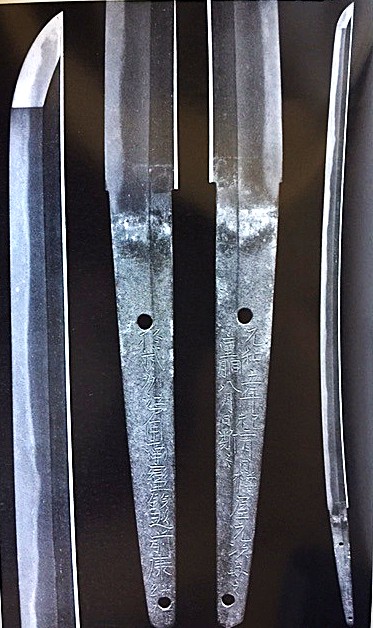
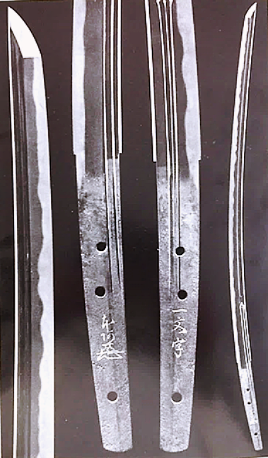
                       Yasutsugu  From the Sano Museum Catalogue.  (Permission to use granted)

Characteristics of Yasutusgu (康継) ——Shallow curvature; chu-gissaki (medium kissaki); a wide notare hamon, midare, or o-gunome (occasionally double gunome); traces of Soshu-den and Mino-den; a wood-grain pattern mixed with masame on the shinogi-ji.


              Kotetsu (虎徹) from Sano Museum Catalogue, (permission to use granted)

Here is the famous Kotetsu.  His formal name was Nagasone Okisato Nyudo Kotetsu (長曽祢興里入道虎徹).   Kotetsu started making swords after turning 50.  Before that, he was an armor maker.  

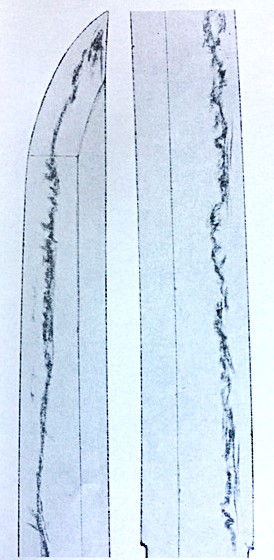
The characteristics of Kotetsu ———————— A shallow curvature and wide width, a wide tempered line with nie.  A small irregular hamon surrounds the machi area, transitioning into a wide suguha-like notare in the upper area.  Fine nie, komaruboshi with a short turn backThe ji-hada is a fine-grained wood with burl.  Occasionally, o-hada (black core iron shows through) appears in the lower part above the machi area.  The illustration above shows a thick-tempered line with nie, a typical feature of Kotetsu. Once you see it, you will remember it.   The next region is 7 (skip 4, 5, and 6)


  1. Satsuma (Kyushu) 

  Miyahara Mondonosho Masakiyo (宮原主水正正清) from Sano Museum Catalogue (permission to use granted).

Miyahara Mondonosho Masakiyo was highly respected by the Shimazu family of Satsuma- han (the Satsuma domain in Kyushu).  Later, he was chosen to travel to Edo to forge swords for Shogun Yoshimune

Mondonosho Masakiyo’s characteristics————- Well-balanced sword shape, shallow curvature, and wide and narrow hamon mixed with squarish hamon and pointed hamon as shown in the photo above.  He engraved the Tokugawa family’s Aoi crest (the hollyhock crest) on the nakago.

42|Part 2 of — 9 Middle Kamakura Period : Bizen Den (鎌倉中期備前伝)

This chapter is a detailed part of Chapter 9.  Please read 9 | Middle Kamakura Period (Bizen Den) 鎌倉中期備前伝  before reading this chapter.

0-timeline - size 24 Middle Kamakura

                         The red circle indicates the time we discuss in this section

The middle Kamakura period marked the height of the Bizen-den.  In many regions outside Bizen, sword styles often reflected local preferences and politics in specific areas.  However, the Bizen sword has its own style and has not been significantly influenced by these elements throughout time.  The clients of Bizen swords come from across the country.  Therefore, Bizen swordsmiths created swords that appealed to everyone. 

The general style of Bizen Den

  • In general, their style appeals to everyone.
  • The shape, the width of the blade, the thickness of the body, and the tempered line are of standard size or usual design, rarely out of the ordinary.
  • Nioi base
  • Soft feeling Ji-gane (steel)
  • Utsuri (cloud-like shadow) appears.
  • The tempered line tends to have a consistent width, neither too wide nor too narrow.

Fukuoka Ichimonji group

 Names of swordsmiths among the Fukuoka Ichimonji group

Fukuoka Ichimonji Norimune (福岡一文字則宗) and Fukuoka Ichimonji Sukemune (福岡一文字助宗) were the leading swordsmiths of the Fukuoka Ichimonji group (福岡一文字).   From this group, six swordsmiths, including Norimune and Sukemune, received the honor of “Gobankaji” from Emperor Gotoba (後鳥羽上皇).   I saw Fukuoka Ichimonji Muneyoshi (福岡一文字宗吉) in Mori Sensei’s class on June 25, 1972.  My notes pointed out a lot of utsuri (shadows) on the blade.

Sugata (shape) ——————- A graceful and elegant shape.  Generally, it has well-balanced proportions.  The difference between the top width and the bottom width is minimal.  Occasionally, a stout-looking kissaki called ikubi-kissaki (refer to Chapter 11, Ikubi Kissaki (猪首切先) appears.

Hi and Engraving ———–The tip of the hi may follow the ko-shinogi line.  See below.  The end of the hi goes under machi, ends with a square or kakinagashi (see Chapter 41)

44 hisaki agaru

Hamon  ———- Wide ichimonji-choji tempered line.  It indicates the consistent width of the tempered line from the bottom to the top.  The same hamon appears on both sides.  O-choji-midare  (large clove-like pattern), juka-choji (overwrapped-looking choji).  Nie base.  Inazuma and/or kinsuji may appear.

Boshi ————– Same Hamon continues into the Boshi area and ends with Yakizume or turns slightly.  Sometimes O-maru.

Jihada ———– A fine and soft appearance.  Itame (woodgrain pattern).   Lots of utsuri (cloud-like shadow or reflection)

                   44 Ichimonjio hamon

                 Ichimonji  Sano Museum Catalogue (佐野美術館) Permission granted

*The sword above is o-suriage.  The end of the hi is lower than the mekugi-ana inside the nakago.


30| Shin-Shin-To 1781-1867 (Bakumatsu Period Sword 新々刀)

0-timeline - size 24 BakumatsuThe red circle indicates the time we discuss in this section

The later part of the Edo period is called Bakumatsu.  See the circled area on the timeline above.  Swords made during this time are called shin shin-to.   They are also called Fukko-to (復古刀: revived sword).  Fukko-to replicates the shape, hamon, boshi, and other features of the Ko-to and Shin-to swords.  The characteristics of the Shin Shin-to (新々刀) and well-known swordsmiths are listed below.

The Characteristics of Shin Shin-to

  • Katana, wakizashi, and tanto all tend to resemble or imitate the ko-to and shin-to in shape.
  • Many swords often have a Hi or detailed engravings.
  • One swordsmith would create multiple sword styles, such as Soshu-den, Bizen-den, and Shin-to style.
  • Often shows Katai-ha.

30 katai-ha

                                                                  Katai-ha

  • Weak (not tight) Nioi.
  • Yakidashi (2 to 3 inches above machi) is often suguha(straight line hamon), even though the rest of the area has irregular    Boshi is often irregular midare.
  • Detailed engravings are more realistic than those from earlier times.

Well-known swordsmiths of Shin Shin-to

  • Settsu (Osaka area) ——————Gassan Sadayoshi (月山貞吉), Gassan Sadakazu (月山貞一). The Gassan family is known for their detailed carvings.
  • Musashi no Kuni (Tokyo area) ————-Suishinshi Masahide (水心子正秀),  Minamoto Kiyomaro (源 清麿),  Taikei Naotane (大慶直胤),  Taikei Yoshitane (大慶義胤).  Yoshitane is well-known for his carvings.                                               

Minamoto Kiyomaro(源清麿)    Once my family possession

  • Tosa (四国: Shikoku area) ———————————————- Sa Yukihide (左行秀)
  • Satsuma (鹿児島: Kagoshima) ———— Oku Moptohira (奥元平) Namino Hira (波平)

Meiji Ishin-To

Right before the Meiji Restoration, long swords (about 3 feet) without any curvature were made.  Sa Yukihide (from the Tosa area) forged this type of sword.  Saigo Takamori (西郷隆盛) and Sakamoto Ryoma (坂本龍馬) owned such swords.  Both are well-known historical figures from the Meiji Restoration.  Both were part of the Kin’no-to (勤皇党) group, which supported the emperor and reformed the political system.


27|Shinto Sword — Main Seven Regions (Part A :主要7刀匠地)

0-timeline - size 24 Shin-to

                            The red circle indicates the subject we discuss in this section

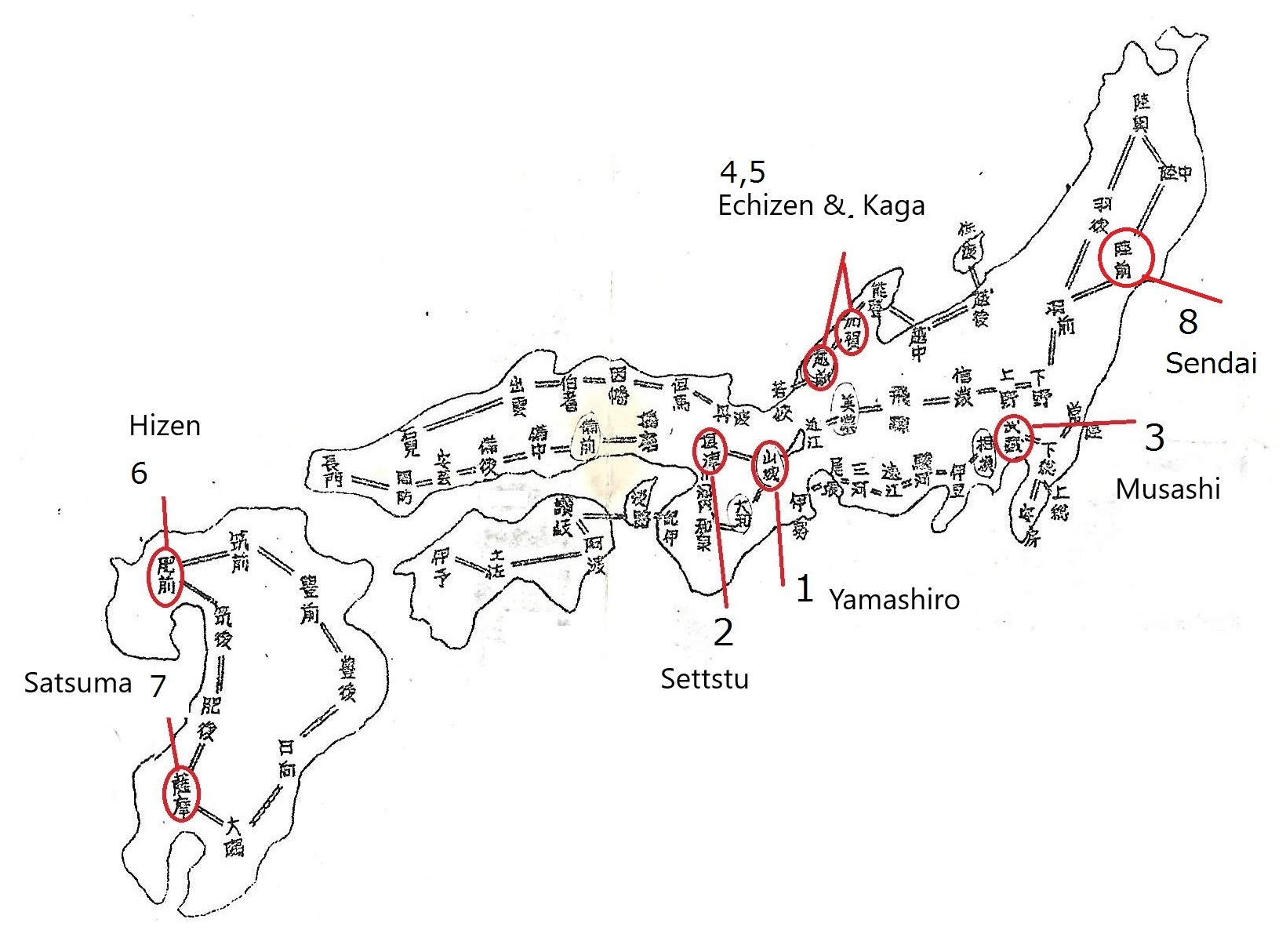
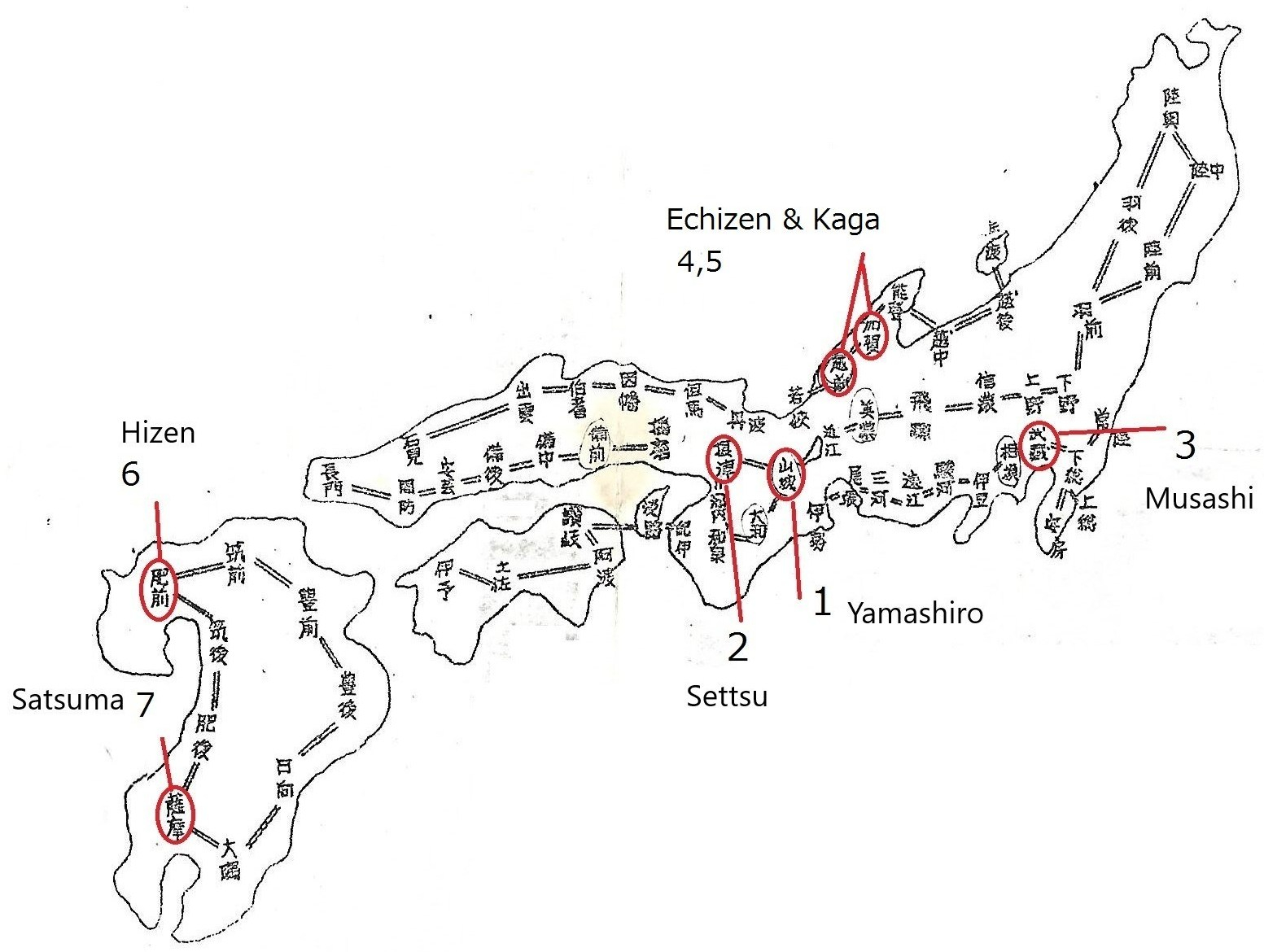
During the Shinto era, there were seven main prosperous regions where many swordsmiths gathered and actively forged swords.  These are Yamashiro (山城) in Kyoto, Settsu (摂津) in Osaka, Musashi (武蔵 ) in Edo, Hizen (肥前) in Saga, Satsuma (薩摩) in Kagoshima, Echizen (越前) in Fukui,  and Kaga (加賀) in Kanazawa.  Swordsmiths from each area shared common regional characteristics of their places.  Knowing each of these characteristics is the easiest way to understand Shin-to.  However, it is important to remember that each swordsmith within a group had their own unique way of sword-making.  The following are only general descriptions of these characteristics.

Below is a map of Japan.  Hokkaido is not shown on the map because swords were not made there during that time.

64Map with number with 8

1.  Yamashiro (山城) Kyoto

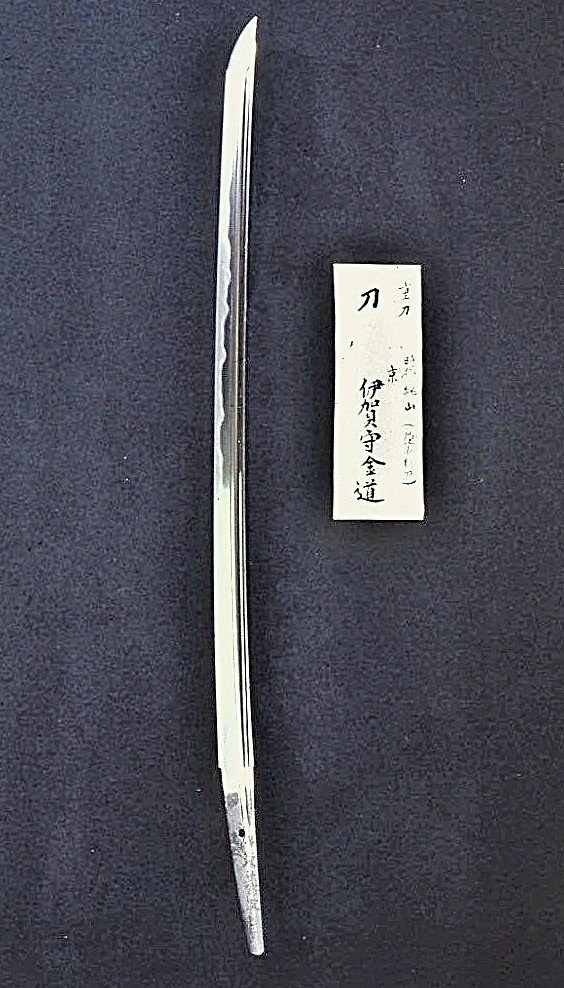
The Yamashiro shin-to sword has a solid and strong look.  The hamon near the lower part of the blade, just above the machi (区) area, shows suguha (straight hamon).  This is called kyo-yakidashi (京焼出し, meaning it starts with a straight hamon.  Then, it shows a sudden shift to a design of o-midare (大乱).  The o-midare (large irregular waviness) becomes less wavy about one or two inches below the yokote line, then continues into the boshi as a wavy hamon.  The design in the boshi is komaru-boshi.   See the illustration below. 

Ji-hada ———— Somewhat rough, (depending on the swordsmith).  Masame-hada (straight grain pattern) may show on shinogi-ji (between the ridgeline and back). 

Among the Yamashiro shin-to group, there was a group called the Mishina group (三品).  They were related to Mino-den (美濃).  Therefore, their boshi was often jizo-boshi (地蔵鋩子).  This is called Mishina-boshi (三品鋩子).  Jizo-boshi is an image of a man’s head.

The Well-known swordsmiths in Yamashiro area: Umetada Myoju (梅忠明寿)                                                                                                   Horikawa Kunihiro (堀川国広)                                                                                               Dewadaijyo Kunimichi (出羽大掾国路)

28 Mishina-Boshi Komaru-boshi, Kyo-Yakidashi

                                                        Iganokami Kinnmichi (伊賀守金道) Yamashiro Den, once my family sword

2.Settu (摂津) Osaka (大阪)

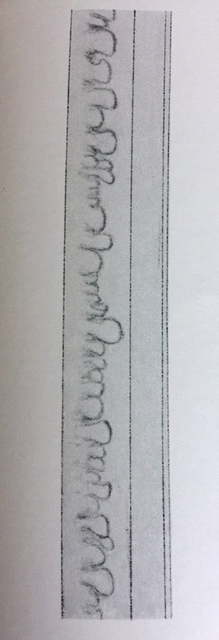
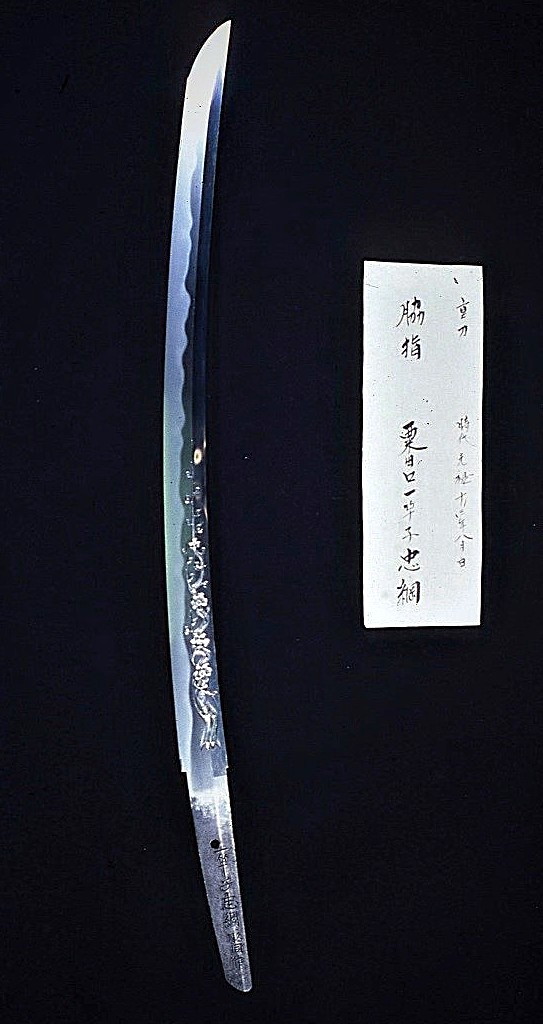
Settsu (Osaka) produced more wakizashi than katana.  They tend to make it slightly sakizori (the top half curving outward) with a slightly stretched boshi. A Settsu sword also shows yakidashi, similar to the previous Yamashiro sword.  However, unlike Yamashiro’s sword, the transition is not abrupt but relatively smooth, where suguha changes into notare (wavy pattern).  This is called Osaka Yakidashi.

Osaka Boshi ——-Hamon continues up to the yokote line, then komaru with a turn back.   Ji-hada————-Very fine,  almost no pattern, a solid surface like, especially, shinogi-ji (between the ridgeline and the back).  This is called Osaka-tetsu (iron).

29 Osaka Yakidashi Komaru Boshi

Well-known swordsmiths in Settsu area— Osaka Tsuda Sukehiro (大阪津田助広)                                                                                 Tsuda Sukenao (津田助直)                                                                                                   Ikkanshi Tadatsuna (一竿子 忠綱)

                                                                 Ikkanshi Tadatsuna (一竿子忠綱), once my family sword