62|Part 2 of — 28 Shin-To Main 7 Region (part B)

This chapter is a detailed part of Chapter 28, Shin-t Main 7 Regions (part B).  Please read Chapter 28 before reading this chapter.  Below are regions 3 and 7.

0-timeline - size 24 Shin-to                           The red circle above indicates the time we discuss in this section    
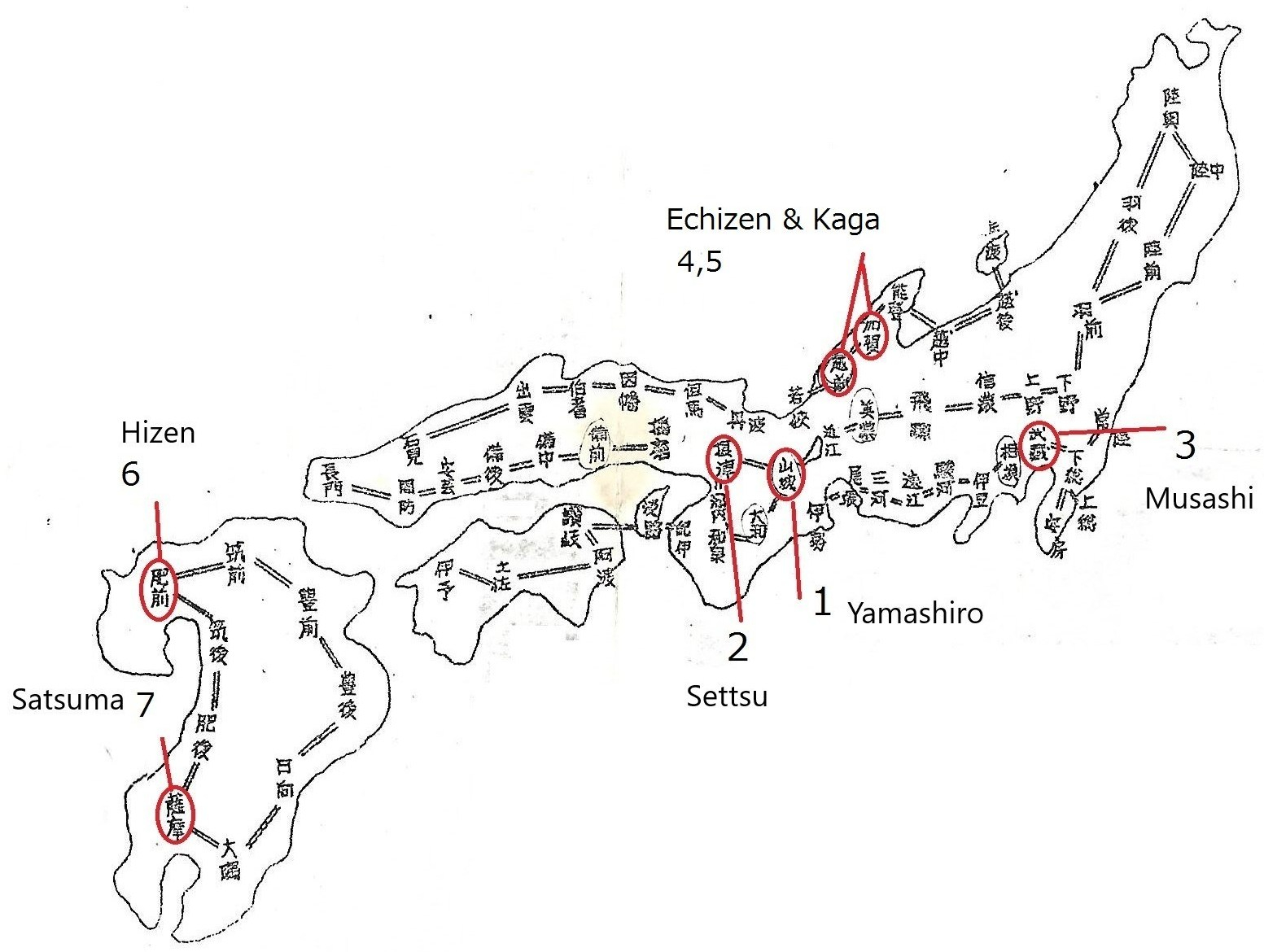
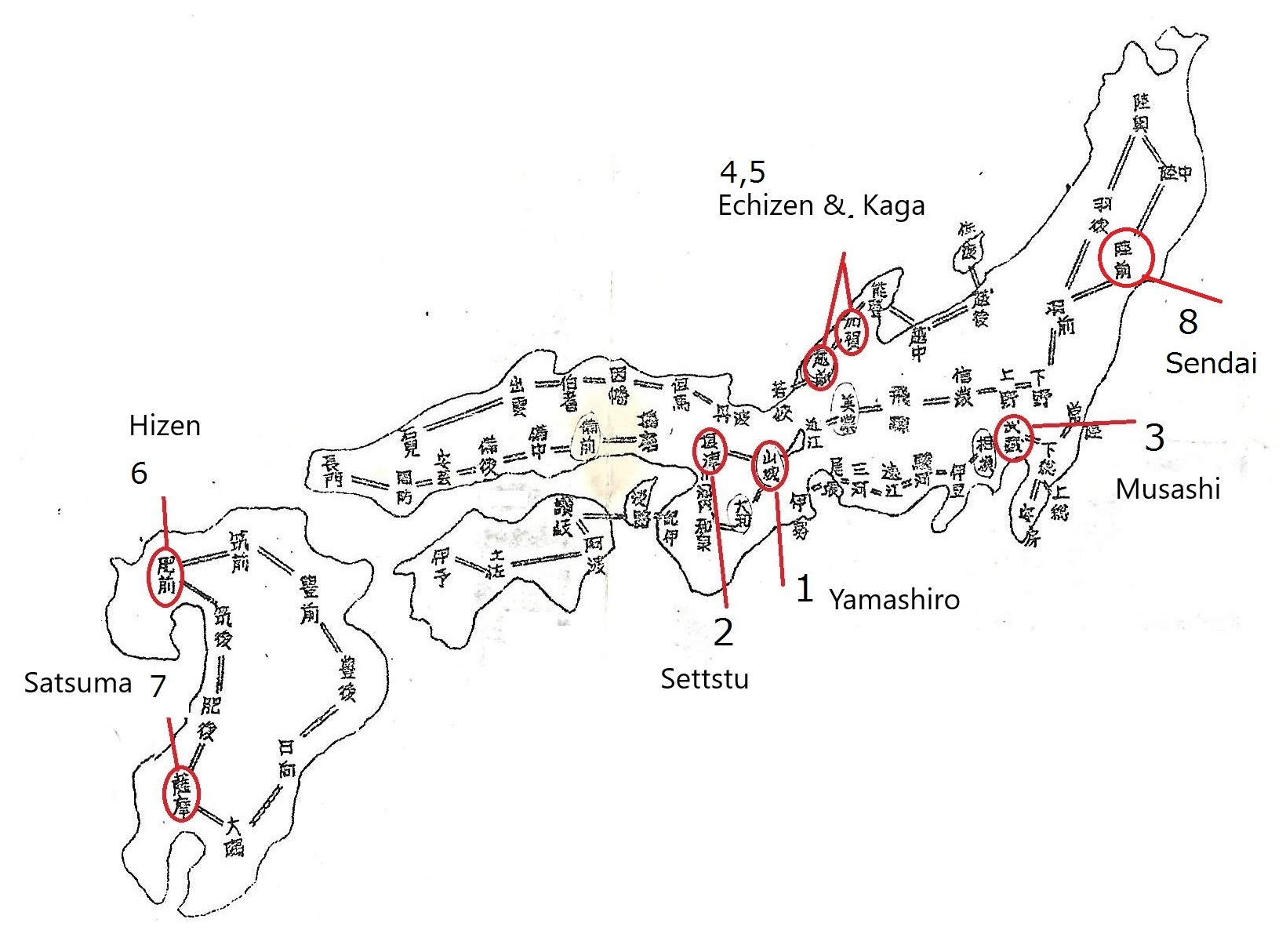
29 Map with number 7

3.Musashi (Edo)

We also find many famous swordsmiths in Edo.  They were Yasutsugu (康継), Kotetsu (虎徹), Noda Hankei (野田繁慶), Hojoji Masahiro (法成寺正弘), and their followers.

Two photos below are swordsmiths from Musashi (武蔵: Tokyo).  
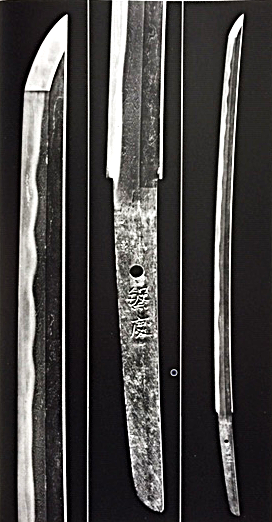
                       Yasutsugu  From the Sano Museum Catalogue.  (Permission to use granted)

Characteristics of Yasutusgu (康継) ——Shallow curvature; chu-gissaki (medium kissaki); a wide notare hamon, midare, or o-gunome (occasionally double gunome); traces of Soshu-den and Mino-den; a wood-grain pattern mixed with masame on the shinogi-ji.
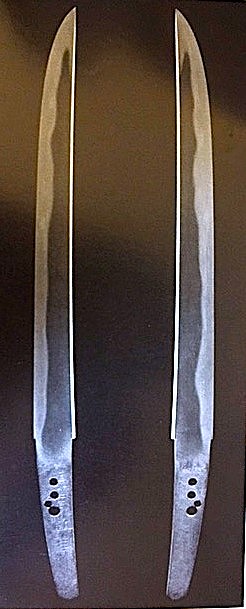
 

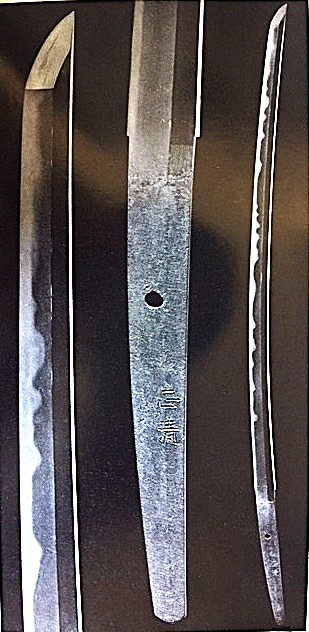
              Kotetsu (虎徹) from Sano Museum Catalogue, (permission to use granted)

Here is the famous Kotetsu.  His formal name was Nagasone Okisato Nyudo Kotetsu (長曽祢興里入道虎徹).   Kotetsu started making swords after turning 50.  Before that, he was an armor maker.  

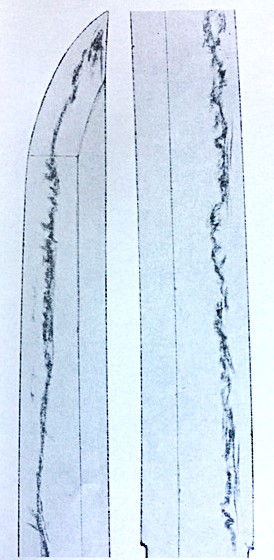
The characteristics of Kotetsu ———————— A shallow curvature and wide width, a wide tempered line with nie.  A small irregular hamon surrounds the machi area, transitioning into a wide suguha-like notare in the upper area.  Fine nie, komaruboshi with a short turn backThe ji-hada is a fine-grained wood with burl.  Occasionally, o-hada (black core iron shows through) appears in the lower part above the machi area.  The illustration above shows a thick-tempered line with nie, a typical feature of Kotetsu. Once you see it, you will remember it.   The next region is 7 (skip 4, 5, and 6)


  1. Satsuma (Kyushu) 

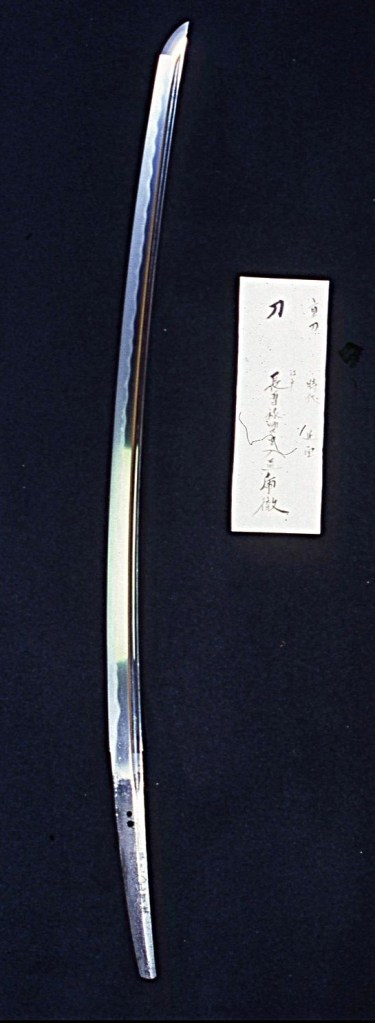
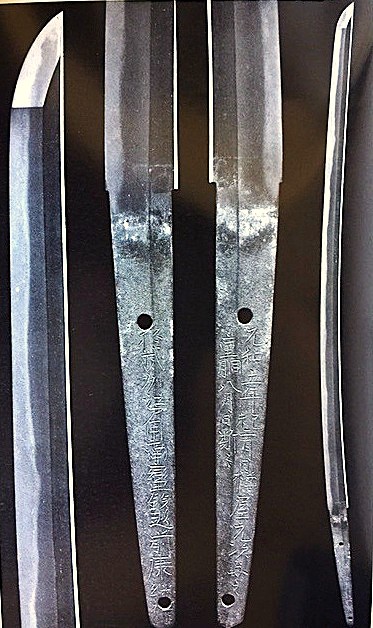
  Miyahara Mondonosho Masakiyo (宮原主水正正清) from Sano Museum Catalogue (permission to use granted).

Miyahara Mondonosho Masakiyo was highly respected by the Shimazu family of Satsuma- han (the Satsuma domain in Kyushu).  Later, he was chosen to travel to Edo to forge swords for Shogun Yoshimune

Mondonosho Masakiyo’s characteristics————- Well-balanced sword shape, shallow curvature, and wide and narrow hamon mixed with squarish hamon and pointed hamon as shown in the photo above.  He engraved the Tokugawa family’s Aoi crest (the hollyhock crest) on the nakago.

28|Shin-to Sword — Main Seven Regions (part B 主要7刀匠地)


0-timeline - size 24 Shin-to
 The red circle indicates the subject of this chapter

64Map with number with 8

3Musashi ( 武蔵 ) in Edo ( 江戸 )

The katana and wakizashi made in the Musashi area have a shallow sori (curvature).  Often, the width of the blade’s upper part is narrow.  Usually, the hamon begins with a slight irregular pattern, then gradually shifts to a larger irregular pattern, and a few inches below the yokote line, it becomes a small irregular pattern again.  The boshi is usually a komaru-boshi.  The ji-hada may be rough.  Masame-hada shows on shinogi-ji.

Well-known swordsmiths in Musashi ———————————-Noda Hannkei (野田繁慶)                                                      Nagasone Okisato Nyudo Kotetsu (長曽根興里入道虎徹)

Nagasone Okisato Nyudo Kotetsu                        Noda Hankei (野田繫慶)                                   (長曽根興里入道虎徹)                                   from Compton’s collection “Nippon-to”    Once, my family sword                                                                                                               

4. Echizen ( 越前 ) and 5. Kaga (加賀 )

Many swordsmiths from the Mino (美濃) area moved to the Echizen and Kaga areas (#4  & #5 on the map above).  Therefore, swords made in these areas are called Echizen-seki and Kaga-seki.  Refer to Chapter 23 Sengoku Period (戦国) Sword for Mino-den.             The style of Echizen Yasutsugu (越前康継) is similar to that of Mino-den.

Well-known swordsmith in Echizen ————————-Echizen Yasutsugu (越前康継 )

6. Hizen (肥前)

Both the katana and wakizashi from Hizen have well-balanced shapes.  The Hizen region tends to produce swords with a chu-suguha-hotsure (a medium-width straight hamon resembling frayed fabric) with fine nie (沸).  The boshi has a clean, regular line with a uniform width tempered line, as shown in the illustration below.  If you see a shin-to sword that has a chu-suguha hamon and a boshi that looks like the one below, it is often made by Hizen Tadayoshi (肥前忠吉).  Very fine Ji-hada (surface), sometimes called nukame-hada.

29 Hizen Tadayoshi Boshi

Well-known swordsmith in Hizen ——————————— Hizen Tadayoshi ( 肥前忠吉)

  1. Satsuma (薩摩 )

The swords made in Satsuma appear solid for both katana and wakizashi.  The kissaki (the top pointed area) is slightly stretched.  Yakidashi (a few inches above the machi ) shows a small, irregular hamon.  The hamon is o-midare with coarse nie called ara-nie. The ara-nie forms togari-ba (a pointed pattern; see the drawing below)One of the characteristics of this region.

The region is well known for its Satsuma-nie.  That is, the ara-nie around the hamon continues and blends into the ji-hada area.  Therefore, the border between ha-nie and ji-nie is unclear.  Inside the hamon, it sometimes shows a thick line shaped like lightning.  This line is called Satsuma-no-imozuru (sweet potato vine), and is less desirable than inazume and kinsiji.  This is the most prominent feature of the Satsuma sword.  Boshi has a narrow-tempered line with a small irregular patternThis is called satsuma-boshi.  On the ji-hada surface, chikei (a long, dark line) appears.  This is called Satsuma-gane (薩摩金).

29 Satsuma Togari-ba

Well-known swordsmiths in Satsuma ——————  Izunokami Masafusa (伊豆守正房)                                                                                                 Ichinohira Yasuyo (一平安代)                                                                                       Mondonosho Masakiyo (主水正正清)