65| The Sword Observation Process

This chapter explains the process for handling the sword examination.

  1. Wear white gloves or hold a handkerchief in both hands.

how-to-handle-sword-1.jpg

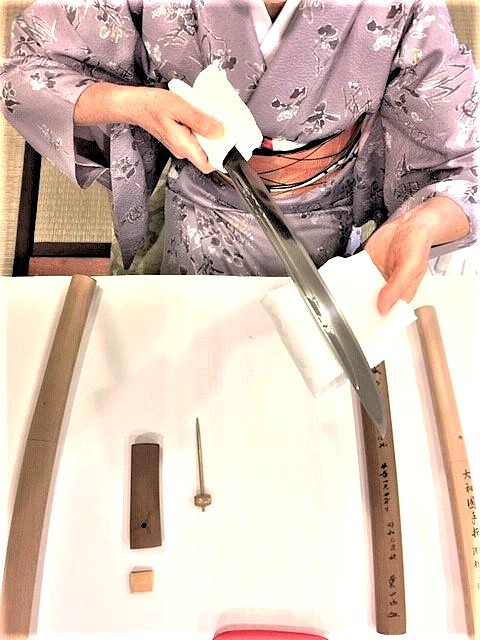
  1. Lightly bow.  Hold the tsuka (hilt) with your right hand and the saya (scabbard) with your left hand.  Keep the back of the saya facing downward, and the ha facing up.  The mune should rest on the inside of the saya.  Carefully pull the blade out.  Do not let the ha touch the inside wall of the saya to avoid scratches.

How to handle sword 2

  1. .  Place the saya to the left of the sword.  Prepare the sword tool.

How to handle sword 3

  1. . Push out the mekugi (peg) from the tsuka using the sword tool. 

How to handle sword 4

5. Place the mekugi into the tsuka hole to prevent it from losing it.

How to handle sword 5

6.   Remove the habaki (the gold metal square piece above the tsuka) and set it on the right. 

How to handle sword 6.a  How to handle sword 6

  1.   Hold the nakago in your right hand.  Support the blade from underneath with your left hand using washi (Japanese rice paper), a handkerchief, or tissue paper.


  1. Use light reflection on the blade’s surface, examine the jigane, hamon, boshi, mei, and other features.  To observe the hamon, jigane, and boshi clearly, move the sword up, down, or sideways, or rotate it to reflect the light at the proper angle.

1悦子の絵

  1. When you finish examining the sword, bow lightly, and put it back together by reversing the order process.


55 |Part 2 of —–21 Muromachi Period Sword (室町時代刀)

Chapter 55 is a detailed section of Chapter 21, Muromachi Period Sword.  Please read Chapter 21 before reading this part.

57 Muromach-timeline size 22

                         The circle above indicates the time we discuss in this section

After the Muromachi period, swords shifted to katana(刀) from tachi (太刀), as described in Chapter 21, Muromachi Period Sword.  Refer to Chapter 21, Muromachi Period Sword.  By the end of the Nanboku-cho period, sword lengths had shortened to about 2 feet ± a few inches.  The 3-to-5-foot-long swords seen during the Nanboku-cho period were no longer produced.  This change occurred because, during the Nanboku-cho period, warriors mainly fought on horseback, but after the Muromachi period, infantry combat became more common.

Oei Bizen (応永備前)                                                                                                              The pronunciation of Oei is “O” as in “Oh” and “ei” as in “A” from ABC.  The Muromachi period was a declining time for sword-making.  The swords made during the early Muromachi period in the Bizen area is known as Oei BizenOsafune Morimitsu (長船盛光), Osafune Yasumitsu (長船康光), and Osafune Moromitsu (長船師光) were the main Oei Bizen swordsmiths.  Soshu Hiromasa (相州広正) and Yamashiro Nobukuni (山城信國) were also similar to the Oei Bizen style.  Please refer to Chapter 21, Muromachi Period Sword, for details on the  Muromachi sword shape, Hamon, Boshi, and Ji-hada.
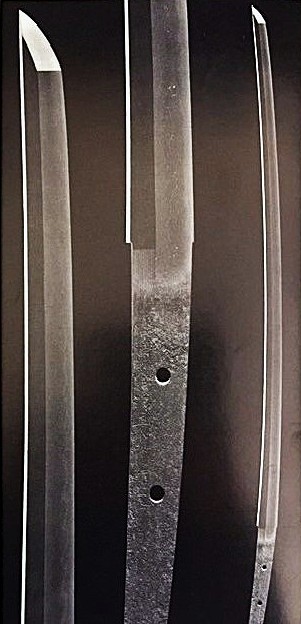
                       Bishu Osafune Moromitsu (備州長船師光)   from Sano Museum Catalogue ((permission granted)

The Osafune Moromitsu sword shown above measures 2 feet 5 inches in length and has a medium kissaki.  Its hamon has a small wave-like pattern with continuous gunome (a lined half-circle pattern).  The boshi area shows irregular waviness with a slightly pointed tip.  Very faint bo-utsuri (a soft shadow shaped like a strip of wood) appears on ji-hadaBo-utsuri is a distinctive feature among all the Oei Bizen

Before the Muromachi period, many swordsmith groups operated in the Bizen region. However, by the Muromachi period, Osafune (長船) was the only remaining group.

Osafune (長船) is the name of a region, but it became the surname of swordsmiths during the Muromachi period.  Two other well-known swordsmiths from Oei Bizen are Osafune Morimitsu (盛光) and Osafune Yasumitsu (康光).  The hamon created by Morimitsu and Yasumitsu is more detailed than that of the sword in the photo above.  Chapter 21, Muromachi period swords, shows the hamon of Morimitsu and Yasumitsu and describes the typical characteristics of swords from the Muromachi period.

                                                 Hirazukuri Ko-Wakizashi Tanto
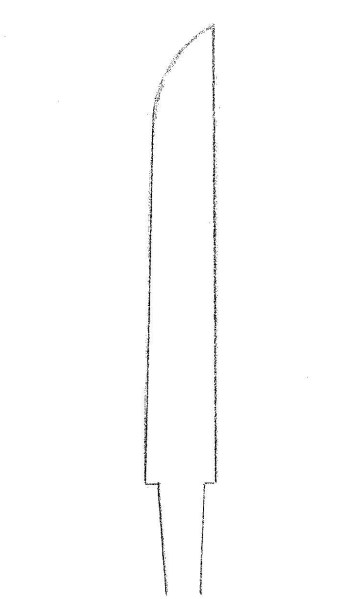
58 Hirazukuri Ko-Wakizashi Tanto

Hirazukuri Ko-Wakizashi Tanto Shape                                                                       

Hirazukuri ko-wakizashi tanto was a popular style during the early Muromachi period. Swordsmiths from various regions produced tantos similar to the one shown above. However, most of these types were made by Oei Bizen swordsmiths.

The characteristics of the Hirazukuri ko-wakizashi tanto ————-Typically about one foot and 1 or 2 inches long.  No yokote line, no shinogi, and no sori (meaning no curvature, straight back).  Average thickness.  Narrow width.  Gyo-no-mune (refer to Chapter 12, Middle Kamakura Period Tanto).
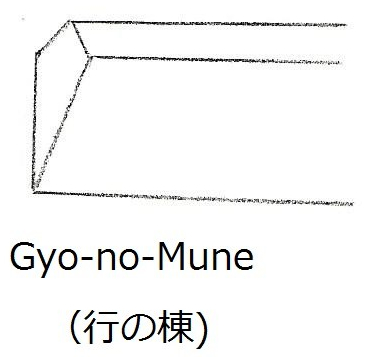
13 Mune drawing

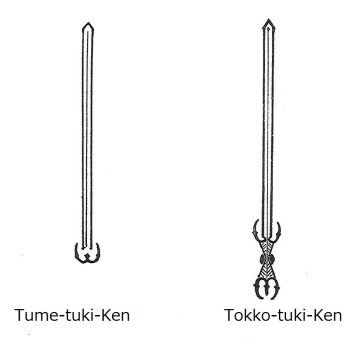
Hirazukuri Ko-wakizashi tanto often shows many engravings.  Hi with soe-hi (double lines, wide and narrow side by side), Tokko-tsuki-ken, Tsume-tsuki-ken, Bonji, and more.

.
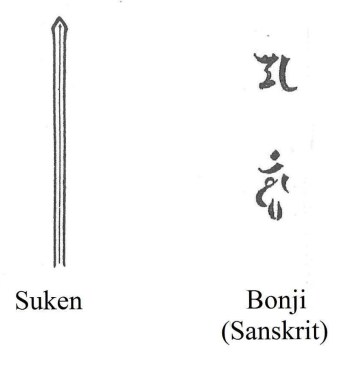
9 Hi, Suken, Bonji20 Tokko, tume Ken  58 tsumetukiken and Hi

*drawings from “Nihonto no Okite to Tokucho” by Honami Koson


46|Part 2 of — 12|Middle Kamakura Period: Tanto 鎌倉中期短刀

This chapter is a datiled part of chapter of 12| Middle Kamakura Period Tanto ( 短刀) .  Please read Chapter 12 before reading this section.

0-timeline - size 24 Middle Kamakura

                   The circle above indicates the time we discuss in this section


In Chapter 12, Middle Kamakura Period: Tanto, it is described that the tanto shape called takenoko-zori appeared during the middle Kamakura period.  This type of tanto  curves slightly inward at the tip.  The drawing below may be somewhat exaggerated to show the curve.  The actual curvature of the takenoko-zori is not very noticeable.  Perhaps only a few millimeters inward. 

Usually, the length of a tanto is around 12 inches.  Tantos are categorized as follows: if it is approximately ten inches, it is called a josun tanto (定寸短刀), longer than ten inches is called a sun-nobi tanto (寸延び短刀), and shorter than ten inches is called a sun-zumari tanto (寸詰短刀).

12Tanto drawing Mid Kamakur

Sun-nobi Tanto (寸延び)   >   Jyosun Tanto (定寸)   >  sun-zumari Tanto (寸詰り)  (longer than 10 inches)           (approx. 10 inches)                (less than 10 inches

13 «Part 2» Tanto photo

 46 Shintogo Kunimitsu Oshigata

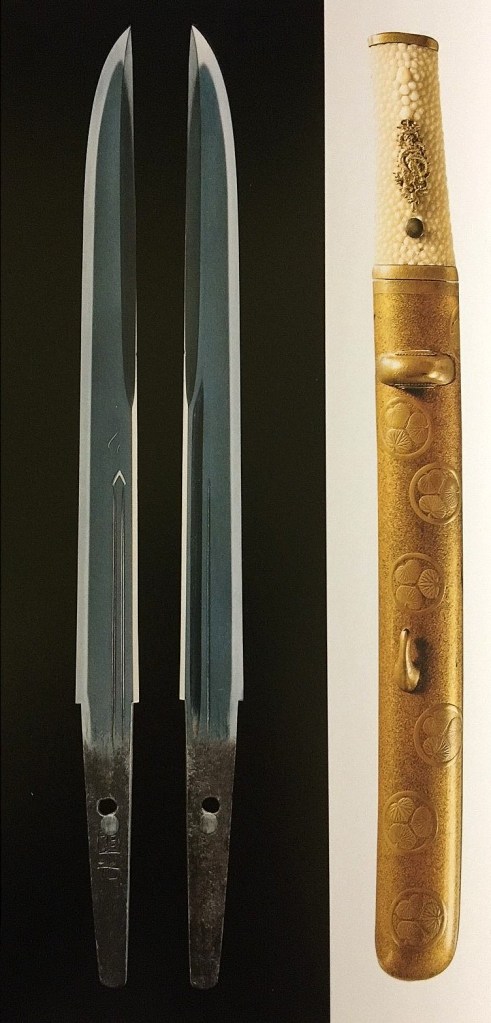
Shintogo Kunimitsu (新藤五国光)  Sano Museum Catalogue, permission granted to use

The style above is called kanmuri-otoshi (冠落); the mune side (opposite side of the  cutting edge) is shaved off.  The length is approx. 10 inches: woodgrain pattern surface  with nie on ji (refer to Chapter 3, Names of parts).   Very finely forgedThe hamon is a medium suguha (straight).  The boshi is ko-maru (small round).  Due to the kanmuri-otoshi style, it may not be easy to see the takenoko-zori; the mune side slightly bends inward.  Shintogo Kunimitsu is regarded as the top tanto maker.

13 «Part 2»Tanto photo with Saya

The above photo is also by Shintogo Kunimitsu (新藤五国光) with Saya.  Saya is the scabbard.  The handle of the scabbard (white part) is made of sharkskin.  Both photos are from the  Sano Museum Catalog “Reborn.”  Permission granted.                                                                     

19 | Nanboku-Cho Period Tanto(南北朝短刀)

0-timeline - size 24 Nanboku-cho
The circle indicates the time we discuss in this section

During the Nanboku-cho period, a type of tanto called hirazukuri ko-wakizashi sun-nobi tanto was made.  Hirazukuri means flat swords without the yokote line or shinogi.  Ko-wakizashi refers to a shorter sword.  Sun-nobi tanto means longer than a standard tanto.  This type is also known as Enbun Jyoji ko-wakizashi tanto because most of these tantos were created during the Enbun and Jyoji eras of the imperial period.  In Japan, a new imperial era begins when a new emperor ascends to the throne.  The Enbun era spanned 1356-1361, while the Jyoji period spanned 1362-1368.

20 Enbun Jyoji Kowakizashi Tanto

Sugata (姿: shape) ————A standard tanto measure is approximately one shaku.  Shaku is an old Japanese unit of measurement for length, and one shaku is roughly equal to one foot.  

8.5 sun (the sun is another old Japanese measurement unit of length) is approximately ten inches.  Ten inches is the standard size for a tanto, known as a josun tanto.  Anything longer than a josun tanto is called a sun-nobi tanto.  Anything shorter than a josun is called a sun-zumari tanto. 

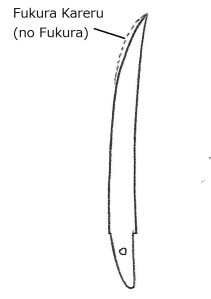
Most of the Nanboku-cho tantos are longer than a josun tanto, approximately one foot two inches.  Therefore, they are called hirazukuri ko-wakizashi sun-nobi tantoSaki-zori (curved outward at the top.  See the illustration above).   Wide in width and thin in body.  Fukura kareru (no fukura means less arc).  Shin-no-mune.  See the drawing below.

20 Fukura           20 Shin-no-Mune

Hi, (: Grooves) and Horimono (彫り物: Engraving) ——- A groove or grooves on the mune side.  Bonji (Sanskrit, see Chapter 16 Late Kamakura Period (Early Soshu-Den Tanto),  koshi-bi (short groove),  tumetuki ken, and tokko-tsuki ken (see below) appear. The ken (dagger) is curved widely and deeply in the upper part and shallower and narrower in the lower part.  This is called Soshu-bori (Soshu-style carving).

20 Tokko, tume Ken

Hamon (: Tempered line) ——- The narrowly tempered section at the lower part gradually widens toward the top.  A similar wide hamon pattern extends into the boshi area.  The hamon in the kissaki area is kaeri-fukashi (deep turn back).  See the illustration below.  Coarse nie.  O-midare (large irregular hamon pattern).

20 Hitatsura

                                        From Sano Museum Catalogue

Ji-hada (地肌: the area between shinogi-ji and the tempered line) ——– a loose wood grain pattern called itame.  Yubashiri (see Chapter 16, Late Kamakura Period) and tobiyaki (irregular patchy tempered spots) appear.  Dense tobiyaki is called hitatsura (see the drawing above).

Nakago (: Tang) —- Short tanago-bara.  Tanago-bara refers to the shape of the belly of a Japanese fish called tanago (bitterling).

20 Tanago Bara

Tanto Swordsmiths during the Nanboku-Cho Period

Soshu Den ———————————————————-Hiromitu( 広光) Akihiro (秋広) Yamashiro Den ————————————————–Hasebe Kunishige (長谷部国重)   Bizen Den ——————————————————— Kanemitu (兼光) Chogi (長義 )

    Soshu Hiromitsu     “Nippon-To Art Sword of Japan “   The Walter A. Compton Collection

15| The Revival of Yamato Den(大和伝復活)

0-timeline - size 24 Late Kamakura

        The red circle above indicates the time we discuss in this section

It is believed that sword-making first started in Yamato province (now Nara Prefecture) during the Nara period (710 to 794).  In the early days of sword-making, the forging techniques were primitive.  At that time, many swordsmiths lived in Yamato, but over time, sword-making in this region declined.

At the end of the Kamakura period, several powerful Buddhist temples emerged in the Yamato area, leading to conflicts among them.  Temples held significant political and military power to control large territories called shoen (荘園) through their large numbers of warrior monks, known as sohei (僧兵).  The most dominant group was Nanto Sohei (南都僧兵)*.  These groups of sohei demanded more swords to arm themselves, which revitalized the Yamato-den (school) and increased the number of swordsmiths in the Yamato area.   As a result, the Yamato-den group became active again.  The Yamato-den style is somewhat similar to the Yamashiro-den.    

*Nanto Sohei (南都僧兵)—————-Since around the 11th century, Buddhist temples grew powerful under the protection of the Joko (retired emperors).  These temples had many sohei (low-level monks who also served as soldiers). When power struggles arose among the temples, sohei fought as their soldiers on the battlefields.  Nanto Sohei were such soldiers at Kofuku-Ji Temple (興福寺).  Several large temples, such as Todai-ji (東大寺) Temple, controlled the Yamato area.

Sugata (姿: Shape) —————- Not much difference in style during the early part of Yamatoden and Yamashiro-den.  Shinogi is high.  Mune is thin.   Some Yamato-den have a shallow sori (curvature).

16 Yamato sword cross section

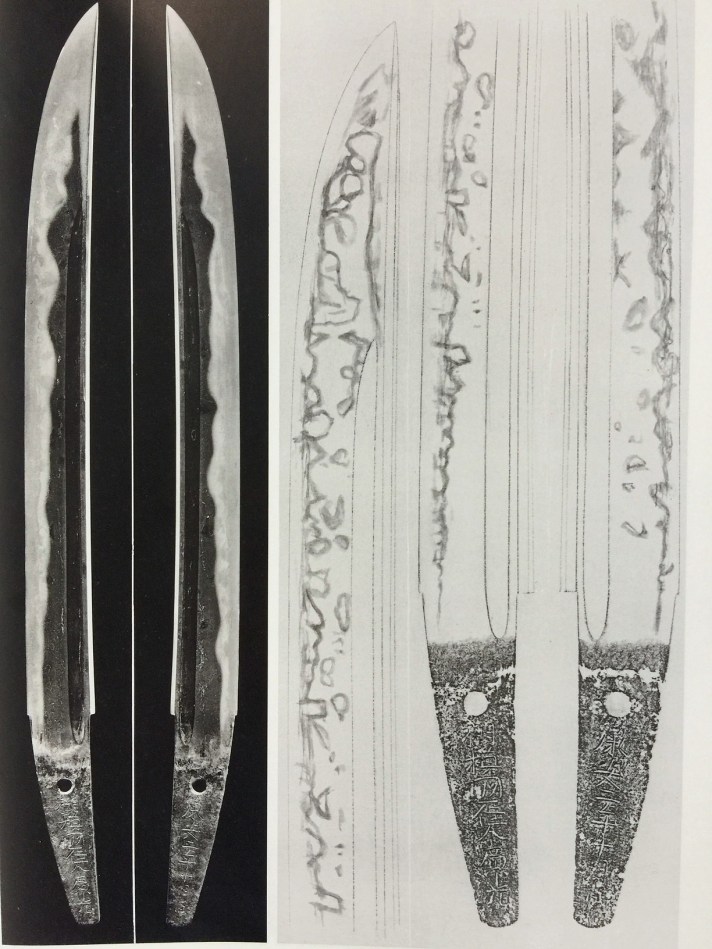
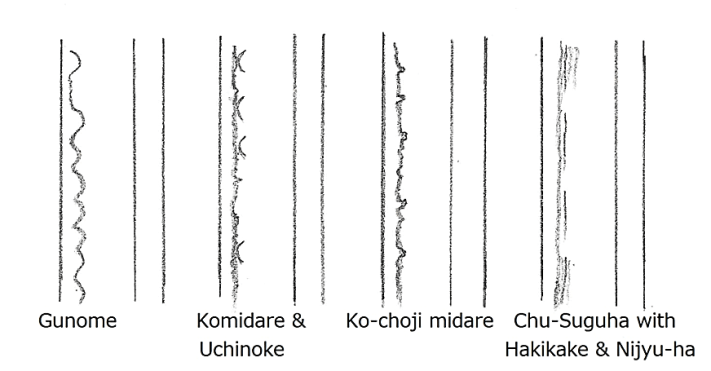
Hamon (刃文Tempered line) ——————Narrow tempered line.  Mainly nie (沸).  Chu-suguha-hotsure (中直刃ほつれ: a medium straight line with a frayed pattern), ko-choji-midare (小丁子: a mixture of small clove-like patterns and irregular wavy lines), ko-midare (小乱: small irregular wavy lines), ko-gunome-komidare (小五の目小乱: small continuous half-circles mixed with wavy lines). 

The main features of the Yamatoden style sword are masame (straight grain).  Its tempered line often shows nijyu-ha (double straight lines), hakikake (brush mark trace), uchinoke (a crescent-shaped line), or a combination of these.   See the illustration below.


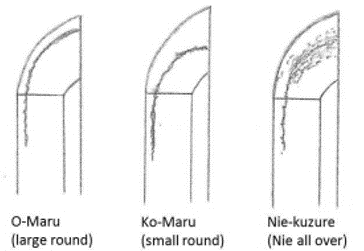
Boshi (鋩子: Tempered line at Kissaki area) ———- In the boshi area, a straight grain hamon pattern appears.  Yakizume or kaen. (Refer to Chapter 12, Middle Kamakura period: Tanto).  O-maru, ko-maru, nie-kuzure.  (Refer to Chapter 14, Late Kamakura Period Sword.  See the illustration below.)


15 Omaru Komaru Niekuzure

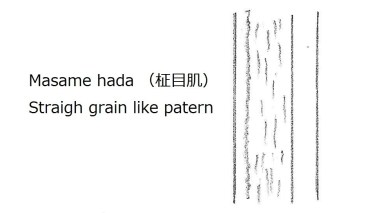
Ji-hada (地肌):Area between the shinogi and the tempered line)———— mostly masame-hada (straight grain pattern 柾目肌). Fine ji-nie, chikei, or yubashiri.  (Refer to Chapter 14, Late Kamakura Period Sword (鎌倉末太刀).  See below.)

16 Masame Hada

Nakago (Hilt) ———————– Often displays Higaki Yasuri (檜垣), the finishing file pattern, as illustrated below. 

16 Higaki Yasuri

Names of the Yamato School Sword-smiths

Taema(当麻) Group————–Taema Kuniyuki(当麻国行) Taema Tomokiyo(当麻友清) Shikkake (尻懸) Group———————————————-Shikkake Norinaga (尻懸則長) Tegai (手掻) group ——————Tegai Kanenaga (手掻包永) Tegai Kanekiyo(手掻包清) Hoshou (保昌) group———Hosho Sadayoshi ( 保昌貞吉) Hosho Sadamune (保昌貞宗)

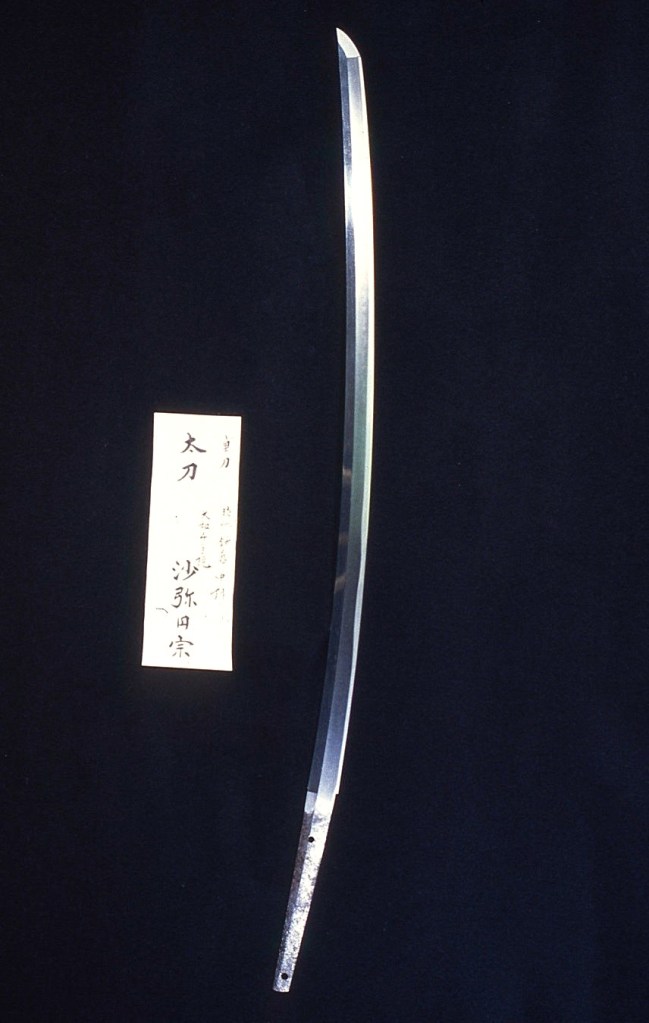
Yamato Senjuin Saya Enso (大和千手院沙弥円宗)  once my family sword