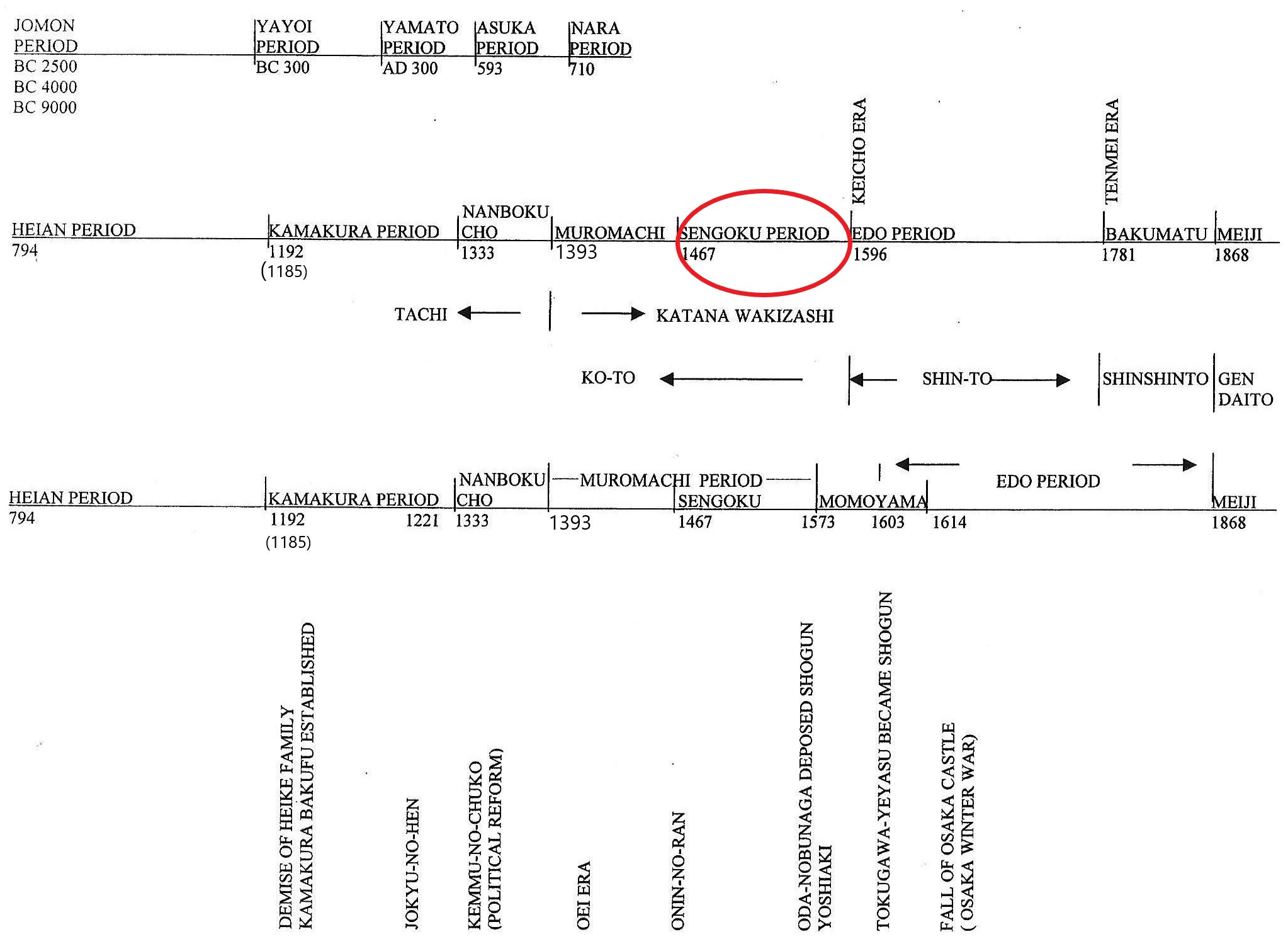
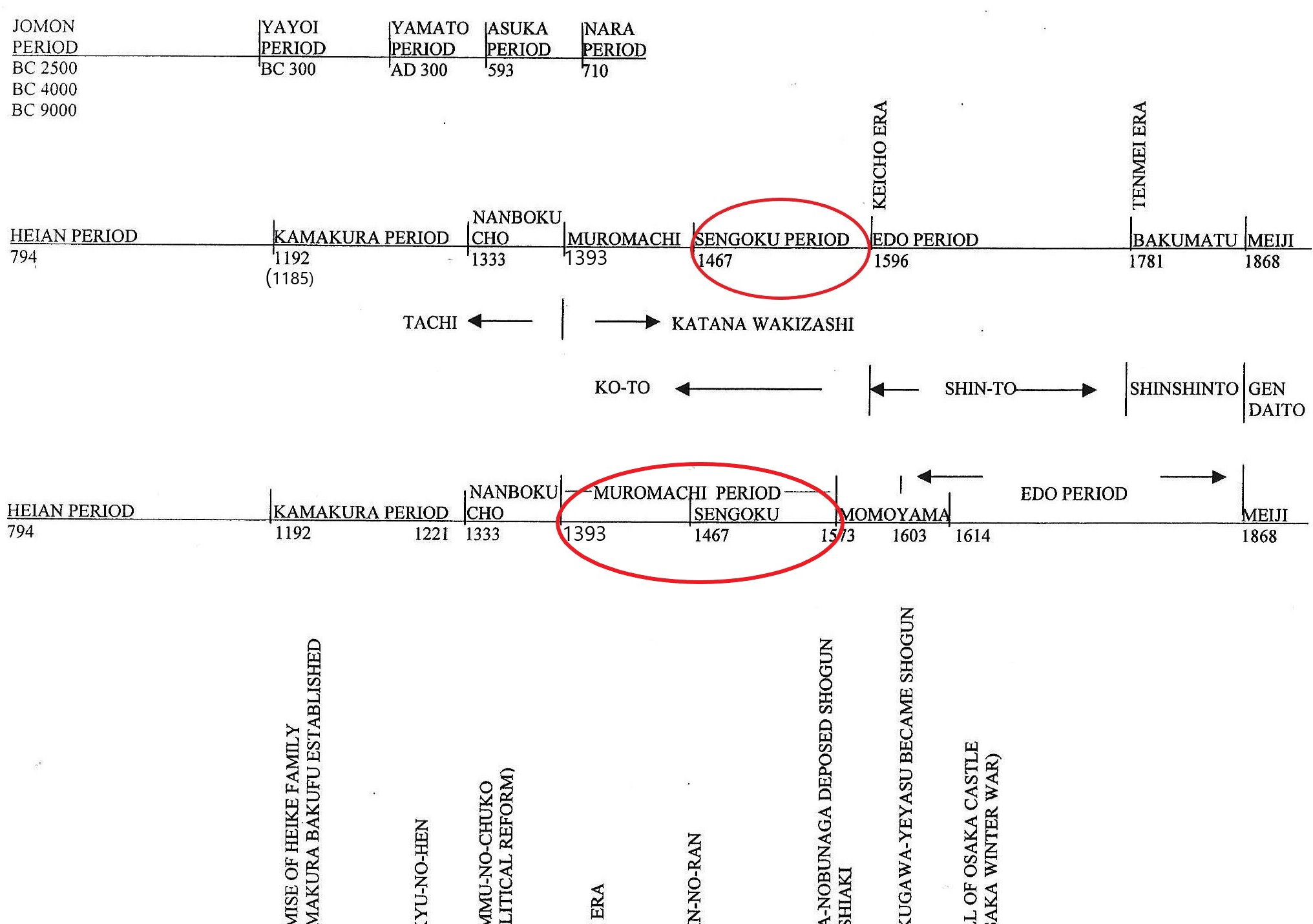
The red circle above indicate the time we discuss in this section
After the Onin-no-ran, Kyoto was left in a devastated state. Almost all the distinguished swordsmiths in the Kyoto area were gone. Many Sengoku daimyo (warlords or feudal lords) needed swords from nearby regions. The Mino and Bizen areas were the main centers of sword production during the Sengoku period, because Mino Province was conveniently located for many feudal lords. Also, the Shizu group from Yamato-den (school) moved to Mino Province. Tegai Kaneyoshi from Yamato-den moved to Mino, and many swordsmiths from the Yamashiro and Yamato areas also moved to Mino. As a result, Mino could supply a large demand for swords. During this wartime period, samurai sought practical swords that would not bend or break but still cut well. Along with swordsmiths in the Mino area, Bizen Osafune swordsmiths also met the high demand.
Kazu-Uchi-Mono and Chumon-Uchi
-
Kazu-uchi-mono was a sword made just good enough for one battle. They were not intended for long-term preservation.
-
Chumon-uchi was a custom-made sword. They were well-shaped, well-forged, and often engraved with the swordsmith’s name as well as the name of the person who ordered it.

Characteristics of Mino-Den Swords
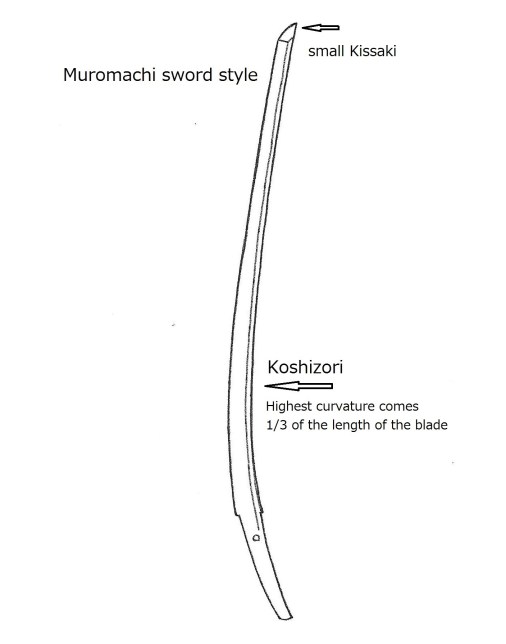
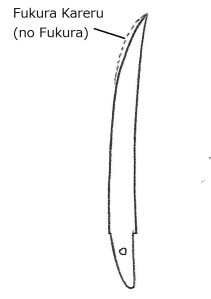
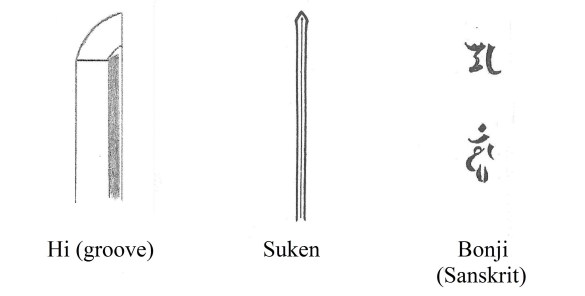
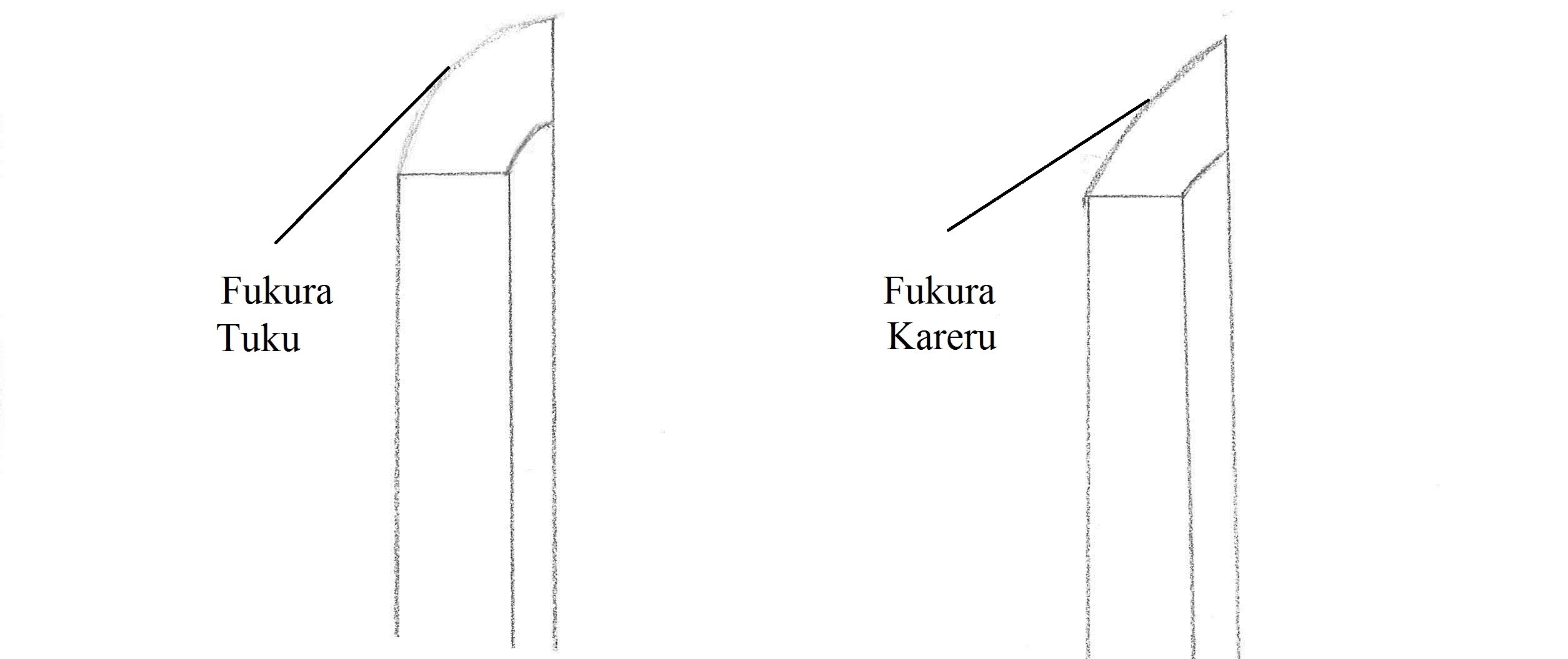
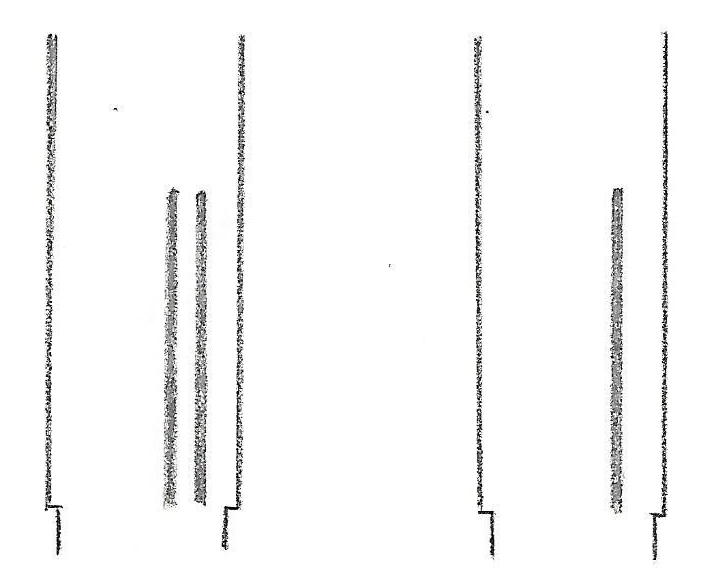
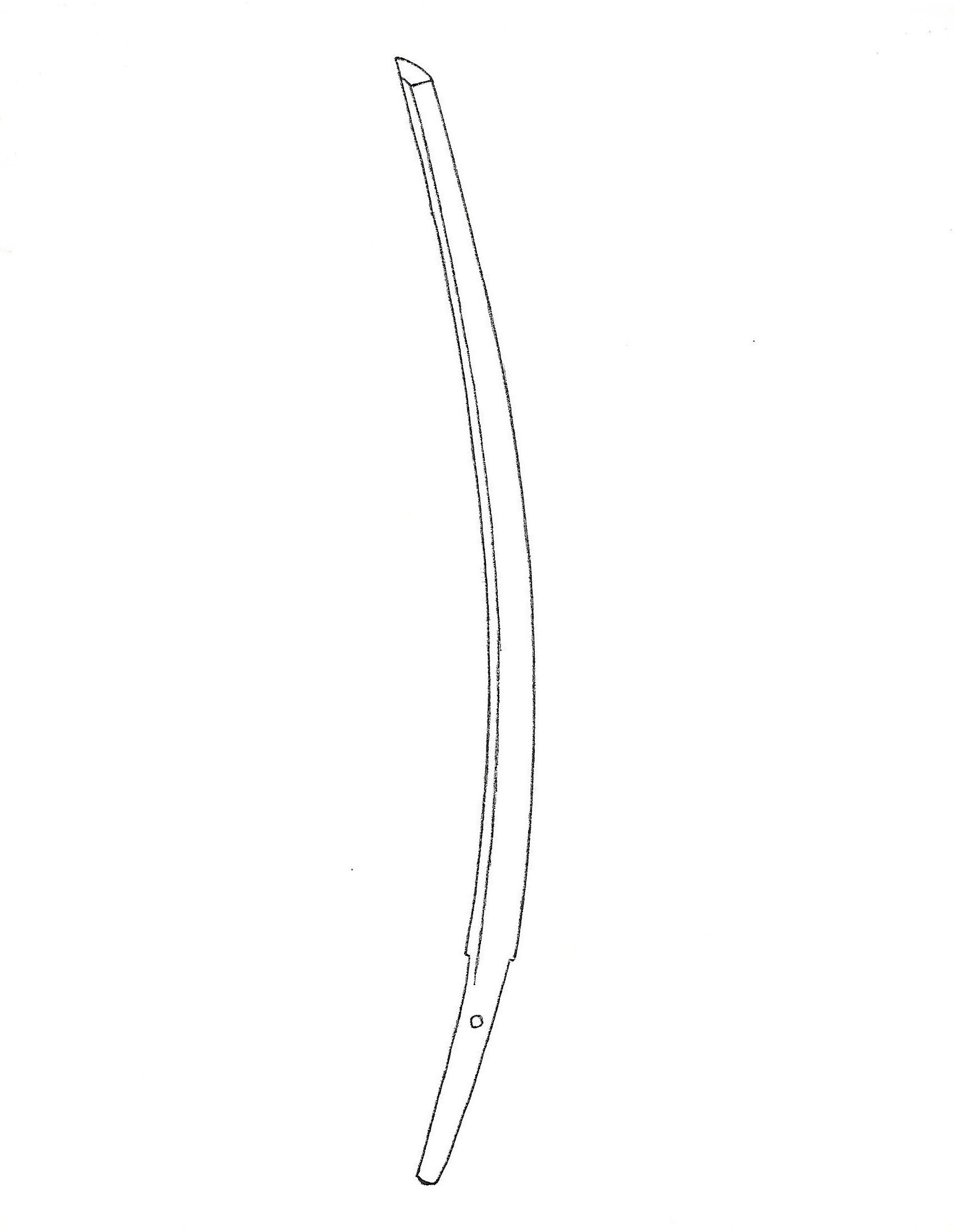
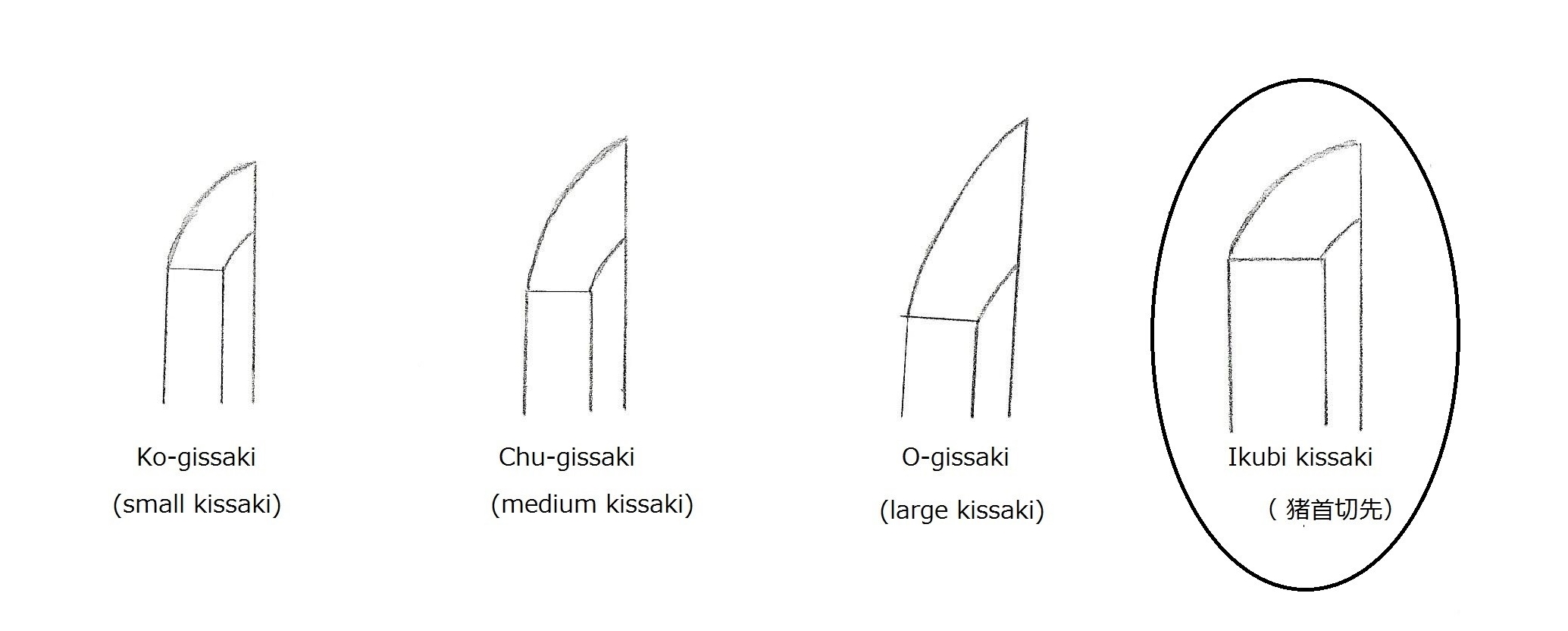
Sugata (姿:shape) ————– Shallow curvature, low gyo-no-mune, chu–kissaki with fukura. The width and thickness are neither too wide nor too thick. Engraving is rare on Mino-den swords. On Bizen-den swords, the bottom of the bo-hi (single groove) has a rounded end (see the photo on P.100) just above the machi area (for machi, see the diagram in Chapter 3: Names of parts).

Hamon (刃文: Tempered line)
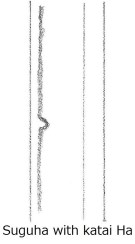
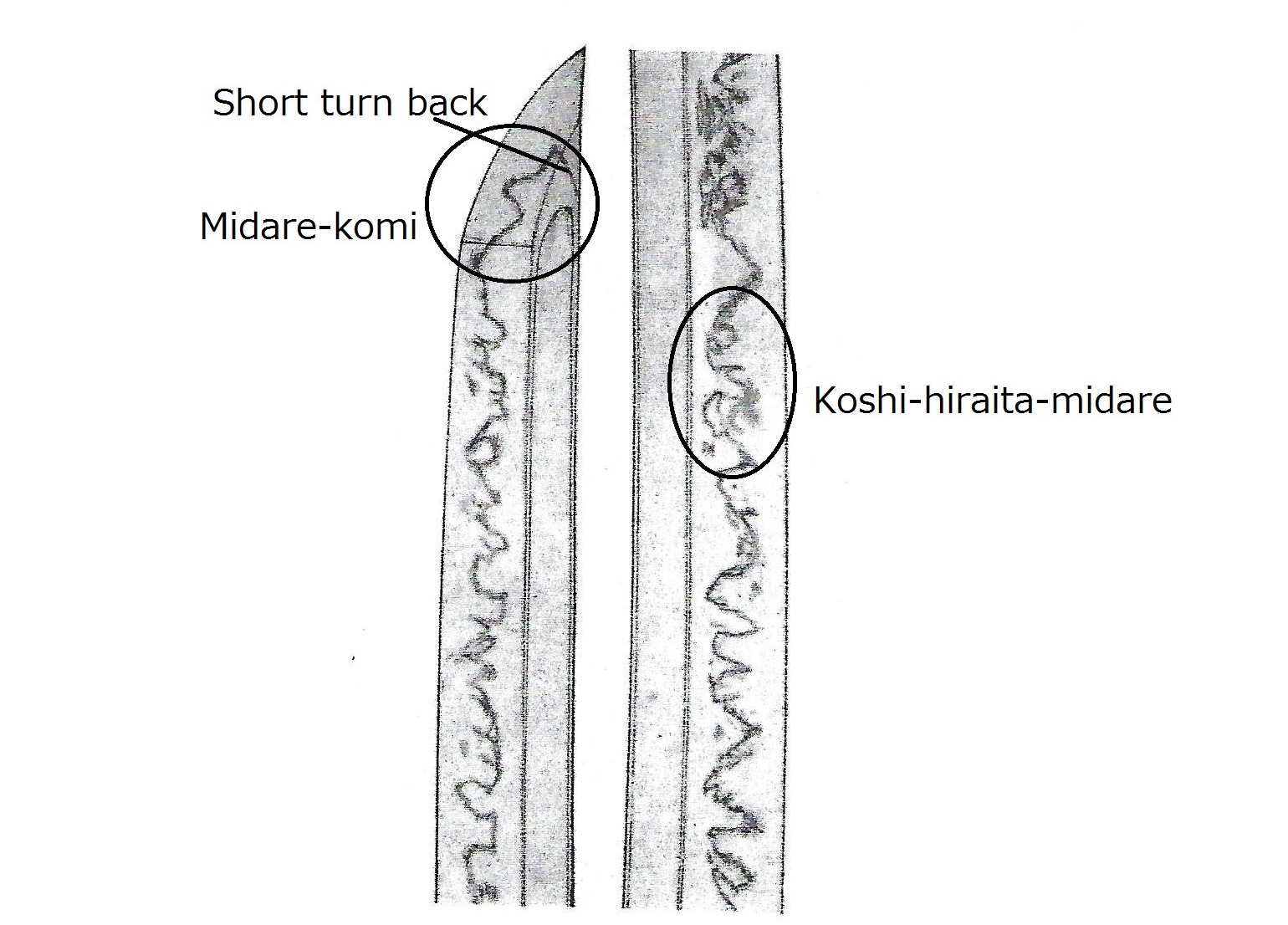
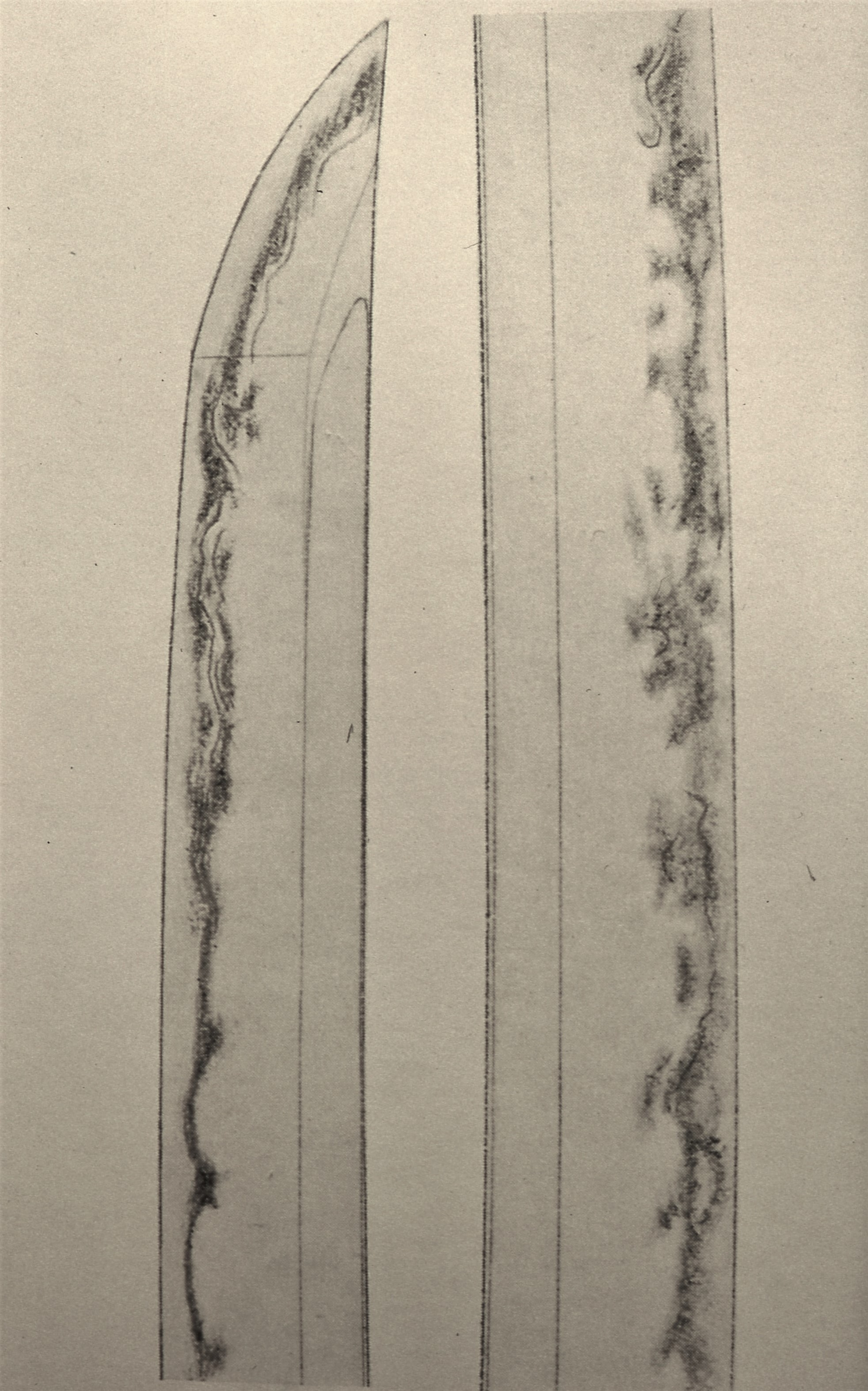
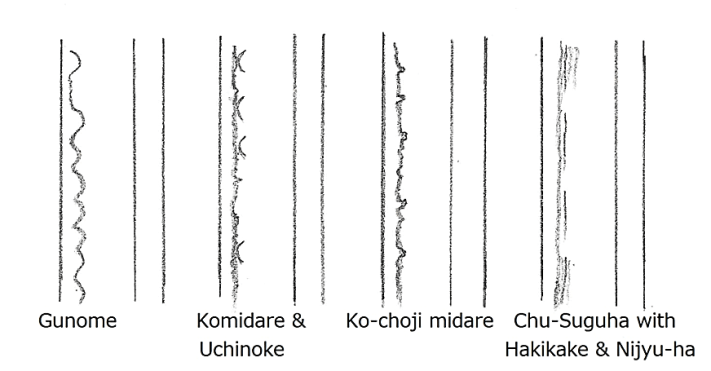
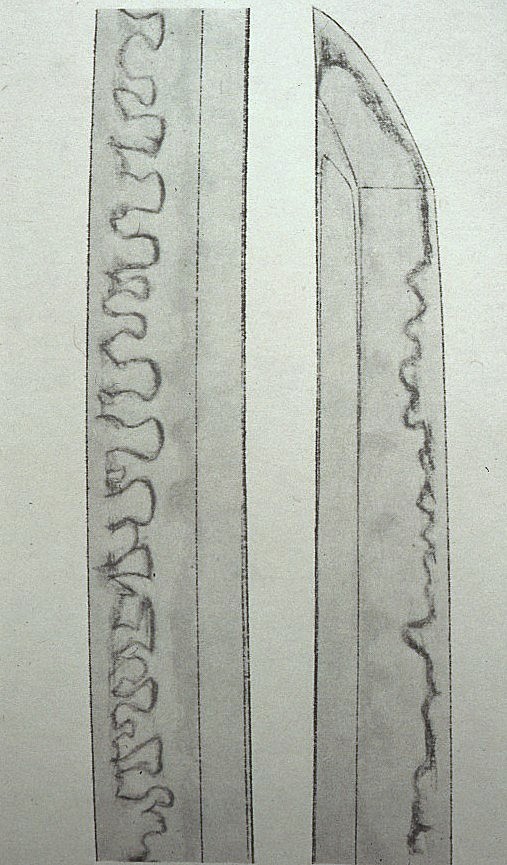
Mino Den ——–Mostly Nioi. Sanbon-sugi (pointed Gunome ), O-notare, Yahazu-midare, Hako-midare (box shape), Chu-suguha with Katai-ha. See the drawings below. Also, Mino Koshi-ba appeared. Mino Koshi-ba: approx. 1-inch Sugu-ha at the bottom, followed by irregular Hamon, then Chu-suguha at the top.
Mino-Den Hamon

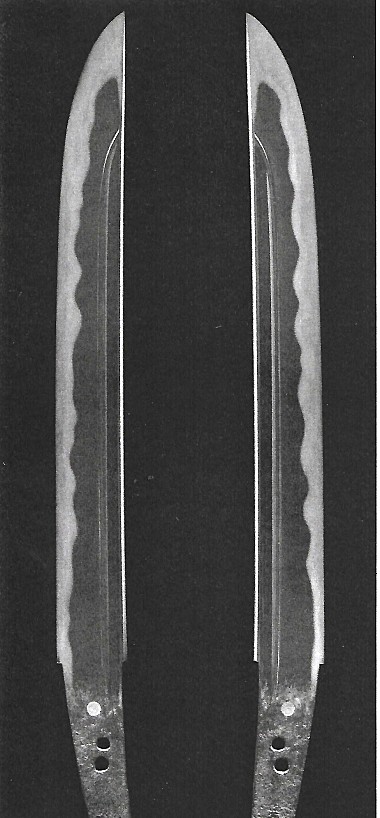
Bizen-Den ———-Mostly Nioi. Wide tempered line. Koshi-hiraita-midare. See the drawings below.
Bizen-Den Hamon
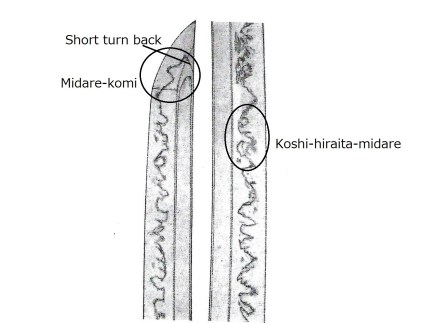
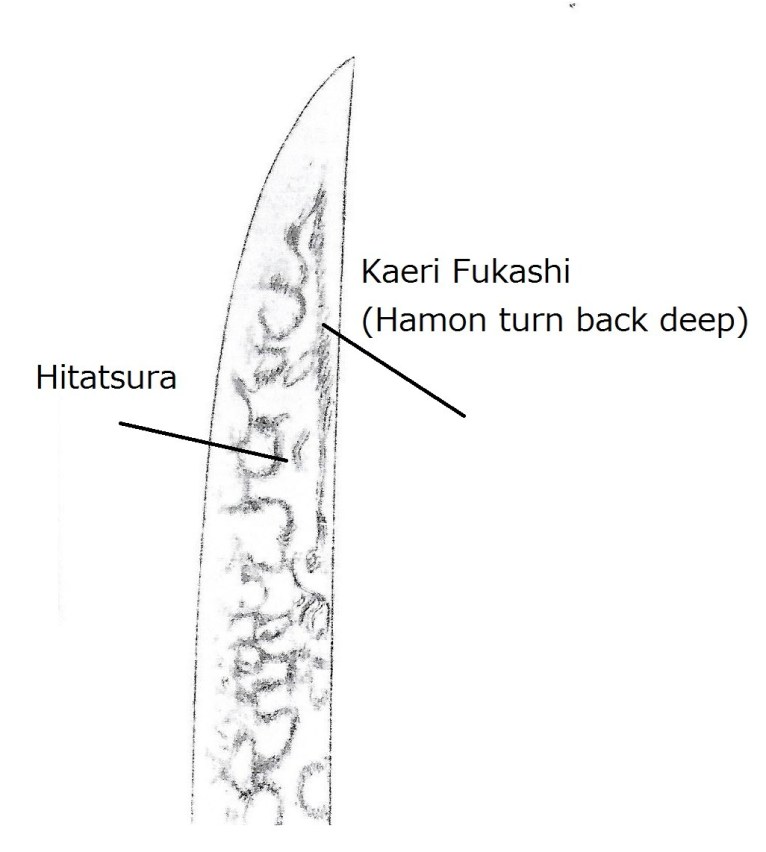
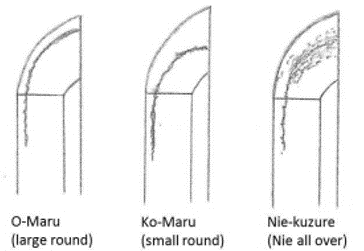
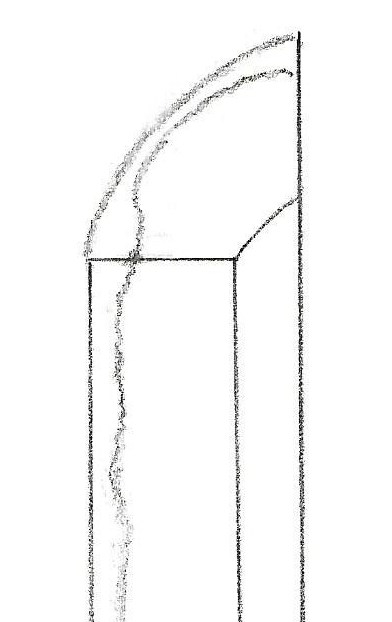
Boshi ((鋩子: Tempered line at the kissaki area)—————————–Turn back deep. Jizo-boshi (side view of a monk’s head), Ko-maru (small round), kaeri-yoru (lean)

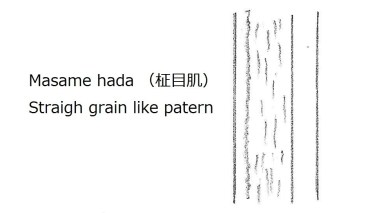
Ji-hada (地肌: the area between shinogi and the tempered area)————Mokume (wood burl) mixed with masame (straight grain). It often shows masame in the shinogi area. Sometimes, mokume stands out.
Swordsmiths during the Sengoku Period
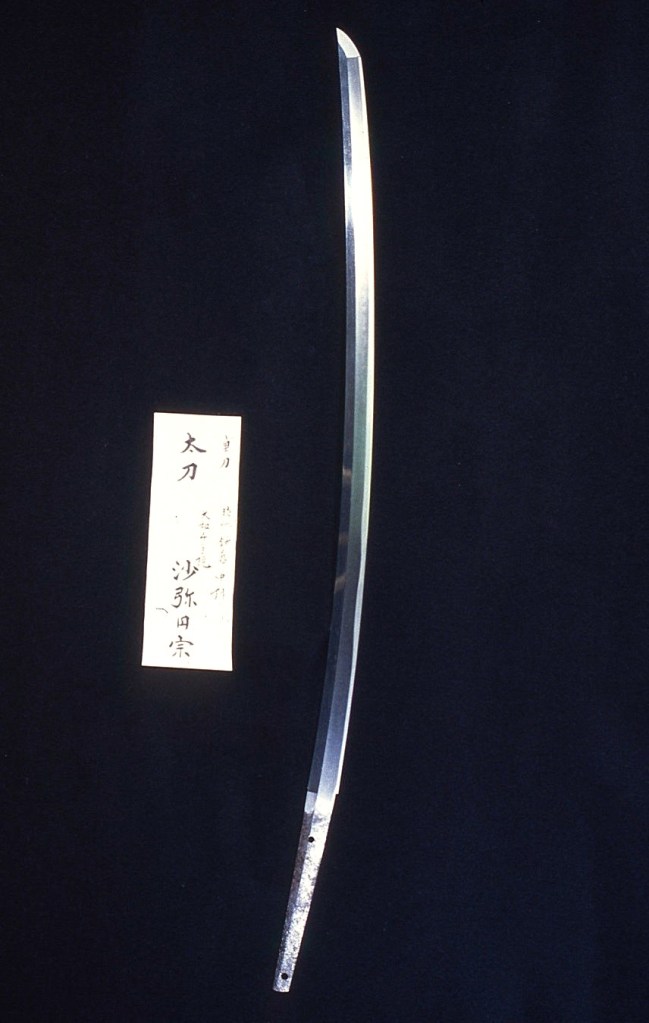
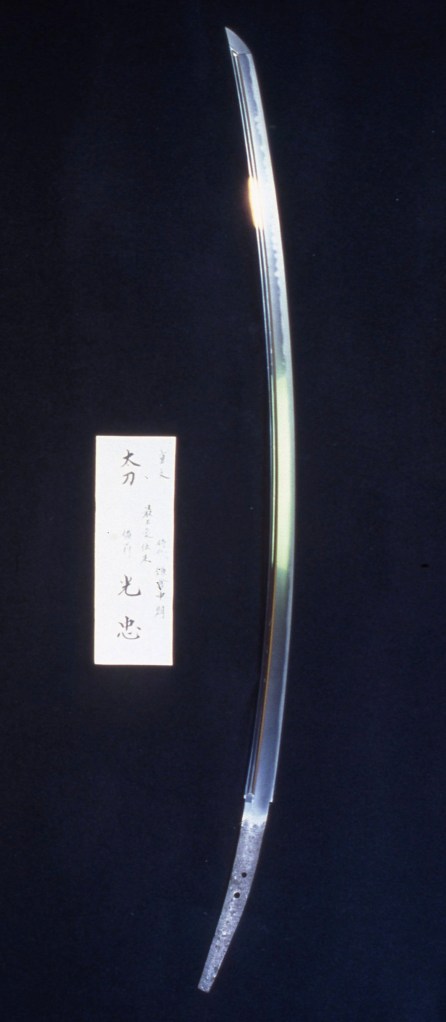
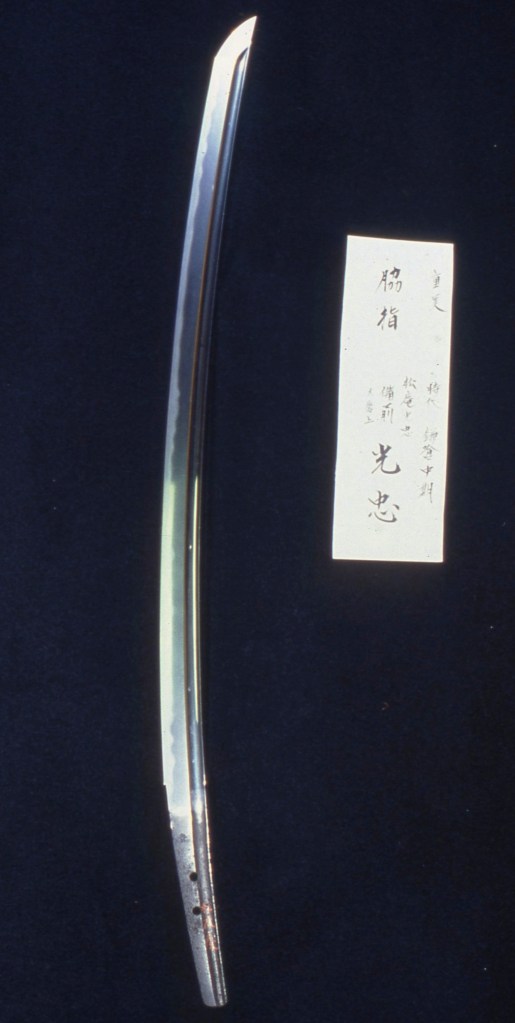
Mino-Den———Magoroku Kanemoto (孫六兼元) Izuminokami Kanesada (和泉守兼定) Bizen-Den —-Yosozaemon Sukesada (興三左衛門祐定) Norimitsu (則光) Tadamitu(忠光)
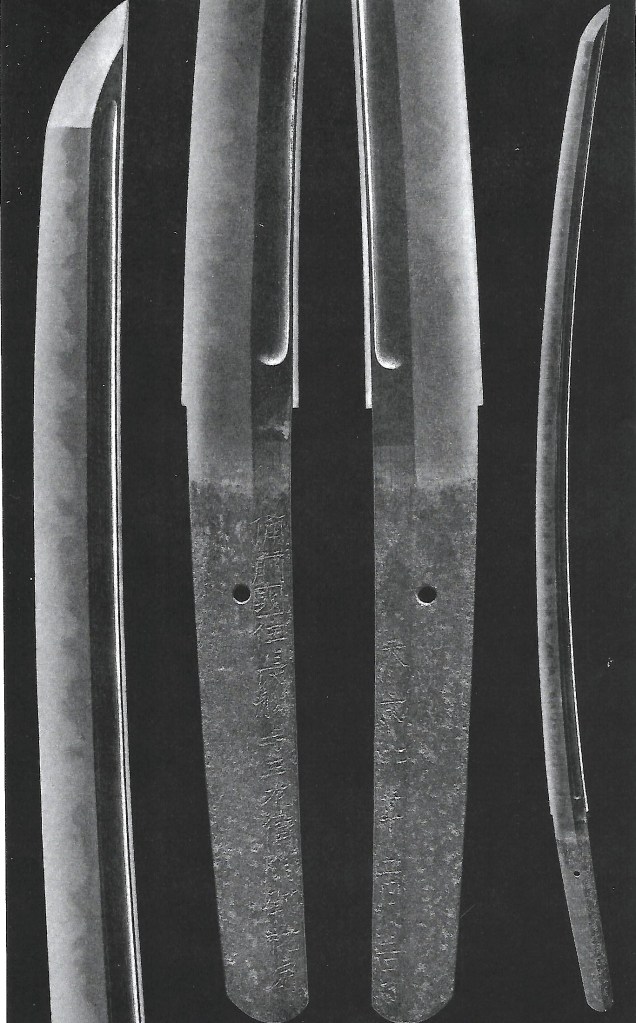
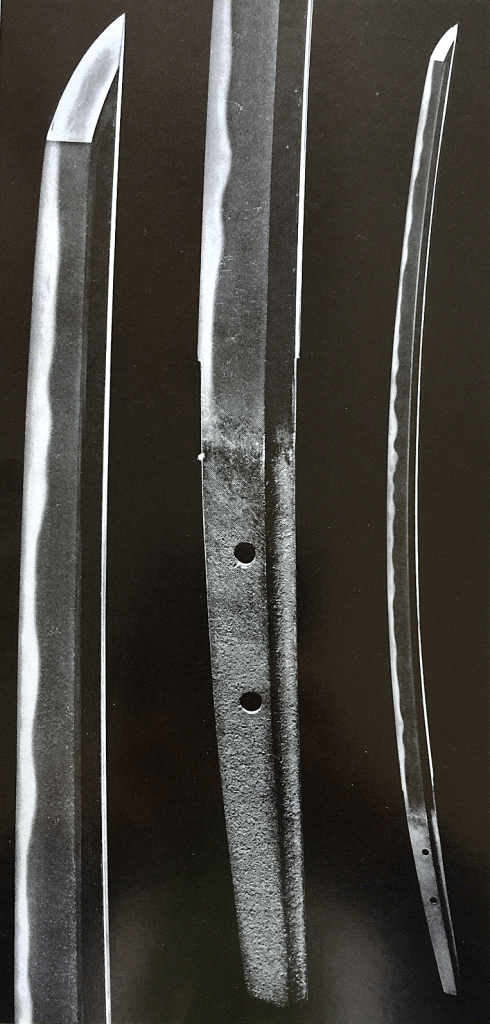
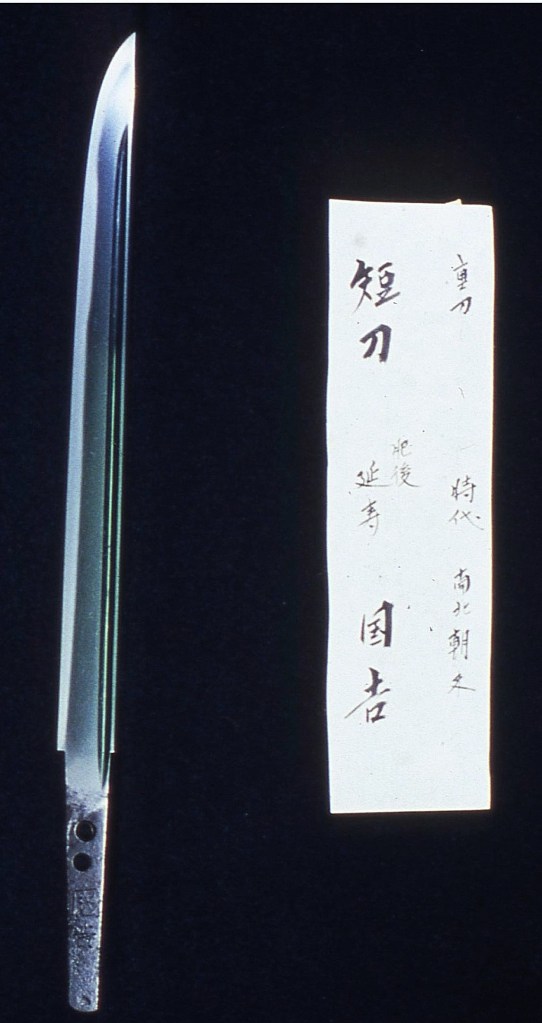
Yosozaemon Sukesada (Sano Museum) 興三左衛門祐定(佐野美術館) Permission granted










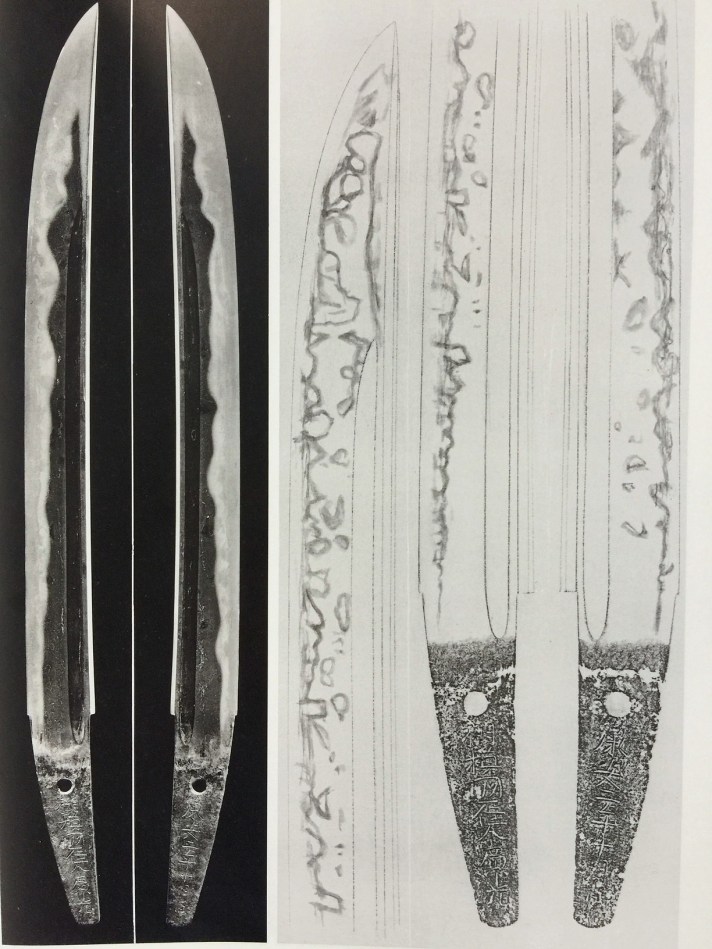




 Masamune from Sano Museum Catalog (permission granted)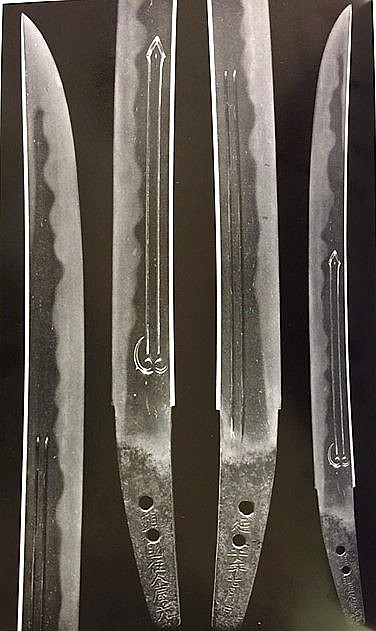
 Hiromitsu from Sano Museum Catalog (permission granted)
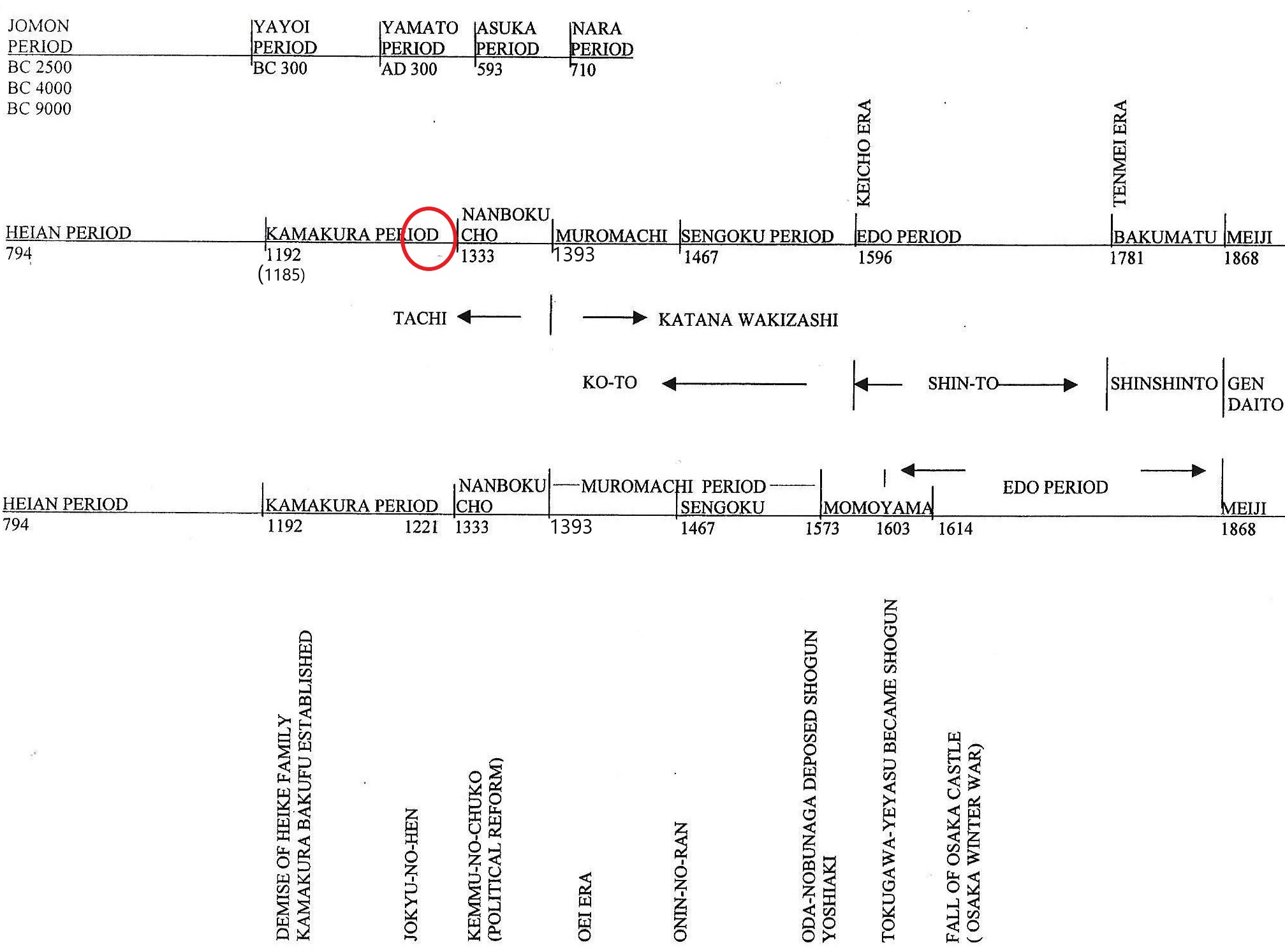 The red circle above indicates the time we discuss in this section










 Kawazuko-choji O-choji Ko-choji Suguha-choji (tadpole head) (large clove) (small clove) (straight and clove)
 Sansaku-boshi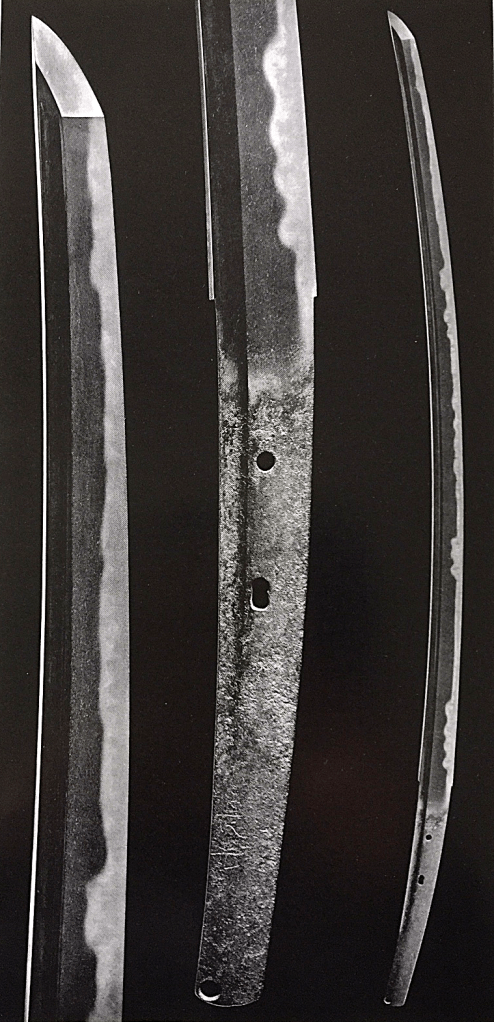
 Study of Japanese Sword