57| Part 2 of — 23 Sengoku Period Sword (戦国時代刀)

Chapter 57 is a detailed section of Chapter 23, Sengoku Period Sword.  Please read Chapter 23, Sengoku Period Sword, before reading this part.

0-timeline - size 24 Sengoku Period

                         The red circle above indicates the time we discuss in this section

During the Sengoku period (Warring States era), the Mino-den and Bizen Osafune groups were the leading sword makers.  For nearly 100 years during the Warring States period, all daimyo needed numerous swords.  Having suppliers nearby was more advantageous.  Many Sengoku daimyo (戦国大名: warlords) could easily access the Mino region because of its central location.  Since the Heian period, Mino swordsmiths have been producing swords there.  One of the well-known swordsmiths of Mino-den at the end of the Kamakura period was Shizu Kane’uji (志津兼氏).  He was one of the Masamune juttettu (正宗十哲)*.  However, the true peak of the Mino-den came during the Sengoku periodDuring the Sengoku period, the Shizu and Tegai groups from the Yamato region, and swordsmiths from the Yamashiro area, moved to Mino.  Mino became the busiest center for sword-making, producing practical swords for feudal lords.

60-mino-map.jpg

*Masamune Juttetsu (正宗十哲) ———-The original meaning of Masamune Juttetsu was the top 10 Masamune studentsHowever, the term was later used more broadly.  Masamune Juttetsu (正宗十哲):https://www.touken-world.jp/tips/7194/

Three examples of Sengoku period swords

The three swords listed below are examples of swords from the Sengoku period.  Note that each sword is unique.  Even when the same swordsmith forged swords, each one is different.  Please refer to Chapter 23, Sengoku Period Sword, for the key characteristics of swords made during the Sengoku period.
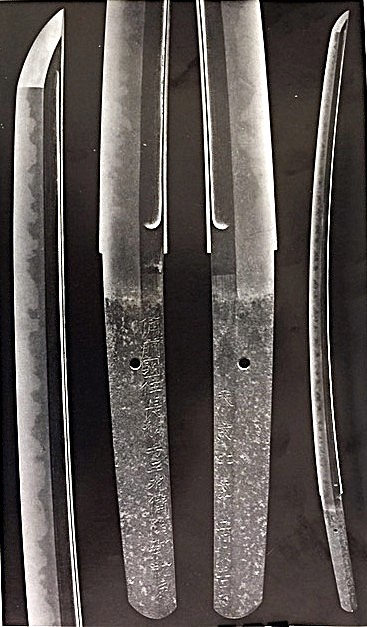
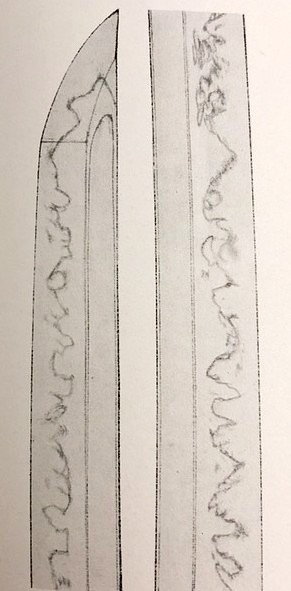
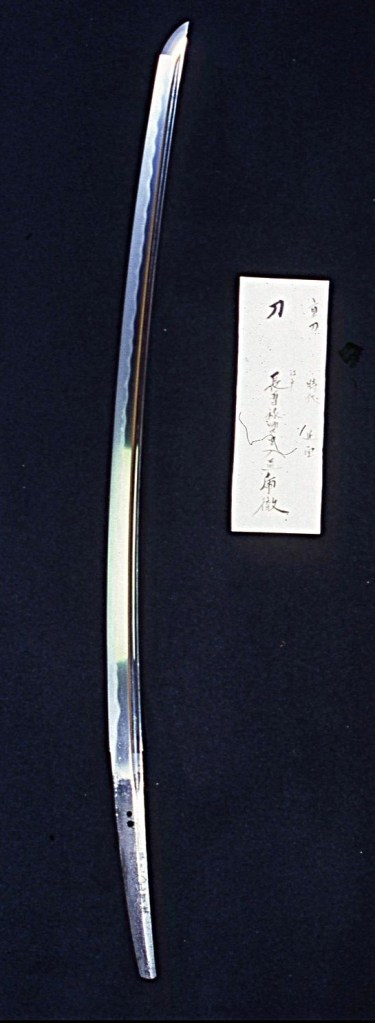
            Bizen Osafune Yosozaemon Sukesada (備前国住長船与三左衛門尉祐定) from Sano Museum Catalog (permission granted).

 Characteristis on the sword above

Hamon is Kani-no-tsume (crab-claw pattern; see the hamon above).  The Kani-no-tsume pattern hamon never appeared during the Heian, Kamakura, or Nanboku-cho periods.  This type of hamon is one of the key factors in determining whether a sword is from the  Sengoku Period.  Marudome-hi (the end of the groove is rounded) often appears on Bizen-den swords during the Sengoku period.  Wide tempered area.  The midare-komi boshi (where the hamon on the body and the boshi share the same pattern) has a long turn-back that stops abruptly.  The hamon has a nioi base, and most Bizen swords feature nioi, though a few exceptions exist.
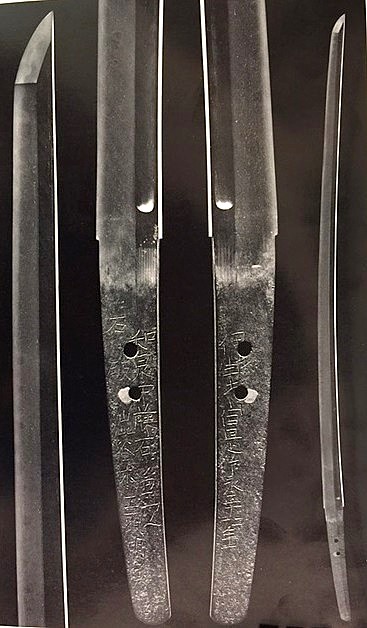
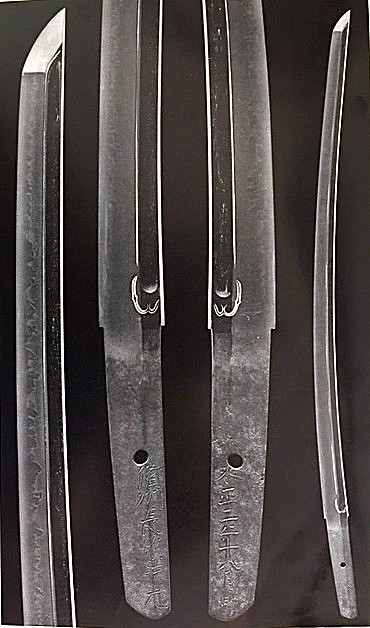
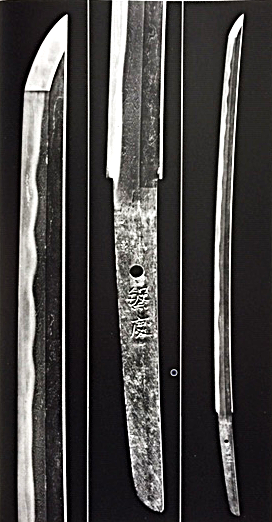
60 kanesada illustration Izuminokami Fujiwara Kanesada (和泉守藤原兼) from Sano Museum Catalog

Characteristic  on the sword above

The last character of the kanji (Chinese characters) in the swordsmith’s name above is “.”  We use this uncommon character instead of the standard “定” for him.  Because there are two Kanesada.  To distinguish him from the other Kanesada (兼定), we use the character “ “and call him Nosada “のさだ.”

Izuminokami Fujiwara Kanesada (AKA Nosada) was the leading swordsmith of Mino-den during that time.  The sword’s shape is typical of the Sengoku period: shallow curvature, a chu-gissaki (medium-sized kissaki), and a pointed gunome hamon.  The hamon width can be wide and narrow.  Nosada and other Mino-den swordsmiths often exhibit wood-grain patterns with masame on the ji-hadaNioi base, mixed with coarse nie. 

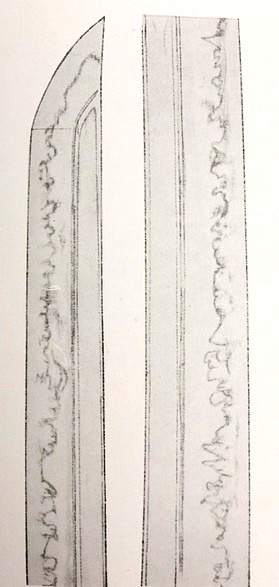
      Bizen Osafune Norimitsu (備前長船法光) from Sano Museum Catalog, permission granted.

Characteristic of the sword above

Shallow curvature.  Sturdy appearance.   Marudome-hi (the hi ends are rounded)The pointed hamon is called togari-ba (尖り刃).  Nioi base, mixed with nie.  Slight masame and wood grain patterns on Ji-hada.


28|Shin-to Sword — Main Seven Regions (part B 主要7刀匠地)


0-timeline - size 24 Shin-to
 The red circle indicates the subject of this chapter

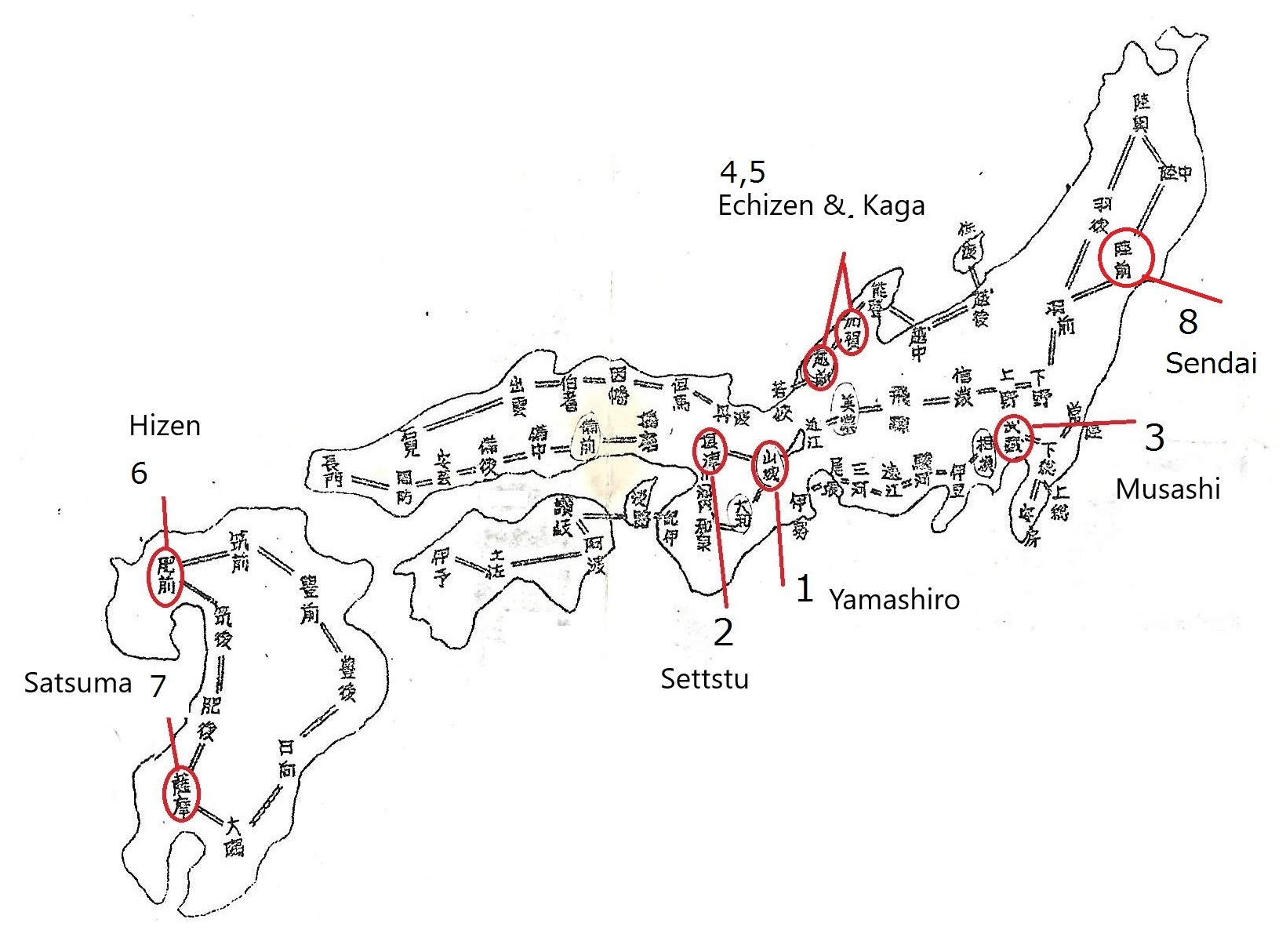
64Map with number with 8

3Musashi ( 武蔵 ) in Edo ( 江戸 )

The katana and wakizashi made in the Musashi area have a shallow sori (curvature).  Often, the width of the blade’s upper part is narrow.  Usually, the hamon begins with a slight irregular pattern, then gradually shifts to a larger irregular pattern, and a few inches below the yokote line, it becomes a small irregular pattern again.  The boshi is usually a komaru-boshi.  The ji-hada may be rough.  Masame-hada shows on shinogi-ji.

Well-known swordsmiths in Musashi ———————————-Noda Hannkei (野田繁慶)                                                      Nagasone Okisato Nyudo Kotetsu (長曽根興里入道虎徹)

Nagasone Okisato Nyudo Kotetsu                        Noda Hankei (野田繫慶)                                   (長曽根興里入道虎徹)                                   from Compton’s collection “Nippon-to”    Once, my family sword                                                                                                               

4. Echizen ( 越前 ) and 5. Kaga (加賀 )

Many swordsmiths from the Mino (美濃) area moved to the Echizen and Kaga areas (#4  & #5 on the map above).  Therefore, swords made in these areas are called Echizen-seki and Kaga-seki.  Refer to Chapter 23 Sengoku Period (戦国) Sword for Mino-den.             The style of Echizen Yasutsugu (越前康継) is similar to that of Mino-den.

Well-known swordsmith in Echizen ————————-Echizen Yasutsugu (越前康継 )

6. Hizen (肥前)

Both the katana and wakizashi from Hizen have well-balanced shapes.  The Hizen region tends to produce swords with a chu-suguha-hotsure (a medium-width straight hamon resembling frayed fabric) with fine nie (沸).  The boshi has a clean, regular line with a uniform width tempered line, as shown in the illustration below.  If you see a shin-to sword that has a chu-suguha hamon and a boshi that looks like the one below, it is often made by Hizen Tadayoshi (肥前忠吉).  Very fine Ji-hada (surface), sometimes called nukame-hada.

29 Hizen Tadayoshi Boshi

Well-known swordsmith in Hizen ——————————— Hizen Tadayoshi ( 肥前忠吉)

  1. Satsuma (薩摩 )

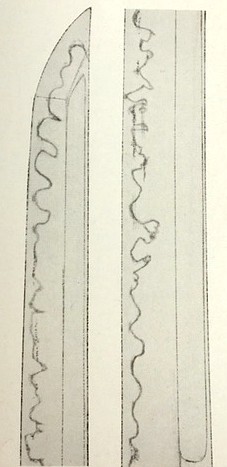
The swords made in Satsuma appear solid for both katana and wakizashi.  The kissaki (the top pointed area) is slightly stretched.  Yakidashi (a few inches above the machi ) shows a small, irregular hamon.  The hamon is o-midare with coarse nie called ara-nie. The ara-nie forms togari-ba (a pointed pattern; see the drawing below)One of the characteristics of this region.

The region is well known for its Satsuma-nie.  That is, the ara-nie around the hamon continues and blends into the ji-hada area.  Therefore, the border between ha-nie and ji-nie is unclear.  Inside the hamon, it sometimes shows a thick line shaped like lightning.  This line is called Satsuma-no-imozuru (sweet potato vine), and is less desirable than inazume and kinsiji.  This is the most prominent feature of the Satsuma sword.  Boshi has a narrow-tempered line with a small irregular patternThis is called satsuma-boshi.  On the ji-hada surface, chikei (a long, dark line) appears.  This is called Satsuma-gane (薩摩金).

29 Satsuma Togari-ba

Well-known swordsmiths in Satsuma ——————  Izunokami Masafusa (伊豆守正房)                                                                                                 Ichinohira Yasuyo (一平安代)                                                                                       Mondonosho Masakiyo (主水正正清)


27|Shinto Sword — Main Seven Regions (Part A :主要7刀匠地)

0-timeline - size 24 Shin-to

                            The red circle indicates the subject we discuss in this section

During the Shinto era, there were seven main prosperous regions where many swordsmiths gathered and actively forged swords.  These are Yamashiro (山城) in Kyoto, Settsu (摂津) in Osaka, Musashi (武蔵 ) in Edo, Hizen (肥前) in Saga, Satsuma (薩摩) in Kagoshima, Echizen (越前) in Fukui,  and Kaga (加賀) in Kanazawa.  Swordsmiths from each area shared common regional characteristics of their places.  Knowing each of these characteristics is the easiest way to understand Shin-to.  However, it is important to remember that each swordsmith within a group had their own unique way of sword-making.  The following are only general descriptions of these characteristics.

Below is a map of Japan.  Hokkaido is not shown on the map because swords were not made there during that time.

64Map with number with 8

1.  Yamashiro (山城) Kyoto

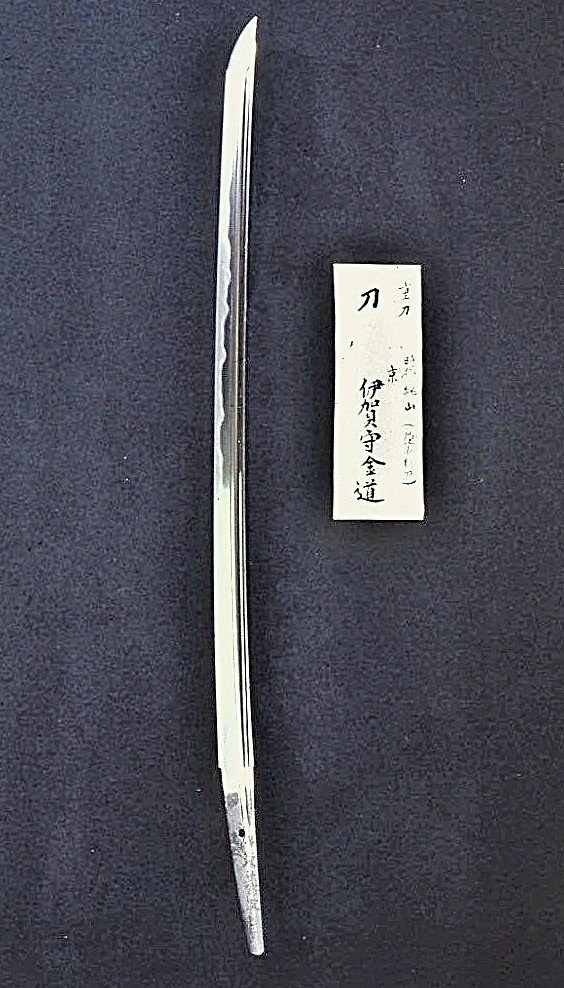
The Yamashiro shin-to sword has a solid and strong look.  The hamon near the lower part of the blade, just above the machi (区) area, shows suguha (straight hamon).  This is called kyo-yakidashi (京焼出し, meaning it starts with a straight hamon.  Then, it shows a sudden shift to a design of o-midare (大乱).  The o-midare (large irregular waviness) becomes less wavy about one or two inches below the yokote line, then continues into the boshi as a wavy hamon.  The design in the boshi is komaru-boshi.   See the illustration below. 

Ji-hada ———— Somewhat rough, (depending on the swordsmith).  Masame-hada (straight grain pattern) may show on shinogi-ji (between the ridgeline and back). 

Among the Yamashiro shin-to group, there was a group called the Mishina group (三品).  They were related to Mino-den (美濃).  Therefore, their boshi was often jizo-boshi (地蔵鋩子).  This is called Mishina-boshi (三品鋩子).  Jizo-boshi is an image of a man’s head.

The Well-known swordsmiths in Yamashiro area: Umetada Myoju (梅忠明寿)                                                                                                   Horikawa Kunihiro (堀川国広)                                                                                               Dewadaijyo Kunimichi (出羽大掾国路)

28 Mishina-Boshi Komaru-boshi, Kyo-Yakidashi

                                                        Iganokami Kinnmichi (伊賀守金道) Yamashiro Den, once my family sword

2.Settu (摂津) Osaka (大阪)

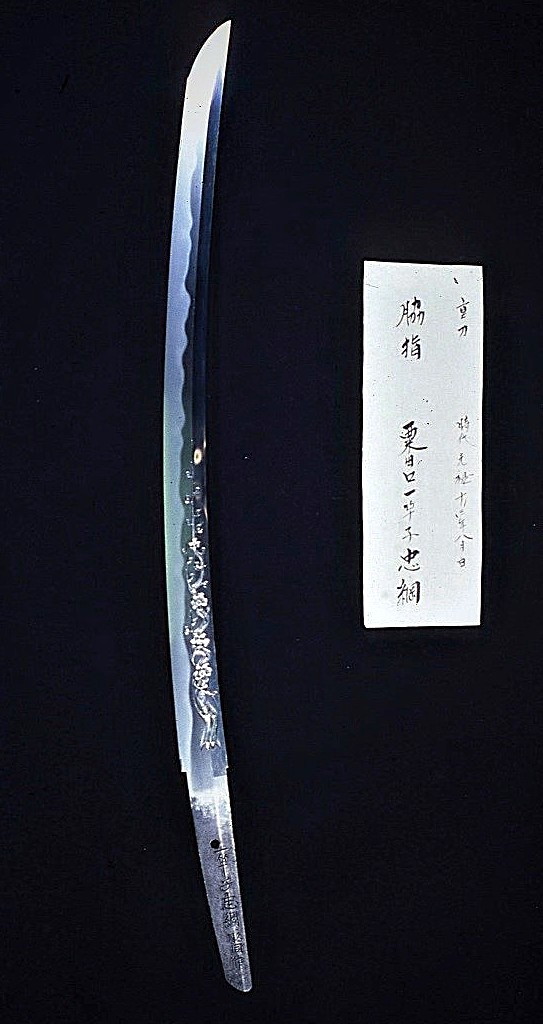
Settsu (Osaka) produced more wakizashi than katana.  They tend to make it slightly sakizori (the top half curving outward) with a slightly stretched boshi. A Settsu sword also shows yakidashi, similar to the previous Yamashiro sword.  However, unlike Yamashiro’s sword, the transition is not abrupt but relatively smooth, where suguha changes into notare (wavy pattern).  This is called Osaka Yakidashi.

Osaka Boshi ——-Hamon continues up to the yokote line, then komaru with a turn back.   Ji-hada————-Very fine,  almost no pattern, a solid surface like, especially, shinogi-ji (between the ridgeline and the back).  This is called Osaka-tetsu (iron).

29 Osaka Yakidashi Komaru Boshi

Well-known swordsmiths in Settsu area— Osaka Tsuda Sukehiro (大阪津田助広)                                                                                 Tsuda Sukenao (津田助直)                                                                                                   Ikkanshi Tadatsuna (一竿子 忠綱)

                                                                 Ikkanshi Tadatsuna (一竿子忠綱), once my family sword